
Non-FictionInformativeEducational
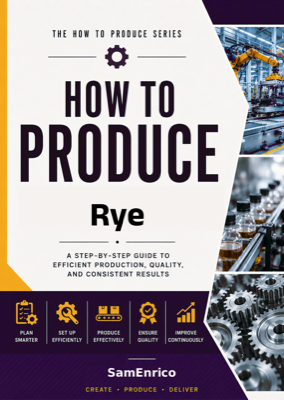
How to Produce Rye
This publication, published by SamEnrico, covers H
by Molina Ammie
This publication, published by SamEnrico, covers How to Produce Rye
Formats
About this book
Free sample
Chapter 1: The Resurrection Grain...–- On a frigid December morning in 1816, known to history as the Year Without a Summer, a farmer named Henrik Juntunen walked through his rye field in northern Finland. Mount Tambora had erupted in Indonesia the previous year, spewing so much ash into the atmosphere that frosts came in July and snow fell in August. Across Europe and North America, wheat fields turned black and died. Corn rotted in the ground. Potatoes, the standby of the poor, liquefied into stinking slime.
Famine swept the continent. But Henrik’s rye field stood green. Not lush, not thriving—but alive. The stalks were shorter than usual, the heads thinner, but when he pulled a spikelet apart, there were kernels. Hard, dark, edible kernels.
That winter, Henrik’s family ate dark rye bread while his neighbors ate bark and boiled leather. He did not know the science behind what he witnessed. He only knew that rye was different. It was tougher. It was the grain that did not quit.More than two centuries later, the lesson of Henrik’s field matters more than ever.
Climate change is making weather less predictable. Input costs for wheat and corn are soaring. Consumers are demanding local, sustainable, and nutrient-dense foods. And a quiet revolution is underway—farmers, bakers, distillers, and homesteaders are rediscovering the grain that built Northern Europe, sustained the Russian Empire, and launched the American whiskey industry. That grain is rye.
This book is the comprehensive guide to producing it, from seed selection to harvest to market. But before we get to the how, we must understand the why. Why should you, the farmer or homesteader, dedicate acres to a grain that most consumers can barely pronounce? The answer lies in three converging forces: agronomic resilience, economic opportunity, and cultural resurgence.The Forgotten Superpower of Rye Let us begin with a simple comparison. Wheat, the king of American grains, requires well-drained loam, a p H between 6.0 and 7.5, moderate rainfall, and careful fertility management.
Push wheat outside these bounds—too sandy, too acidic, too dry, too cold—and yields collapse. Barley is even more finicky, demanding…
This is the end of the free sample. Get the eBook to keep going. Buy now
Contents
- Chapter 1
- Chapter 2
- Chapter 3
- Chapter 4
- Chapter 5
- Chapter 6
- Chapter 7
- Chapter 8
- Chapter 9
- Chapter 10
- Chapter 11
- Chapter 12
Details
- Author
- Molina Ammie
- Publisher
- SamEnrico
- Language
- English
- Genre
- Non-Fiction, Informative, Educational
- Released
- 2026-05-11
- Pages (approx.)
- 156
- Available as
- eBook, Audiobook

Read better in the ZLOADR app
Your eBooks on your phone or tablet. Sign in with your SamEnrico account and start reading.
More by Molina Ammie
 Neck Tension HeadachesMolina Ammie$11.99
 Emotion Labeling SkillsMolina Ammie$11.99
 Musk Boring CompanyMolina Ammie$11.99
 Fatty Fish Metabolic SyndromeMolina Ammie$11.99
 USO Entertainer Pacific TourMolina Ammie$11.99
 Meal Prep for Bariatric SurgeryMolina Ammie$11.99
 Personal Brand Reputation ManagementMolina Ammie$11.99
 DSPD Chronotherapy RisksMolina Ammie$11.99
 Working Memory For MusiciansMolina Ammie$11.99
 StoryGraph Challenge PressureMolina Ammie$11.99
 Retail Store InsuranceMolina Ammie$11.99
 Benzodiazepine PAWS ManagementMolina Ammie$11.99
You may also like
 Hong Kong Handover 1997Dunn Johnnie$11.99
 Zumba For Postnatal Recovery CourseNeal Christian$11.99
 Zumba for BeginnersLadner Nikia$11.99
 YouTube Comment Mining GuideHumes Pandora$12.99
 Worry Box MeditationCarlin Rudy$11.99
 Workplace Stress MeditationNguyen Lynn$11.99
 Workplace Stress and Sleep RepairHawley Ivory$11.99
 Workplace Perfectionism CureDelaney Jeffry$11.99
 Workplace Injustice Anger GuideWallen Isabelle$11.99
 Work Addiction and Burnout LinkGreenwood Ester$11.99
 Women in Yoga and WellnessBeattie Galina$11.99
 Women in Stand Up ComedyChun Evangeline$11.99