
Non-FictionInformativeEducational
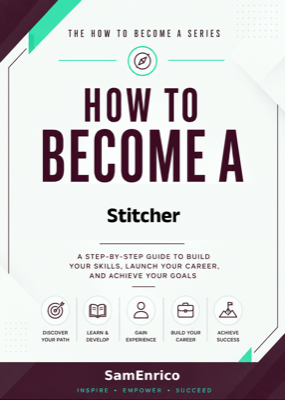
How to Become a Stitcher Paperback
How to Become a Stitcher
by Ferrari Neda
How to Become a Stitcher
Formats
Free sample
Chapter 1: The One Thing...--–- In the spring of 2015, a woman named Eleanor walked into a small fabric shop in County Cork, Ireland, and asked for “whatever thread doesn’t break when you cry.” The shopkeeper, an elderly stitcher named Margaret, didn’t laugh. She reached under the counter, pulled out a spool of six-strand cotton floss in a color called “Forgiveness,” and handed it over without charging a cent. Eleanor later became a textile artist whose work hangs in the National Gallery of Ireland. She still has that spool, now nearly empty, and she says the first stitch was the hardest—not because it required skill, but because it required her to believe that a single, shaky line of thread could matter.This book exists because of people like Eleanor. And like you, if you’re holding this page with trembling fingers or a skeptical eyebrow.Every year, millions of people buy embroidery kits, hand-sewing needles, and bundles of colorful thread.
The global craft market is worth over forty billion dollars, and the fastest-growing segment is hand-stitching among adults under thirty-five. Yet the same surveys show that nearly seventy percent of beginners abandon their first project within two weeks. Not because they lack talent. Not because stitching is boring. But because the first hour—the one where you look at a bare hoop, a threaded needle, and a blank patch of fabric—feels like standing at the edge of a very high diving board.
You know people have done it. You’ve seen the beautiful results on Instagram. But your hands don’t seem to belong to you anymore.This chapter is the diving board. And by the end of it, you will have jumped.The Radical Premise of This Chapter Most embroidery and hand-sewing books start with history. They tell you about the Bayeux Tapestry or the silk roads or Victorian samplers.
Those things matter, but not today. Today we start with a different question, one that no other craft book has asked in its first pages:What is the absolute smallest, cheapest, most failure-proof thing you can do right now that will prove to yourself that you are capable of becoming a stitcher?The answer is not a project. It is not a sampler. It is not even a full stitch. The answer is: one single, straight line of thread, no longer than two inches, sewn into a scrap of fabric that you would otherwise throw away.That’s it.
That’s the entire first lesson.Everything else in this chapter—the tools, the thread, the needles, the hoop, the fabric—exists only to make that one small line possible. And if you complete nothing else in this book, if you put it down after Chapter One and never pick it up again, you will still have done something that seventy percent of beginners never do: you will have made your first stitch without quitting.Why Most First Stitches Fail (And Why Yours Won’t)Before we talk about what you need, let’s talk about what you don’t need. The biggest reason beginners fail is not lack of skill. It is overwhelm. The average beginner’s first five minutes go something like this:You buy a kit.
The kit contains a hoop, three colors of thread, a needle, a printed pattern, and an instruction sheet with forty-two steps. You open the package. You try to separate the six strands of thread, but they twist into a knot. You try to thread the needle, but the eye is tiny and your fingers are suddenly clumsy.…
This is the end of the free sample. Get the Paperback to keep going. Buy now
About this book
Details
- Author
- Ferrari Neda
- Publisher
- SamEnrico
- Language
- English
- ISBN
- 9781506075396
- Genre
- Non-Fiction, Informative, Educational
- Released
- 2026-05-11
- Pages (approx.)
- 135
- Available as
- eBook, Paperback, Audiobook

Read better in the ZLOADR app
Your eBooks on your phone or tablet. Sign in with your SamEnrico account and start reading.
More by Ferrari Neda
 WFH Daily Shutdown RitualFerrari Neda$11.99
 Student Loan Stress SolutionsFerrari Neda$11.99
 Pinterest Perfect UnrealisticFerrari Neda$11.99
 Gambling Addiction and Heart DiseaseFerrari Neda$11.99
 Ennio Morricone: The Maestro Who Painted with SoundFerrari Neda$11.99
 Boss Boundary Setting GuideFerrari Neda$12.99
 Learn to Play the SitarFerrari Neda$11.99
 Onyx (a Monochromatic Banded Variety of Chalcedony) MiningFerrari Neda$11.99
You may also like
 Hong Kong Handover 1997Dunn Johnnie$11.99
 Zumba For Postnatal Recovery CourseNeal Christian$11.99
 Zumba for BeginnersLadner Nikia$11.99
 YouTube Comment Mining GuideHumes Pandora$12.99
 Worry Box MeditationCarlin Rudy$11.99
 Workplace Stress MeditationNguyen Lynn$11.99
 Workplace Stress and Sleep RepairHawley Ivory$11.99
 Workplace Perfectionism CureDelaney Jeffry$11.99
 Workplace Injustice Anger GuideWallen Isabelle$11.99
 Work Addiction and Burnout LinkGreenwood Ester$11.99
 Women in Yoga and WellnessBeattie Galina$11.99
 Women in Stand Up ComedyChun Evangeline$11.99