
Non-FictionInformativeEducational
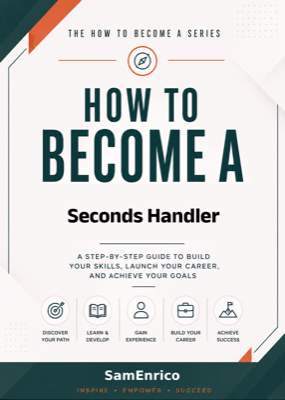
How to Become a Seconds Handler eBook
How to Become a Seconds Handler
How to Become a Seconds Handler
Formats
Free sample
Chapter 1: The $800 Billion Blind Spot...--–- The first time I saw a perfectly good espresso machine get thrown into a dumpster, I almost cried. It was a $1,200 Italian model, brushed stainless steel, warm to the touch because someone had unplugged it just minutes earlier. The reason for its execution? A small dent on the back panel—the side that faces the wall. The retail manager shrugged.
“Corporate writes these off. We don’t have a process for ‘slightly dented.’ It’s either full price or trash.” That day, I watched six more items—a vacuum cleaner with a scratched handle, a set of cookware with a missing lid, a lamp with a torn shade—follow the same fate. I asked if I could take them. He said no. Liability.
Policy. The way things have always been.That moment changed something in me. Not because I was an environmental activist or a bargain hunter by nature. I was simply a person who could not stand waste. And waste, I was about to discover, is a trillion-dollar industry hiding in plain sight.Welcome to the world of seconds handling.
You are about to learn how to turn other people’s trash into your treasure—not by luck, not by hustle, but by system. This book will teach you to see what 99 percent of the population walks past every day: the invisible economy of imperfection.The Spectacular Waste You Walk Past Every Day Let’s start with a number that will either terrify you or excite you: $800 billion. That is the estimated annual value of returned, overstocked, damaged-packaging, and off-specification goods generated by American retailers alone. Globally, the figure exceeds $1.2 trillion. To put that in perspective, $800 billion is more than the GDP of Switzerland, more than the entire global box office industry for a decade, more than the combined market capitalization of Starbucks, Nike, and Netflix.Where does all that money go?
Most of it evaporates. Retailers write off these goods as “shrink” or “inventory loss.” Liquidators buy them for pennies on the dollar. Insurers pay claims on salvage. And the goods themselves—still functional, still useful, still valuable—end up in landfills, recycling centers, or the hands of the very few people who know how to unlock their worth.Here is the reality that every seconds handler understands: a dented box is not a broken product. A missing power cord is not a dead appliance.
A customer return with one scuffed corner is not trash. These are assets that have been misclassified, mispriced, and mishandled. Your job—should you choose to accept it—is to become a value recovery engineer.What This Book Means by “Seconds” (A Critical Clarification)Before we go any further, we need to nail down our definition. The term “seconds” is used loosely across retail, manufacturing, and resale. Some people use it to mean any non-first-quality item.
Others restrict it to goods with only cosmetic flaws. In this book, we adopt a spectrum definition that will guide every decision you make, from sourcing to pricing to returns management.At one end of the spectrum, you have aesthetic seconds. These are products that function exactly as intended but look imperfect. Scratches on a smartphone case. A dent on a refrigerator’s side panel.
A torn box on a coffee maker. A missing instruction manual. These items are, for all practical purposes, new—except for how they appear. They represent the safest, most profitable category for the beginner seconds handler.In the middle of the spectrum, you have light functional damage. This is where the product works but not perfectly.
A blender whose speed dial is stiff. A laptop with a stuck key. A power tool missing its belt clip. A speaker with a crackle at maximum volume. These items require honesty in disclosure and skill in pricing, but they are absolutely sellable—often at excellent margins.At the far end of the spectrum, you have goods that are not seconds at all.
These include: products with severe water damage (corroded electronics, swollen particleboard), items with missing safety guards (a table saw without its blade guard), anything with exposed wiring or broken glass, and products that have been recalled or deemed hazardous. These are not opportunities. These are liabilities. This book will teach you to identify and avoid them quickly.This spectrum-based definition resolves a common confusion found in other resale guides. One source will tell you that water-damaged goods are “seconds.” Another will say they are “scrap.” The truth depends on the degree of damage.
A sprinkler-damaged box with a dry product inside? That is an aesthetic second. A smartphone that sat in a puddle for three days? That is e-waste. You will learn the difference.The Psychology of the Bargain Hunter: Why Your Customers Behave the Way They Do To sell seconds effectively, you must understand the person on the other side of the transaction.
The bargain hunter is not a monolith. They come in several varieties, each with distinct motivations, tolerances for risk, and buying triggers.The Treasure Hunter is driven by dopamine. They buy not because they need an item but because they love the thrill of finding a deal. They will spend an hour scrolling through your e Bay listings, comparing photos, zooming in on scratches, convincing themselves that they have discovered a hidden gem. These customers are your best repeat buyers—if you reward their hunting instinct with honest listings and fair prices.The Pragmatist needs a functional item and wants to pay as little as possible for it.
They do not care about dents or scratches as long as the product works. They will buy a refrigerator with a crushed side panel because they are putting it in a garage where no one will see it. These customers are low-drama, high-volume, and extremely loyal—provided you never sell them something that fails.The Reseller is buying from you to sell to someone else. They are the most demanding customer in terms of grading consistency and margin compression. They will buy your pallets of mixed seconds, sort them, and sell the best units at retail.
These customers become your wholesale buyers once you scale—a topic covered in depth in Chapter 12.The Problem Customer exists in every business, but seconds handling attracts a specific subtype: the buyer who wants new quality at used prices. They will buy a “cosmetic second” and then complain about the very scratch you photographed. They will demand a refund for a missing part that was clearly listed as absent. This chapter is not about how to handle them—that is Chapter 11—but about how to recognize them early. Red flags include: asking “what’s the lowest you’ll take” before asking any condition questions, demanding additional photos of trivial details, and leaving neutral feedback on other sellers’ profiles.
Trust your gut.Understanding these psychological drivers is not academic. It directly informs your pricing strategy (Chapter 10), your channel selection (Chapter 9), and your returns policy (Chapter 11). A treasure hunter will pay more than a pragmatist if you present the item as a discovery. A reseller will pay less but buy in bulk. You will learn to segment your…
This is the end of the free sample. Get the eBook to keep going. Buy now
About this book
Details
- Author
- Ginn Lorriane
- Publisher
- SamEnrico
- Language
- English
- ISBN
- 9781506056609
- Genre
- Non-Fiction, Informative, Educational
- Released
- 2026-06-02
- Pages (approx.)
- 150
- Available as
- eBook, Paperback, Audiobook

Read better in the ZLOADR app
Your eBooks on your phone or tablet. Sign in with your SamEnrico account and start reading.
More by Ginn Lorriane
 Dumbbell Only Strength GuideGinn Lorriane$11.99
 Genetic Testing for SchizophreniaGinn Lorriane$11.99
 Workplace Esteem HandbookGinn Lorriane$11.99
 Self Worth Adoption Origins GuideGinn Lorriane$11.99
 Meiji Annexation of Korea GuideGinn Lorriane$11.99
 The Moonlit Vow: A Yokai’s Forbidden LoveGinn Lorriane$11.99
 The Lost Fleet of the Chola Dynasty: Surviving the Bay of BengalGinn Lorriane$11.99
 Kratochvilite MiningGinn Lorriane$11.99
 Non Compete Trap PrimerGinn Lorriane$12.99
 Data Cleaning for EconGinn Lorriane$12.99
 Understanding Glossopalatine Ankylosis Micrognathia Ear AnomaliesGinn Lorriane$17.99
You may also like
 Hong Kong Handover 1997Dunn Johnnie$11.99
 Zumba For Postnatal Recovery CourseNeal Christian$11.99
 Zumba for BeginnersLadner Nikia$11.99
 YouTube Comment Mining GuideHumes Pandora$12.99
 Worry Box MeditationCarlin Rudy$11.99
 Workplace Stress MeditationNguyen Lynn$11.99
 Workplace Stress and Sleep RepairHawley Ivory$11.99
 Workplace Perfectionism CureDelaney Jeffry$11.99
 Workplace Injustice Anger GuideWallen Isabelle$11.99
 Work Addiction and Burnout LinkGreenwood Ester$11.99
 Women in Yoga and WellnessBeattie Galina$11.99
 Women in Stand Up ComedyChun Evangeline$11.99