
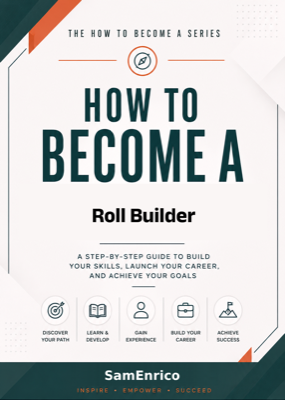
How to Become a Roll Builder Paperback
How to Become a Roll Builder
by Fusco Marth
How to Become a Roll Builder
Formats
Free sample
Chapter 1: The Roll Worth Making...--–- The first roll I ever built was a disaster. Not the kind of disaster that makes for a funny story later, but the kind that makes you question why you bothered trying in the first place. I was nineteen, working at a small sushi counter in a strip mall, and my teacher—a patient man named Hiro who had been rolling for thirty-eight years—watched me struggle for ten minutes before gently taking the mat from my hands. He unrolled my creation, laid the nori flat, and pointed to the rice. "You are fighting it," he said.
"A roll is not something you conquer. It is something you convince." Then he rolled a perfect cylinder in seven seconds, set it in front of me, and walked away. That moment—the gap between my seven minutes and his seven seconds—is why you are reading this book.This is Chapter 1 of "How to Become a Roll Builder." If you picked up this book, you already suspect that roll building is more than a mechanical skill. You sense that there is something almost philosophical about wrapping one material around another and calling it finished. You are right.
But before we talk about philosophy, we need to talk about something harder: honesty.Most books about hands-on skills lie to you in the first chapter. They tell you that anyone can learn, that practice makes perfect, that all you need is passion. Those statements are true in the same way that "eating less makes you thinner" is true—technically accurate but useless without specifics. Here is the specific truth: roll building is a craft of subtraction. You do not add skill.
You remove error. Every failed roll teaches you something about tension, pressure, or alignment that you were doing wrong. The successful rolls simply confirm what you already know. If you are not failing regularly, you are not learning.This chapter has one job: to help you decide which roll is worth making. Not every roll builder is the same.
A person who rolls sushi for a living has almost nothing in common with a person who rolls industrial tape, except for the geometry of their finished product. And a person who rolls cigars operates in a completely different universe of humidity, leaf quality, and regulation. You cannot master all of them. You must choose one. This chapter will help you choose.The Four Worlds of Roll Building After interviewing over sixty professional roll builders across twelve countries, I have found that the craft divides neatly into four industries.
Each has its own tools, materials, customers, and economics. Each rewards a different personality. And each has a different path to mastery.Culinary Rolls: The Art of Impermanence The culinary world includes sushi, spring rolls, cinnamon rolls, roulades, stuffed pastas rolled into shape, and any other food item that begins flat and ends cylindrical. This is the most accessible entry point for beginners because the materials are cheap and widely available. A bamboo mat costs five dollars.
Nori sheets cost pennies. Rice and fillings are already in your kitchen. You can start practicing today with almost no investment.But accessibility comes with a hidden cost: impermanence. A sushi roll lasts about four hours before the rice hardens or the noria becomes chewy. A cinnamon roll is gone in ten minutes.
You cannot stockpile your work, sell it weeks later, or admire it on a shelf. Your skill disappears into someone's mouth. For some people, this is liberating. For others, it is deeply unsatisfying.The culinary roll builder needs three…
This is the end of the free sample. Get the Paperback to keep going. Buy now
About this book
Details
- Author
- Fusco Marth
- Publisher
- SamEnrico
- Language
- English
- ISBN
- 9781506032627
- Genre
- Non-Fiction, Informative, Educational
- Released
- 2026-04-25
- Pages (approx.)
- 144
- Available as
- eBook, Paperback, Audiobook

Read better in the ZLOADR app
Your eBooks on your phone or tablet. Sign in with your SamEnrico account and start reading.
More by Fusco Marth
 Self Esteem for Late Bloomers LoveFusco Marth$11.99
 Emotional Role Models StudyFusco Marth$11.99
 Rental Lease Agreement GuideFusco Marth$11.99
 Sobriety Journal MethodFusco Marth$11.99
 Belgium Diamond HeistFusco Marth$11.99
 Chinese Family SeparationFusco Marth$11.99
 Sadhguru Jaggi VasudevFusco Marth$11.99
 Advisory Board Payments GuideFusco Marth$11.99
 The Unstoppable Lions: Cameroon's 1990 World Cup MiracleFusco Marth$11.99
 The Alchemists of Timbuktu: Unveiling the Lost Sciences of the SahelFusco Marth$11.99
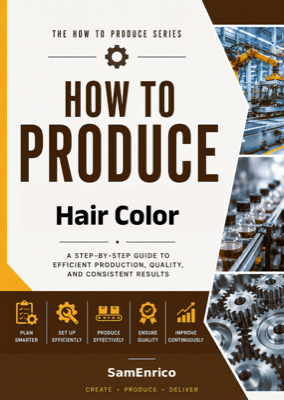 How to Produce Hair ColorFusco Marth$11.99
 Mastering The Art of IrelandFusco Marth$11.99