
Non-FictionInformativeEducational
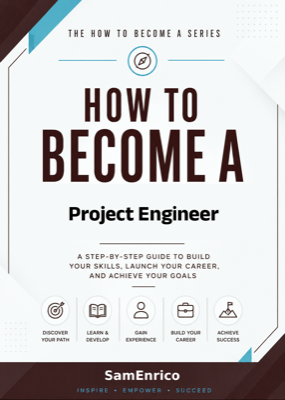
How to Become a Project Engineer
How to Become a Project Engineer
by Haller Amado
How to Become a Project Engineer
Formats
About this book
Free sample
Chapter 1: The Lynchpin Position--–- Every year, thousands of newly minted engineers walk through the doors of construction trailers, engineering firms, and industrial facilities with the same sinking feeling: they have four years of calculus, thermodynamics, and fluid mechanics in their heads, but absolutely no idea how a real project actually comes together. They can solve differential equations in their sleep. They can model stress distributions on a cantilever beam. But when a senior superintendent asks them why the concrete pour is delayed, or when a client demands to know why costs are running over, or when a vendor calls with a shipping emergency—they freeze. Not because they aren’t smart.
Because no one ever taught them the job they’re about to do.This book exists to fix that.If you are reading these words, you have likely just accepted a position as a project engineer, or you are aiming to become one. You may be wondering what the role actually entails. Perhaps you’ve scrolled through job descriptions that list “coordinate activities,” “manage interfaces,” and “support the project manager” without any concrete explanation of what those phrases mean in practice. Or maybe you are already in the role, drowning in emails, RFIs, and meeting minutes, wondering if anyone actually knows what you’re supposed to be doing.Here is the truth that nobody tells you in school: the project engineer is the single most important role in the entire project delivery system. Not the project manager.
Not the design lead. Not the construction superintendent. The project engineer.Why? Because the project engineer sits at the exact intersection where design meets reality, where planning meets execution, where promises meet performance. Designers draw perfect worlds where pipes never clash and concrete cures instantly.
Project managers track budgets and schedules from a high altitude, often disconnected from the daily chaos. Construction crews execute with their hands and their experience, but they lack the technical authority to change drawings. Only the project engineer bridges all three. You are the nervous system of the project, carrying signals from the brain (design) to…
This is the end of the free sample. Get the eBook to keep going. Buy now
Contents
- Chapter 1
- Chapter 2
- Chapter 3
- Chapter 4
- Chapter 5
- Chapter 6
- Chapter 7
- Chapter 8
- Chapter 9
- Chapter 10
- Chapter 11
- Chapter 12
Details
- Author
- Haller Amado
- Publisher
- SamEnrico
- Language
- English
- ISBN
- 9781505931631
- Genre
- Non-Fiction, Informative, Educational
- Released
- 2026-05-11
- Pages (approx.)
- 139
- Available as
- eBook, Paperback, Audiobook

Read better in the ZLOADR app
Your eBooks on your phone or tablet. Sign in with your SamEnrico account and start reading.
More by Haller Amado
 Step Ten Morning Planning Inventory GuideHaller Amado$11.99
 Blood Pressure and MemoryHaller Amado$11.99
 Letting Go of Hope for ChangeHaller Amado$11.99
 Listener Fatigue PreventionHaller Amado$11.99
 Understanding Anger Triggers TogetherHaller Amado$11.99
 Goal Tracker Dashboard GuideHaller Amado$11.99
 Guilt After Pet LossHaller Amado$11.99
 Charlemagne: The Hammer of the Franks and the Carolingian DawnHaller Amado$11.99
 The Silk Road Gambit: Han China's War of Expansion (111 BC)Haller Amado$11.99
 A Collector's Handbook to the Polski-fiat PolonezHaller Amado$11.99
 Growing AponogetonHaller Amado$11.99
 Pop Up Design and Build HandbookHaller Amado$12.99
You may also like
 Hong Kong Handover 1997Dunn Johnnie$11.99
 Zumba For Postnatal Recovery CourseNeal Christian$11.99
 Zumba for BeginnersLadner Nikia$11.99
 YouTube Comment Mining GuideHumes Pandora$12.99
 Worry Box MeditationCarlin Rudy$11.99
 Workplace Stress MeditationNguyen Lynn$11.99
 Workplace Stress and Sleep RepairHawley Ivory$11.99
 Workplace Perfectionism CureDelaney Jeffry$11.99
 Workplace Injustice Anger GuideWallen Isabelle$11.99
 Work Addiction and Burnout LinkGreenwood Ester$11.99
 Women in Yoga and WellnessBeattie Galina$11.99
 Women in Stand Up ComedyChun Evangeline$11.99