

Non-FictionInformativeEducational
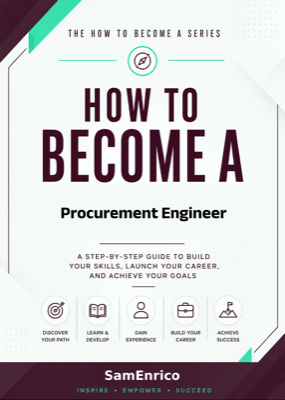
How to Become a Procurement Engineer eBook
How to Become a Procurement Engineer
by Geary Lenny
How to Become a Procurement Engineer
Formats
Free sample
Chapter 1: The Unseen Bridge...--Two weeks into his new role as a junior buyer at a mid-sized industrial pump manufacturer, Marcus Chen sat in a windowless conference room, staring at a $4.2 million contract he was about to approve. The supplier—a well-known casting house in Thailand—had provided excellent references, competitive pricing, and ISO 9001 certification. The logistics manager had signed off. Finance had signed off. Even the VP of Operations had initialed the last page.
All that remained was Marcus's signature.But something nagged at him. The technical specification—a dense, 47-page engineering drawing for a pump housing—contained a symbol he didn't fully understand. It looked like a circle with a crosshair and a number: Ø0.5 at MMC. Marcus had studied mechanical engineering in university, but GD&T—Geometric Dimensioning and Tolerancing—was a subject he had crammed for exams and promptly forgotten. Now, staring at that symbol, he had a choice: sign the contract like everyone expected, or admit he didn't know what he was looking at.He chose the second option.
He walked down the hall to the chief engineer's office and asked, "What does this actually mean?"The chief engineer's face went pale. He pulled the drawing closer, traced the symbol with his finger, and said, "This callout means the mounting flange must be perpendicular to the bore within half a millimeter at maximum material condition. If the supplier ignores this—and many do—the pump will vibrate catastrophically after about 2,000 hours of operation. We'd have a warranty claim larger than the contract value."Marcus asked, "Did anyone check this with the supplier?"A silence stretched across the room. No one had.Marcus picked up the phone and called the Thai supplier.
The sales engineer on the other end hesitated, then admitted, "We don't usually hold that tolerance on pump housings. Our standard is Ø1.5 at MMC. Would that be acceptable?"It would not. Marcus flagged the contract for review. The supplier was required to requote with the correct manufacturing process—a more expensive machining operation that added $600,000 to the contract.
When the VP of Operations heard the news, he called Marcus into his office and said, "You just saved us from a disaster no one saw coming. What do you even call what you do? You're not really a buyer. You're not really an engineer."Marcus said, "I don't know what it's called. But I want to do more of it."That moment—the phone call, the VP's question, the unnamed role—is the starting point of this book.
Marcus had stumbled into a profession that, until recently, did not have a name. It is now called Procurement Engineering. And it is one of the most valuable, misunderstood, and rapidly growing career paths in modern industry.The Myth You Must Unlearn Immediately Let me begin with a direct challenge to everything you think you know about procurement. If you search online for "how to become a procurement professional," you will find thousands of articles about negotiation tactics, supplier scorecards, and cost reduction. If you search for "how to become an engineer," you will find millions of pages about CAD software, calculus, and design principles.
But almost nothing exists at the intersection of these two worlds. That is not an accident. It is a failure of career guidance, corporate training, and academic curriculum development.The myth is this: Procurement is administrative. Engineering is technical. These are separate tracks that never meet.This myth persists because most organizations still separate purchasing and engineering into distinct silos.
Buyers sit in one department, focused on price, delivery, and supplier contracts. Engineers sit in another, focused on design, testing, and quality. When these two groups fail to communicate—and they almost always fail to communicate—the organization suffers from expensive mismatches, quality escapes, and missed opportunities. The buyer buys a cheaper component that doesn't fit. The engineer designs a component that cannot be manufactured economically.
The supplier exploits the gap between them.The Procurement Engineer is the bridge across that gap. This role does not exist to replace buyers or engineers. It exists to connect them. A Procurement Engineer speaks the language of engineers—tolerances, materials, fatigue limits, manufacturing processes—and the language of buyers—cost structures, lead times, payment terms, supply contracts. More importantly, a Procurement Engineer knows how to translate between these languages.
When an engineer says "the flange must be perpendicular within 0.1 millimeters," the Procurement Engineer asks, "What does that cost? What happens if we relax it to 0.2? Can the supplier measure 0.1 reliably?" When a buyer says "we need a 15% cost reduction," the Procurement Engineer asks, "Which tolerances can we adjust to achieve that without compromising safety?"Marcus Chen did not know that his phone call to the Thai supplier was the defining act of a Procurement Engineer. He simply refused to sign a contract he did not fully understand. That refusal—that willingness to admit ignorance and seek answers—is the fundamental disposition of this profession.The T-Shaped Professional: Depth and Breadth in One Person Every Procurement Engineer is a "T-shaped" professional.
This metaphor, borrowed from design thinking and innovation management, perfectly captures the dual demands of the role.The vertical leg of the T represents depth. You must have deep, demonstrable expertise in at least one engineering domain. This does not mean you need to be a licensed professional engineer (though that helps). It means you must understand how things are made, how they fail, and how they perform under real-world conditions. Your depth could be in mechanical engineering (casting, forging, machining, welding), electrical engineering (PCB assembly, embedded systems, power electronics), civil engineering (structural loads, concrete mixtures, soil mechanics), or chemical engineering (reaction vessels, material compatibility, corrosion).
Without depth, you cannot evaluate whether a supplier's proposed process will actually produce a part that meets specifications. You will be dependent on engineers to check your work—and engineers are not always available when a supplier calls with a "good deal."What does depth look like in practice? Consider a Procurement Engineer sourcing injection-molded plastic components for a medical device. Depth means knowing that injection molding requires draft angles (tapered surfaces) to eject parts from the mold. If an engineer designs a part without sufficient draft, the Procurement Engineer can flag the issue before the RFQ goes to suppliers—saving weeks of rework.
Depth means knowing that different plastics (ABS, polycarbonate, nylon) have different shrink rates, and that the mold must be cut to compensate. If a supplier quotes a part using the wrong shrink rate, the Procurement Engineer can catch the error. Depth means knowing that glass-filled nylon is abrasive and will wear out standard tooling faster than unfilled plastics—affecting long-term pricing and lead times.The horizontal bar of the T represents breadth. You must have broad, working knowledge across supply chain functions that extend beyond engineering. This includes logistics (shipping modes, Incoterms, customs documentation), inventory management (safety stock, economic order quantity, consignment), quality systems (ISO 9001, AS9100, IATF 16949, Six Sigma), legal contracting (liability clauses, intellectual property, warranties), and finance (payment terms, currency hedging, supplier financial analysis).
Without breadth, you cannot optimize across the entire value stream. You might negotiate a great price on a component, only to…
This is the end of the free sample. Get the eBook to keep going. Buy now
About this book
Details
- Author
- Geary Lenny
- Publisher
- SamEnrico
- Language
- English
- ISBN
- 9781505930771
- Genre
- Non-Fiction, Informative, Educational
- Released
- 2026-05-18
- Pages (approx.)
- 159
- Available as
- eBook, Paperback, Audiobook

Read better in the ZLOADR app
Your eBooks on your phone or tablet. Sign in with your SamEnrico account and start reading.
More by Geary Lenny
 Cognitive Behavioral Tools for SobrietyGeary Lenny$11.99
 Low T Symptoms Recognition GuideGeary Lenny$11.99
 NVC Daily Practice GuideGeary Lenny$11.99
 Franchising Your Local Brand Across Borders Termination ProceduresGeary Lenny$11.99
 Post Vasectomy ReversalGeary Lenny$11.99
 Memory Diet And NutritionGeary Lenny$11.99
 Home Equity Conversion MortgageGeary Lenny$11.99
 Cocaine and HIV MedicationGeary Lenny$11.99
 The Visionary Builders of Great Zimbabwe: Stone, Sky, and SovereigntyGeary Lenny$11.99
 The Daredevil and the Devil: The Untold Story of the First Motorcycle Wall of Death (1920s)Geary Lenny$11.99
 Mastering The Art of Chun Kuk DoGeary Lenny$11.99
 EU VAT One Stop Shop HandbookGeary Lenny$12.99
You may also like
 Hong Kong Handover 1997Dunn Johnnie$11.99
 Zumba For Postnatal Recovery CourseNeal Christian$11.99
 Zumba for BeginnersLadner Nikia$11.99
 YouTube Comment Mining GuideHumes Pandora$12.99
 Worry Box MeditationCarlin Rudy$11.99
 Workplace Stress MeditationNguyen Lynn$11.99
 Workplace Stress and Sleep RepairHawley Ivory$11.99
 Workplace Perfectionism CureDelaney Jeffry$11.99
 Workplace Injustice Anger GuideWallen Isabelle$11.99
 Work Addiction and Burnout LinkGreenwood Ester$11.99
 Women in Yoga and WellnessBeattie Galina$11.99
 Women in Stand Up ComedyChun Evangeline$11.99