
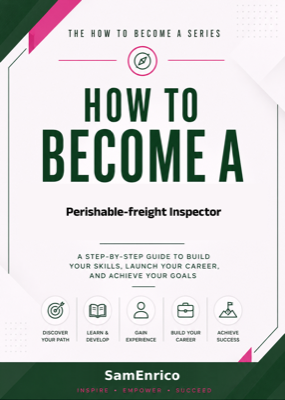
How to Become a Perishable-freight Inspector eBook
How to Become a Perishable-freight Inspector
How to Become a Perishable-freight Inspector
Formats
Free sample
Chapter 1: Beyond the Thermometer...--The first time you watch an entire shipping container of premium avocados—worth nearly $200,000 at retail—get bulldozed into a landfill because someone ignored a faulty door seal, you understand something profound about this profession. It is not about checking boxes. It is not about filling out forms in a heated office while sipping coffee. It is about standing in a freezing warehouse at two in the morning, flashlight in hand, knowing that your signature will determine whether a family of farmers gets paid, whether a supermarket chain can stock its shelves, and whether hundreds of tons of food become dinner or compost.This is the reality of the perishable-freight inspector. You are the last line of defense in a global cold chain that moves trillions of dollars worth of temperature-sensitive goods across oceans, highways, and railways every single year.
The world’s food supply—along with life-saving pharmaceuticals, fresh flowers, and specialty chemicals—depends on people who know how to spot a failing evaporator fan, interpret a suspicious data logger gap, and tell the difference between natural decay and carrier negligence. And yet, for such a critical role, there is remarkably little guidance on how to enter it, master it, and build a career from it.This book exists to fill that gap. It is not a dry technical manual, nor is it a collection of abstract regulations. It is a career roadmap built from the inside out, based on what actually works in the field, what employers are desperate to find, and what separates a mediocre inspector from the one who gets called back for every major shipment.Before we dive into the mechanics of container inspections, USDA grading standards, and digital forensics, we must first answer a more fundamental question: What exactly does a perishable-freight inspector do, why does it matter so much, and how do you know if this is the right path for you?The Cold Chain Unveiled To understand the inspector’s role, you must first understand the beast you are dealing with: the cold chain. This term refers to the temperature-controlled supply chain that moves perishable goods from their point of origin (a farm, a fishery, a pharmaceutical lab) to their final destination (a grocery store, a hospital, a restaurant).
The cold chain is not a single thing but a vast, interconnected system of refrigerated containers (called reefers), temperature-controlled warehouses, specialized trucks, cargo ships, and aircraft.Every link in this chain is vulnerable. A container that fails to pre-cool before loading. A power outage at a transshipment port. A poorly stacked pallet that blocks airflow. A door seal cracked just enough to let warm air seep in over a two-week ocean voyage.
Any one of these failures can destroy an entire shipment. And here is the truth that most people never realize: the vast majority of spoilage is not caused by freak accidents or natural disasters. It is caused by small, preventable errors that compound over time.That is where you come in.The perishable-freight inspector is the quality control checkpoint at critical junctures in this chain. You are the person who inspects the container before it is loaded, ensuring it is clean, functional, and properly calibrated. You are the person who examines the cargo itself, grading it against USDA standards, looking for signs of decay, contamination, or mishandling.
You are the person who downloads and interprets the data logger—the "black box" that records temperature, humidity, and runtime throughout the journey—to determine whether the carrier maintained the required conditions. And when something goes wrong, you are the person who documents the damage, assigns liability, and writes the report that will determine who pays.This is not a job for passive personalities. You will be the bearer of bad news on a regular basis. You will reject shipments that desperate buyers are waiting for. You will tell a trucking company that their $50,000 load of beef is condemned because their reefer unit failed and they did not have a backup plan.
You will face angry phone calls, legal challenges, and attempts to shift blame. But you will also be the person who catches a problem before it destroys a shipment, saving jobs, preventing waste, and keeping the supply chain moving.The Three Faces of the Inspector Before you can pursue this career, you need to understand that "perishable-freight inspector" is actually an umbrella term for several distinct roles. Each has its own certification requirements, work environments, and career trajectories. Knowing the difference will save you years of confusion.The first and most common role is the Container Inspector. This inspector focuses on the equipment rather than the product.
You will inspect refrigerated containers (reefers) before they are loaded, verifying that they meet ISO standards, that the refrigeration unit functions correctly, that the door seals are intact, that the data logger is operational, and that the interior is clean and dry. You will also inspect containers after they arrive, looking for signs of damage that occurred in transit. Container inspectors typically work for third-party inspection companies, shipping lines, or large logistics firms. The work is highly technical and requires mechanical aptitude, but it does not require deep knowledge of produce grading.The second role is the Product Grader. This inspector specializes in evaluating the perishable goods themselves.
You will open boxes, cut into fruit, examine meat for marbling and fat content, smell seafood for signs of decomposition, and assign official USDA grades (such as U.S. Extra Fancy, U.S. No. 1, U.S. Commercial, etc.).
Product graders are often employed by the USDA Agricultural Marketing Service, large wholesale distributors, or independent inspection agencies. This role demands extensive knowledge of USDA standards, sharp sensory skills, and the ability to make consistent, defensible judgments under time pressure.The third role is the Cargo Surveyor, which combines elements of both. The cargo surveyor inspects the entire shipment—container, product, documentation, and transit conditions—and produces a comprehensive report used for insurance claims, legal disputes, and quality assurance. Cargo surveyors are typically independent contractors or work for marine surveying firms. They are called in when a shipment has been rejected or damaged, and their report often determines liability in multimillion-dollar claims.
This is the highest-paid and most autonomous role, but it also carries the greatest legal responsibility.Throughout this book, we will cover the knowledge and skills required for all three roles, because the best inspectors are versatile. The container inspector who understands produce grading is more valuable. The product grader who knows how to troubleshoot a reefer alarm is more valuable. And the cargo surveyor who can do both is the one who commands premium rates and repeat clients.Why This Career Matters More Than Ever You might be wondering: Is there actually demand for this profession? The answer is a resounding yes, and that demand is growing faster than most people realize.The global cold chain market was valued at over $250 billion in recent years and is projected to grow at nearly fifteen percent annually.
What is driving this growth? Three major trends. First, consumers expect fresh, high-quality produce year-round, regardless of season or geography. You want strawberries in December? That shipment…
This is the end of the free sample. Get the eBook to keep going. Buy now
About this book
Details
- Author
- Greenlee Caroll
- Publisher
- SamEnrico
- Language
- English
- ISBN
- 9781505779738
- Genre
- Non-Fiction, Informative, Educational
- Released
- 2026-05-02
- Pages (approx.)
- 148
- Available as
- eBook, Paperback, Audiobook

Read better in the ZLOADR app
Your eBooks on your phone or tablet. Sign in with your SamEnrico account and start reading.
More by Greenlee Caroll
 Anger And Social Media GuideGreenlee Caroll$11.99
 Russian Mafia in Brighton BeachGreenlee Caroll$11.99
 The Food Industry Safety StockGreenlee Caroll$11.99
 Dream Journaling for TruckersGreenlee Caroll$11.99
 Brainstorming for WritersGreenlee Caroll$11.99
 Maulvi of Faizabad RevoltGreenlee Caroll$11.99
 British Empire Missionary WorkGreenlee Caroll$11.99
 Overcoming Procrastination for CodersGreenlee Caroll$11.99
 The Tet Offensive: Vietnam's Gambit of Fire and ShadowGreenlee Caroll$11.99
 The Last Telegram: Love Letters from the Battle of the AtlanticGreenlee Caroll$11.99
 How to Produce Power Steering FluidGreenlee Caroll$11.99
 The Photographer's Guide to Kirlian PhotographyGreenlee Caroll$11.99