
Non-FictionInformativeEducational
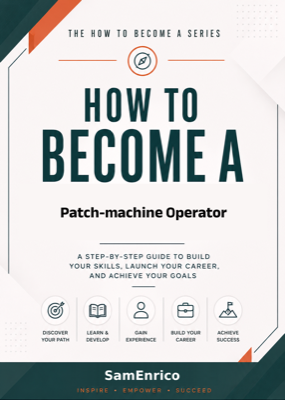
How to Become a Patch-machine Operator eBook
How to Become a Patch-machine Operator
How to Become a Patch-machine Operator
Formats
Free sample
Chapter 1: The Search Problem--A few years ago, a manager at a medium-sized electronics factory in Shenzhen posted a job opening for a "patch-machine operator." Three thousand miles away, a public works department in Ohio posted the exact same job title for someone to drive a Multihog pothole repair vehicle. And in Chicago, an envelope manufacturer used the same title to find someone to glue plastic windows onto greeting card envelopes.Three completely different jobs. One search term. One confused job seeker.If you typed "patch-machine operator" into a search engine right now, you would see results for circuit board assembly, road maintenance, and packaging manufacturing. You might find a job listing asking for "SMT patch machine experience" next to a listing asking for "asphalt patch machine certification." You would be forgiven for closing your browser and pursuing literally any other career.Do not close your browser.The ambiguity you just encountered is not a problem.
It is an opportunity hiding behind poor naming conventions. You have stumbled into a category of work that spans three high-value, low-visibility careers—each with its own salary ladder, each with its own training pipeline, and each desperately short of skilled operators. The fact that you are reading this book means you are already ahead of 99 percent of people who search for "patch-machine operator" and give up. You stayed. That tells me something about your persistence, and persistence is the single most valuable currency in this line of work.This chapter has three jobs.
First, to demystify the three careers that share this confusing title. Second, to help you figure out which one fits your personality, your location, and your financial goals. Third, to show you the roadmap ahead so you know exactly where this book is taking you.Let us start with the most important question: what actually is a patch machine?The Common Thread That Binds Three Different Worlds Despite the vast differences between electronics, asphalt, and envelopes, every patch machine in every industry shares one fundamental purpose. A patch machine takes a base material—a circuit board, a road, a piece of paper—and applies something onto it. That "something" could be a tiny electronic component, a layer of hot asphalt, or a transparent plastic window.
The machine "patches" one thing onto another.That is the common thread. Everything else is different.In electronics manufacturing, the "patch machine" is actually a pick-and-place machine, also called an SMT placement machine. It uses vacuum nozzles to pick up components smaller than a grain of sand and places them onto a circuit board with accuracy measured in microns. One mistake, and a twenty-thousand-dollar board becomes scrap.In road maintenance, the "patch machine" is a Multihog or patch planer—a heavy vehicle with attachments that mill out failed pavement, clean the hole, apply tack coat, and place new asphalt. One mistake, and a pothole returns within months or a worker gets hit by traffic.In packaging, the "patch machine" is a window patcher that applies clear plastic film to envelopes and boxes.
It runs at twenty thousand pieces per hour, and one mistake means glue bleeds through the window or the film wrinkles and the entire batch gets rejected.Three machines. Three industries. One title. And three very different career paths that all lead to a stable, skilled, and increasingly automated future.The rest of this chapter breaks down each path so you can make an informed choice before we dive into the technical details later in the book.Path One: SMT Electronics Patch Machine Operator The most technically demanding of the three paths, SMT electronics operation sits at the intersection of computer programming, fine motor skills, and materials science. If you have ever wondered how a smartphone fits a billion transistors onto a chip smaller than your fingernail, you have wondered about SMT.
The patch machine is the tool that makes modern electronics possible.What you will actually do. Your day starts with a computer screen. You load a program that tells the machine where to place each component. You check the feeder reels—tapes of resistors, capacitors, chips, and connectors—to make sure they are loaded correctly. You verify that the solder paste printer applied the right amount of paste.
Then you watch the machine work, moving at speeds that blur the placement head, placing twenty thousand components per hour while you monitor for errors.When something goes wrong—and something always goes wrong—you diagnose the problem. A missing component might mean a feeder jam. A tombstone defect (a component standing on end) might mean uneven heating in the reflow oven. A misalignment might mean the fiducial camera needs recalibration. You are not just a button pusher.
You are a detective.Where you will work. You will work indoors, usually in a climate-controlled cleanroom. The temperature stays around 72 degrees Fahrenheit, and humidity stays between 40 and 60 percent. Solder paste is sensitive to moisture and heat, so the environment is controlled as carefully as the machine. You will wear an ESD-safe smock, wrist strap, and heel grounders to prevent static discharge.
You will stand for most of your shift, though some machines have stools for programming work.The noise level is moderate—the whir of placement heads and the whine of vacuum pumps—but well below the threshold for hearing damage in most facilities. You will work near other operators on an assembly line, but the work is individual. Each operator runs their own machine.Where the jobs are. SMT jobs concentrate in regions with electronics manufacturing. In the United States, that means Silicon Valley, Austin, Boston, and the Research Triangle in North Carolina.
In Europe, look to Munich, Dublin, and the suburbs of London. In Asia, Shenzhen, Taipei, and Seoul dominate the market. If you live in a rural area with no electronics assembly nearby, this path may require relocation.Salary and growth. Entry-level operators start between thirty-five thousand and fifty-five thousand dollars per year, depending on location and experience. With two years of experience and IPC certification, you can expect forty-five thousand to sixty-five thousand.
Lead operators and supervisors earn fifty-five thousand to seventy-five thousand. Field service engineers who travel to install and repair machines earn eighty thousand to one hundred ten thousand.The job growth outlook is steady. Electronics are not going away. Every car, phone, medical device, and appliance contains circuit boards. As components get smaller and placement speeds increase, skilled operators become more valuable, not less.Who this path fits.
You should consider SMT if you enjoy computer work, have steady hands, and can tolerate repetitive precision tasks without losing focus. You do not need a programming background, but you must be comfortable learning machine interfaces. You should be the kind of person who notices when something is one millimeter out of place and cannot let it go.Path Two: Road Maintenance Patch Machine Operator The most physically demanding of the three paths, road maintenance puts you outside in all weather conditions, operating heavy machinery near live traffic. If you like variety—different jobsites, different problems, different weather—this path offers the most variety of any patch machine career.What you will actually do. You start your day with a vehicle inspection.…
This is the end of the free sample. Get the eBook to keep going. Buy now
About this book
Details
- Author
- Mcdonough Vertie
- Publisher
- SamEnrico
- Language
- English
- ISBN
- 9781505777123
- Genre
- Non-Fiction, Informative, Educational
- Released
- 2026-06-02
- Pages (approx.)
- 131
- Available as
- eBook, Paperback, Audiobook

Read better in the ZLOADR app
Your eBooks on your phone or tablet. Sign in with your SamEnrico account and start reading.
More by Mcdonough Vertie
 Overland South America Altiplano ExpeditionMcdonough Vertie$11.99
 Low Carb Pasta Alternatives GuideMcdonough Vertie$11.99
 The Walking Meditation and GratitudeMcdonough Vertie$11.99
 Minimalist Muscle BuildingMcdonough Vertie$11.99
 The Golden Debaters: Timbuktu’s Intellectual RenaissanceMcdonough Vertie$11.99
 How to Produce Camping and Hiking EquipmentMcdonough Vertie$11.99
 Integrations DeveloperMcdonough Vertie$11.99
 Derivative Hedge Accounting FormulasMcdonough Vertie$12.99
You may also like
 Hong Kong Handover 1997Dunn Johnnie$11.99
 Zumba For Postnatal Recovery CourseNeal Christian$11.99
 Zumba for BeginnersLadner Nikia$11.99
 YouTube Comment Mining GuideHumes Pandora$12.99
 Worry Box MeditationCarlin Rudy$11.99
 Workplace Stress MeditationNguyen Lynn$11.99
 Workplace Stress and Sleep RepairHawley Ivory$11.99
 Workplace Perfectionism CureDelaney Jeffry$11.99
 Workplace Injustice Anger GuideWallen Isabelle$11.99
 Work Addiction and Burnout LinkGreenwood Ester$11.99
 Women in Yoga and WellnessBeattie Galina$11.99
 Women in Stand Up ComedyChun Evangeline$11.99