
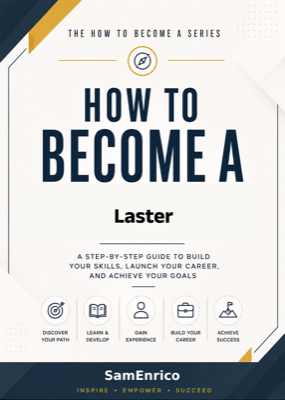
How to Become a Laster eBook
How to Become a Laster
How to Become a Laster
Formats
Free sample
Chapter 1: The Long-Keeping Pear–- In the winter of 1818, a horticulturist named William Cobbett sat down to write about fruit. Not exotic fruit, mind you—he wrote about the humble English pear, the kind that grew in ordinary orchards on ordinary soil. He described many varieties, their flavors and textures, their seasons of ripening. But one phrase he wrote has echoed across two centuries, waiting for someone to notice its deeper meaning. Cobbett described a particular pear as "commonly a long laster."A long laster.
Not the sweetest pear. Not the largest or most beautiful pear. Not the pear that ripened fastest or commanded the highest price at market. Just the pear that lasted—that remained fresh and edible long after other pears had rotted into the soil. While the flashier fruits came and went, the long laster stayed.
It outlasted them all not through brilliance, but through durability.That pear is the central metaphor for everything you are about to read.The Question Nobody Asks We live in a culture obsessed with speed. We want to lose twenty pounds in two weeks, master a language in three months, build a million-dollar business in a year. The books on our shelves promise transformation at breakneck pace: The Four-Hour Work Week, Thirty Days to a Better You, The One-Week Diet. We celebrate the teenager who becomes a billionaire before turning thirty, the athlete who wins gold in their first Olympics, the entrepreneur whose startup exits for nine figures before they can legally rent a car.But here is the question nobody asks—the question that changes everything:What if you are not meant to be the fastest? What if you are meant to be the one who lasts?This question lands differently depending on who you are.
For some of you, it will feel like a relief—a permission slip to stop sprinting and start pacing yourself for the long run. For others, it will feel like a challenge—an accusation that you have been chasing the wrong metrics, measuring yourself against the wrong people. For a few, it might feel like an identity crisis—a sudden realization that everything you thought you wanted (speed, flash, early success) is actually a trap that leads to burnout, not fulfillment.I wrote this book for all of you.The Three Meanings of "Laster"Before we can become something, we must understand what it means. The word "laster" is rare in modern English—so rare that most spell-checkers will flag it as an error. But rarity is not the same as insignificance.
Some of the most powerful words are the ones we have forgotten, the ones that carry ancient wisdom in their syllables.The dictionary gives us three distinct meanings of "laster," and each one illuminates a different facet of what it means to endure.Meaning One: The Endurer The most straightforward definition: a laster is someone who lasts. Merriam-Webster defines it as "someone or something that lasts for a notably long time." Collins adds that it is "a person or thing that endures." This is the core meaning—the one that will anchor everything else. A laster persists. A laster remains. A laster outlasts.But notice what this definition does not say.
It does not say the laster is the most talented. It does not say the laster is the most intelligent, the most connected, the most privileged, or the most fortunate. It says only that the laster lasts. Which means that lasting is a skill available to anyone who is willing to develop it. You cannot will yourself into genius.
You cannot will yourself into a different IQ or a different family background. But you can will yourself into lasting. The door is open to everyone.Meaning Two: The Long-Keeping Thing This is the definition that Cobbett captured in 1818. A laster can also be an object—specifically, an object that remains in good condition for an unusually long time. A fruit that does not rot.
A vegetable that does not wilt. A flower that does not fade. In the horticultural literature of the eighteenth and nineteenth centuries, growers would speak of "long lasters" as prized varieties precisely because they could be stored through the winter or shipped long distances without spoiling.This meaning adds something crucial to our understanding. It tells us that lasting is not merely about duration —surviving for a long time. It is also about quality —remaining fresh, functional, and valuable across that duration.
A dry, withered, hollow pear might technically "last" on a shelf for months, but no one would call it a long laster. The long laster stays good. It retains its essential qualities. It remains useful, nourishing, even desirable long after its peers have turned to compost.You will find this distinction matters enormously in your own life. Anyone can survive.
Anyone can drag themselves through the motions, hollow-eyed and exhausted, counting down the days until retirement or death. That is not lasting. That is merely existing. A true laster does not just survive; they thrive across time. They remain engaged, effective, and energized year after year while others burn out, check out, or fade away.Meaning Three: The Shoemaker's Tool The third definition takes us into the workshop.
In shoemaking, a "last" is the foot-shaped mold around which a shoe is constructed. The laster was the worker who stretched the leather around that mold, shaping the raw material into something durable, functional, and beautiful.This is the most unexpected meaning, and perhaps the most profound. A laster is not merely someone who possesses durability. A laster is someone who crafts durability—who takes raw materials (a life, a career, a set of habits) and shapes them deliberately around a solid form until they become strong.The shoemaker's last gives structure to the leather. Without it, the shoe would be shapeless, useless, unable to withstand the stress of walking.
The laster's job is not glamorous. It involves patient, repetitive work—stretching, tacking, shaping, checking, adjusting. But without the laster, there is no shoe that lasts.You are the laster of your own life. You are stretching and shaping the raw materials of your days around the "last" of your deepest values and highest commitments. And the question this book will answer is simple: What kind of laster will you be?The Cultural Conspiracy Against Lasting If lasting is so valuable, why do so few people pursue it?
Why do we celebrate sprinters while ignoring marathoners? Why do we build systems that reward speed and punish durability?The answer is that we live inside a cultural conspiracy against lasting—a set of invisible beliefs and incentives that push us toward burnout, not endurance. Once you see this conspiracy, you cannot unsee it. And once you see it, you can begin to resist it.The Conspiracy of Overnight Success The first layer of the conspiracy is the myth of the overnight success. Every week, some media outlet runs a story about a twenty-something founder who sold their company for a hundred million dollars, or a musician who topped the charts with their debut album, or an author whose first novel became a bestseller.What these stories never tell you is the decade…
This is the end of the free sample. Get the eBook to keep going. Buy now
About this book
Details
- Author
- Dyson Roselyn
- Publisher
- SamEnrico
- Language
- English
- ISBN
- 9781505753165
- Genre
- Non-Fiction, Informative, Educational
- Released
- 2026-04-26
- Pages (approx.)
- 112
- Available as
- eBook, Paperback, Audiobook

Read better in the ZLOADR app
Your eBooks on your phone or tablet. Sign in with your SamEnrico account and start reading.
More by Dyson Roselyn
 Restaurant Kitchen Anger ControlDyson Roselyn$11.99
 Focus Accountability Partner System CourseDyson Roselyn$11.99
 Indian Agent Shift Differential GuideDyson Roselyn$11.99
 The Diet and Testosterone RestorationDyson Roselyn$11.99
 Management Essay AI GuideDyson Roselyn$11.99
 Michelangelo’s Marble Magic: Carving Stories in StoneDyson Roselyn$11.99
 Biomedical Equipment RepairDyson Roselyn$11.99
 YouTube End Screens and Cards GuideDyson Roselyn$12.99
 Orthodontic Aligner M&ADyson Roselyn$12.99
 Understanding Poliomyelitis (Polio)Dyson Roselyn$17.99