
Non-FictionInformativeEducational
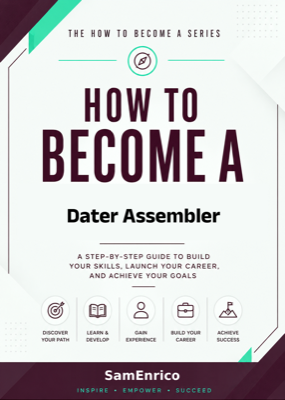
How to Become a Dater Assembler
How to Become a Dater Assembler
by Goff Nakesha
How to Become a Dater Assembler
Formats
About this book
Free sample
Chapter 1: The Dashboard Lie--Maria stared at her screen. It was 10:47 on a Tuesday morning, and she had forty-seven Excel files open across three monitors. The eighteenth file—a CSV export from Salesforce—had just crashed Excel for the fourth time that day. She watched the spinning beach ball and felt something she couldn't quite name. It wasn't frustration anymore.
It was something closer to resignation.Her manager, Derek, had emailed at 8:13 AM: "Need Q3 retention numbers by EOD. Board meeting moved to Thursday. Make sure they're accurate."Maria knew the numbers were somewhere. She had pulled the Salesforce report yesterday—the one called "Opportunities by Close Date." She had pulled the Zendesk ticket data last week. She had the product analytics from Amplitude in a third folder.
Somewhere in the swamp of CSVs, there was a single number that would answer Derek's question. But she couldn't find it. More precisely, she couldn't assemble it.The spinning beach ball stopped. The file opened. Maria looked at 94,000 rows of opportunity data.
The Close Date column had three different date formats. The Status column had seventeen variations of "Closed Won," including "closed won," "Closed Won," "Closed - Won," and "closed won (verified)." The Amount column had negative numbers that made no sense. And the Customer ID column had nulls in 12 percent of rows.Maria closed the file. She opened a new one. She started again.The Identity Trap If you are reading this book, you have been Maria.
You have sat in front of messy data, knowing the answer is somewhere inside it, unable to get it out. You have been told that your job is to "analyze data" or "build dashboards" or "support business intelligence." But those titles are lies. They describe what you consume, not what you build.Let me tell you what you actually are. You are a Dater Assembler.The word "dater" matters. Every piece of data you will ever touch has a timestamp or a date associated with it—a creation date, a modification date, an event date, a reporting date.
Those dates are the most frequently broken, most commonly misunderstood, and most critically important assets in any data pipeline. When…
This is the end of the free sample. Get the eBook to keep going. Buy now
Contents
- Chapter 1
- Chapter 2
- Chapter 3
- Chapter 4
- Chapter 5
- Chapter 6
- Chapter 7
- Chapter 8
- Chapter 9
- Chapter 10
- Chapter 11
- Chapter 12
Details
- Author
- Goff Nakesha
- Publisher
- SamEnrico
- Language
- English
- ISBN
- 9781505739671
- Genre
- Non-Fiction, Informative, Educational
- Released
- 2026-05-04
- Pages (approx.)
- 133
- Available as
- eBook, Paperback, Audiobook

Read better in the ZLOADR app
Your eBooks on your phone or tablet. Sign in with your SamEnrico account and start reading.
More by Goff Nakesha
 Rib Pain Meditation GuideGoff Nakesha$11.99
 Networking for Sales ProfessionalsGoff Nakesha$11.99
 Clutter and Spend ConnectionGoff Nakesha$11.99
 Cycling Time Trial Hypnosis GuideGoff Nakesha$11.99
 Press Release Quick ReferenceGoff Nakesha$11.99
 The Layoff Survival PlanGoff Nakesha$11.99
 Morning Meditation for AnticipatoryGoff Nakesha$11.99
 Making Mistakes LiberatingGoff Nakesha$11.99
 Indian Migrant Worker StoryGoff Nakesha$11.99
 Steel Titans of the Pacific: The Birth of Carrier Warfare (1942)Goff Nakesha$11.99
 The Tides of Timbuktu: How African Mathematicians Charted the CosmosGoff Nakesha$11.99
 How to Produce Bean SproutsGoff Nakesha$11.99
You may also like
 Hong Kong Handover 1997Dunn Johnnie$11.99
 Zumba For Postnatal Recovery CourseNeal Christian$11.99
 Zumba for BeginnersLadner Nikia$11.99
 YouTube Comment Mining GuideHumes Pandora$12.99
 Worry Box MeditationCarlin Rudy$11.99
 Workplace Stress MeditationNguyen Lynn$11.99
 Workplace Stress and Sleep RepairHawley Ivory$11.99
 Workplace Perfectionism CureDelaney Jeffry$11.99
 Workplace Injustice Anger GuideWallen Isabelle$11.99
 Work Addiction and Burnout LinkGreenwood Ester$11.99
 Women in Yoga and WellnessBeattie Galina$11.99
 Women in Stand Up ComedyChun Evangeline$11.99