
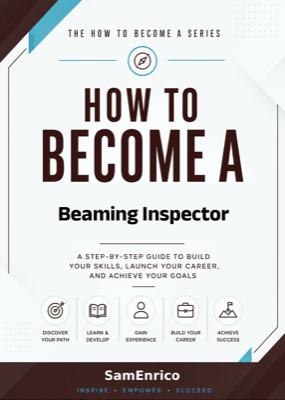
How to Become a Beaming Inspector
How to Become a Beaming Inspector
How to Become a Beaming Inspector
Formats
About this book
Free sample
Chapter 1: Beyond the Magnifying Glass--The first time someone tells you they work as a Beaming Inspector, you will almost certainly imagine the wrong thing. They might picture a person squinting through an eyepiece, slowly rotating a polished metal part under harsh industrial lighting, searching for invisible scratches that could spell disaster. They might imagine someone with a clipboard, checking boxes, performing repetitive tasks that require more patience than skill. They might wonder why such a job still exists in an age of automation, artificial intelligence, and cameras that can count atoms.All of these assumptions are wrong, and understanding why they are wrong is the first and most important step toward entering this field.This chapter exists to burn away the misconceptions that surround the Beaming Inspector role. It will give you a precise, functional definition of what these professionals actually do, where they work, why they matter, and how they fit into the broader manufacturing ecosystem.
By the time you finish these pages, you will understand not just the job description but the economic and engineering logic that keeps this role alive even as factories become smarter and more automated.Let us begin with the name itself, because the term "Beaming Inspector" carries a history that explains much about the role's actual nature.The Origin of the Title and What It Reveals The term "beaming" in this context has nothing to do with lasers, light beams, or any form of radiation. It is an old manufacturing term that predates digital measurement by nearly a century. In traditional machine shops and foundries, a "beam" referred to a reference bar or straight edge made of hardened steel, precisely ground to an exact flatness tolerance. Before the invention of coordinate measuring machines and optical comparators, inspectors would place these beams against surfaces to check for warping, twist, or curvature.To be a Beaming Inspector originally meant someone who could use these reference bars to verify that a casting, forging, or machined part had not deviated from its intended geometry. The beam was the tool, and the inspector was the person who knew how to use…
This is the end of the free sample. Get the eBook to keep going. Buy now
Contents
- Chapter 1
- Chapter 2
- Chapter 3
- Chapter 4
- Chapter 5
- Chapter 6
- Chapter 7
- Chapter 8
- Chapter 9
- Chapter 10
- Chapter 11
- Chapter 12
Details
- Author
- Cuellar Teisha
- Publisher
- SamEnrico
- Language
- English
- ISBN
- 9781505778021
- Genre
- Non-Fiction, Informative, Educational
- Released
- 2026-05-02
- Pages (approx.)
- 147
- Available as
- eBook, Paperback, Audiobook

Read better in the ZLOADR app
Your eBooks on your phone or tablet. Sign in with your SamEnrico account and start reading.
More by Cuellar Teisha
 Self Talk For Boundary SettingCuellar Teisha$11.99
 Caregiver Nutrition GuideCuellar Teisha$11.99
 No Phone Morning RoutineCuellar Teisha$11.99
 Eat That Frog First GuideCuellar Teisha$11.99
 Alcoholism in Veterans GuideCuellar Teisha$11.99
 The Sarah Winnemucca StoryCuellar Teisha$11.99
 Vagus Nerve Connection GuideCuellar Teisha$11.99
 Meditation for Dental PainCuellar Teisha$11.99
 The Phantom of the Silk Road: A Forger’s LegacyCuellar Teisha$11.99
 Nefertiti's Lost Crown: The Pharaoh Who VanishedCuellar Teisha$11.99
 VAT on Leasing EquipmentCuellar Teisha$12.99
 In-Person Sales Visit ProtocolCuellar Teisha$12.99