
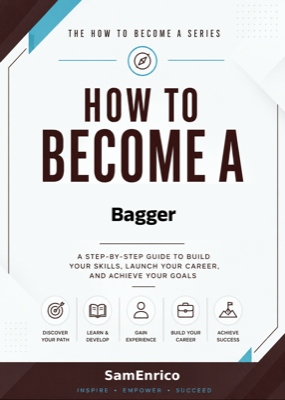
How to Become a Bagger Paperback
How to Become a Bagger
How to Become a Bagger
Formats
Free sample
Chapter 1: The Hundred-Dollar Seed--–- Every oak tree that has ever stood in a forest began its life as something small enough to fit in a child’s palm. The acorn does not announce itself. It does not glow. It does not demand attention. It sits on the forest floor, unremarkable, easily overlooked, easily crushed by a passing boot or carried away by a foraging squirrel.
And yet, buried in that unassuming shell is the blueprint for a structure that will one tower over everything around it.The same is true of wealth in the stock market. The greatest fortunes ever built from public equities did not come from buying the most famous companies of their day. They did not come from following the recommendations of television pundits or the tips of friends at cocktail parties. They came from buying small, overlooked, often ridiculed companies that Wall Street dismissed as too risky, too tiny, or too boring. They came from planting hundred-dollar seeds and waiting for them to grow into hundred-bagger oaks.This book is about finding those seeds.
But before we can hunt for them, we must understand why they exist, why they are ignored, and why they represent the only realistic path to life-changing wealth for the ordinary investor. This is not a book about getting rich slowly through index funds, though that is a perfectly honorable strategy for those who wish to retire at sixty-five with dignity and comfort. This is a book about getting rich in a single generation—about turning ten thousand dollars into a million, or a hundred thousand into ten million. This is a book about becoming a bagger.The Number That Changes Everything Let us begin with a question that most investment books avoid entirely: How much money is enough? Not greedily enough—not a private jet and an island and a staff of twenty.
Just enough. Enough that you no longer wake up at three in the morning worrying about a layoff. Enough that you can help your children buy their first home. Enough that you can walk away from a job you hate without checking your bank account balance first.For most people, that number is between five hundred thousand dollars and two million dollars. According to the Federal Reserve’s Survey of Consumer Finances, the median American household has approximately ten thousand dollars in liquid savings outside of retirement accounts.
That same household, if it saves five hundred dollars per month for thirty years and earns the historical stock market average return of seven percent per year, will accumulate approximately six hundred thousand dollars. That is enough. It is not a fortune, but it is enough to retire with dignity.Now consider the same household if it stops trying to earn the market average and instead tries to find a single hundred-bagger—a stock that returns one hundred times its original investment. That same ten thousand dollars in savings, if invested in a single hundred-bagger, becomes one million dollars. The five hundred dollars per month that was going into index funds can now go into a college fund, a vacation fund, or an early retirement fund.
The math changes entirely.A hundred-bagger is not a lottery ticket. Lottery tickets have negative expected value—for every dollar you spend, you expect to get back roughly fifty cents. A hundred-bagger, properly researched and properly held, has positive expected value. It is a bet on a specific business with specific economics, not a bet on a random number drawn from a bouncing ball. But to understand why hundred-baggers exist and how to find them…
This is the end of the free sample. Get the Paperback to keep going. Buy now
About this book
Details
- Author
- Whitcomb Jackqueline
- Publisher
- SamEnrico
- Language
- English
- ISBN
- 9781505774726
- Genre
- Non-Fiction, Informative, Educational
- Released
- 2026-04-25
- Pages (approx.)
- 115
- Available as
- eBook, Paperback, Audiobook

Read better in the ZLOADR app
Your eBooks on your phone or tablet. Sign in with your SamEnrico account and start reading.
More by Whitcomb Jackqueline
 Senior Life Insurance GuideWhitcomb Jackqueline$11.99
 Partner Support for Menopause InsomniaWhitcomb Jackqueline$11.99
 Committed OKRs HandbookWhitcomb Jackqueline$11.99
 The Military Mom PPD GuideWhitcomb Jackqueline$11.99
 Self Hypnosis Workbook for HabitsWhitcomb Jackqueline$11.99
 Fractionation Induction GuideWhitcomb Jackqueline$11.99
 Body Language for PoliceWhitcomb Jackqueline$11.99
 Mwindo's Epic: The Trickster King of the MoonWhitcomb Jackqueline$11.99
 The Green Visionary: Robert Hooke and the Birth of Sustainable DesignWhitcomb Jackqueline$11.99
 How to Produce CrossbowsWhitcomb Jackqueline$11.99
 Amazon Brand Registry vs Jumia BrandWhitcomb Jackqueline$12.99
 Amazon FBA Storage OptimizationWhitcomb Jackqueline$12.99