
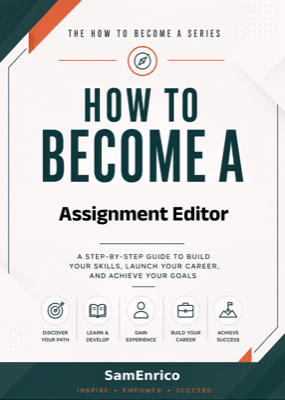
How to Become a Assignment Editor eBook
How to Become a Assignment Editor
How to Become a Assignment Editor
Formats
Free sample
Chapter 1: The 4 AM Command Post--The alarm goes off at 3:15 AM. Not because you want to be awake—because the news is already happening without you. By the time most people are dreaming about tropical vacations or overdue library books, a house fire is burning on the south side, a fatal crash has closed the interstate, and a school board member is returning phone calls at an hour that would make a vampire wince. Someone has to be there to catch those stories, decide which matter, and send the crews that will bring them to an audience that will never know your name. That someone is the assignment editor.
That someone could be you.The assignment editor sits at the nerve center of any newsroom. If the news director is the captain of the ship, the assignment editor is the harbor master, the navigator, the logistics chief, and the lookout all rolled into one. This role, often invisible to the viewing public, determines what stories your audience sees, which journalists cover them, and how resources are deployed across a sprawling coverage area. Unlike a line editor who polishes prose or a managing editor who oversees budgets, the assignment editor lives in the real-time chaos of breaking news. You are the person who answers the phone when a viewer calls about a fire.
You are the one tracking police scanners, monitoring social media, and juggling a dozen competing demands before most people have finished their morning coffee. You decide whether to send a crew to the city council meeting or the house fire, whether to keep a reporter on a developing story or pull them to cover breaking news, whether to lean into a story or let it go.But before you can make any of those decisions, you need to understand what the assignment desk actually is, where it fits in the newsroom ecosystem, and why mastering this role is the single fastest path to newsroom leadership. This chapter provides that foundation. By the time you finish reading, you will know exactly what an assignment editor does, how the daily rhythm unfolds, who you will work with, and why this role matters more than ever in an era of shrinking newsrooms and expanding coverage demands.The Assignment Editor Defined Let us begin with a formal definition, because clarity matters. An assignment editor is the newsroom professional responsible for planning and directing daily news coverage.
This includes monitoring potential stories, dispatching reporters and camera crews, coordinating logistics, and serving as the primary liaison between the newsroom and the field. In many organizations, the assignment editor also manages the news budget, tracks story development, and communicates with producers about what content will be available for upcoming newscasts. The role exists across all media platforms: television, radio, digital news outlets, and even some newspapers that have adopted real-time digital-first workflows. While the specific tools and workflows vary, the core responsibilities remain remarkably consistent.The assignment desk is not just a desk. It is a command post, a crisis center, a dispatch hub, and sometimes a pressure cooker where careers are made and broken.
The desk itself may be a physical piece of furniture cluttered with monitors, scanners, phones, and notes scrawled on Post-its. Or it may be a virtual workspace in a newsroom computer system, accessible from anywhere. But whether physical or digital, the assignment desk is where information flows in and assignments flow out. It is the central nervous system of the newsroom.Where the Assignment Desk Fits in the Newsroom Hierarchy Picture a typical television newsroom. The news director sits in an office, setting overall strategy and managing budgets.
The managing editor oversees the entire editorial operation, including the assignment desk. The producers build the actual shows, deciding story order and timing. The reporters and photographers go into the field to gather stories. The assignment editor sits between all of them, reporting to the managing editor while directing field crews and coordinating with producers.This central position gives the assignment editor enormous influence. You are not just following orders; you are actively shaping what becomes news.
A good assignment editor can elevate coverage, finding stories that competitors miss and deploying resources where they will have the greatest impact. A bad assignment editor can sink it, wasting precious resources on low-value stories while missing major breaking news. The assignment editor is the difference between a newsroom that reacts to events and a newsroom that anticipates, plans, and leads.The hierarchy is important to understand because it determines who you report to, who reports to you, and how decisions flow. The news director sets the strategic vision. The managing editor translates that vision into daily operations.
The assignment editor executes those operations by deciding which stories to cover and which crews to send. Producers then take the raw material gathered by those crews and shape it into newscasts. This is not a chain of command in the military sense—good newsrooms are collaborative, not authoritarian—but it is a chain of responsibility. When something goes wrong, the assignment editor is accountable. When something goes right, the assignment editor rarely gets the credit.
That is the nature of the role. You succeed quietly. You fail loudly. Learn to be comfortable with that asymmetry.The Daily Rhythm: A Minute-by-Minute Look Every newsroom has its own rhythm, but most assignment desks follow a predictable daily pattern. Understanding this rhythm is essential because it allows you to anticipate what comes next, prepare for busy periods, and build systems that handle the chaos.The morning shift begins early.
Very early. The assignment editor arrives before anyone else, often by 4 or 5 AM. The first task is a complete news sweep: checking overnight police reports, reviewing local newspapers, scanning wire services, and monitoring social media for developing stories. You also connect with overnight crews to see what they captured and check on any ongoing stories from the previous day. This is the quietest part of the day, but it is also the most critical.
The foundation you lay in these early hours determines the success of every newscast that follows.By 6 or 7 AM, the morning editorial meeting begins. This is where the assignment editor presents the day's coverage plan to the news director, managing editor, and producers. You will present your list of potential stories, explain which ones you recommend covering, and justify your resource allocation decisions. This meeting sets the agenda for the entire day. It is also where you build credibility.
If your recommendations are consistently smart, your colleagues will trust you. If you waste resources on bad stories, that trust erodes.The midday period is the execution phase. Crews are dispatched, stories develop, and the assignment editor constantly adjusts the plan. A fire breaks out on the west side. You pull a crew from a feature story and redirect them.
A press conference runs long, threatening to push a reporter past their deadline. You adjust the schedule. A source calls with a tip about corruption at city hall. You scramble to verify it and decide whether to commit additional resources. This is where the assignment editor earns their reputation.
The morning meeting shows whether you can plan. The midday execution shows whether you can adapt.The afternoon brings the deadline…
This is the end of the free sample. Get the eBook to keep going. Buy now
About this book
Details
- Author
- Bullard Jenni
- Publisher
- SamEnrico
- Language
- English
- ISBN
- 9781505785531
- Genre
- Non-Fiction, Informative, Educational
- Released
- 2026-05-02
- Pages (approx.)
- 99
- Available as
- eBook, Paperback, Audiobook

Read better in the ZLOADR app
Your eBooks on your phone or tablet. Sign in with your SamEnrico account and start reading.
More by Bullard Jenni
 B Priority Task ManagementBullard Jenni$11.99
 Scented Product Toxin GuideBullard Jenni$11.99
 Bipolar Crisis PlanBullard Jenni$11.99
 MBSR For New ParentsBullard Jenni$11.99
 When Your Best Friend DiesBullard Jenni$11.99
 Stakeholder Interview GuideBullard Jenni$11.99
 New Baby DreamsBullard Jenni$11.99
 Dreaming for Business ProblemsBullard Jenni$11.99
 Sarcopenia Infrared TherapyBullard Jenni$11.99
 The Serpent’s Gambit: How a 12th-Century Scholar Outwitted a DemonBullard Jenni$11.99
 Shadows of the Green Book: The Unseen JourneysBullard Jenni$11.99
 Tesla's Lost Dream: The Secret War of the TeleautomatonBullard Jenni$11.99