
Non-FictionHealth & Wellness / Hormones
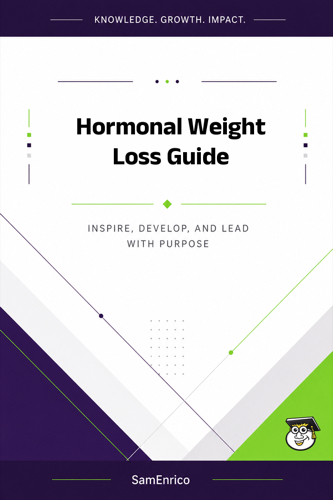
Hormonal Weight Loss Guide eBook
undefined
by Anaya Jene
undefined
Formats
Free sample
Chapter 1: The 30-Second Test--–- Your metabolism isn't broken. You haven't lost your willpower. You're not secretly lazy or undisciplined. And despite what every diet book, fitness influencer, and well-meaning doctor has told you, the reason you can't lose weight has nothing to do with how many calories you eat or how many miles you run.The truth is far more interesting—and far more liberating.For the past fifty years, we've been sold a simple, seductive lie: eat less, move more, and the weight will fall off. It sounds logical.
It sounds fair. And it works—for about three to six months. Then the scale stops moving. Then the weight creeps back. Then you blame yourself.
You think you cheated too much, didn't try hard enough, or simply lack the genetic luck that thin people seem to have.You are wrong about all of it.What if I told you that two women of the same age, height, and starting weight could eat the exact same 1,400-calorie diet and exercise the exact same amount—and one would lose twenty pounds while the other gained ten? Would that sound impossible? Unfair? It happens every single day in doctors' offices and weight loss clinics across the country. And the difference between those two women isn't metabolism, muscle mass, or motivation.
It's hormones.This chapter will do three things. First, it will destroy the calorie myth once and for all, using data your doctor probably hasn't shared with you. Second, it will introduce you to the seven hormones that secretly control every bite you take, every pound you gain, and every inch of belly fat that won't budge. Third, it will give you a thirty-second self-assessment that will tell you—right now, without blood work, without a doctor's visit—which of those seven hormones is most likely sabotaging your weight loss efforts.By the time you finish this chapter, you will never count another calorie again. And you will finally understand why everything you've tried so far has failed.The 95% Failure Rate Nobody Talks About Let's start with an uncomfortable truth.Every major long-term study on dieting has produced the same depressing number: within three to five years, 95% of people who lose weight through calorie restriction will regain every pound, and two-thirds will regain more than they lost.
This isn't speculation. This is data from the National Weight Control Registry, the Look AHEAD study, and dozens of randomized controlled trials spanning four decades.The diet industry's response to this catastrophe has been to blame the dieter. You lacked willpower. You weren't consistent enough. You didn't track accurately.
You cheated on weekends. You chose the wrong diet—maybe low-fat would have worked better, or low-carb, or keto, or paleo, or intermittent fasting, or Weight Watchers, or Noom, or one of the other thousand variations on the same basic theme.But here's what the studies actually show when you look past the headlines: people who follow calorie-restricted diets lose weight reliably for the first three to six months. They are motivated. They are compliant. They are tracking, measuring, and planning every bite.
And then, without warning, the weight loss stops. Their metabolism slows down. Their hunger increases. Their energy plummets. They are doing exactly what worked before, but their bodies have changed.This is not a failure of willpower.
This is a failure of biology.Your body has a system—a highly sophisticated, evolutionarily ancient system—designed to defend your weight as if your life depended on it. Because for most of human history, it did. When you cut calories, your body doesn't think "great, time to fit into my skinny jeans." It thinks "famine is coming, and I need to survive."And survival, as far as your hormones are concerned, means three things: slow down metabolism, increase hunger, and store every available calorie as fat.The Hormonal Triad That Controls Your Weight To understand why diets fail, you need to meet three hormones that work together like a conspiracy against weight loss. I call them the Hormonal Triad, and they are the key to everything that follows in this book.Insulin: The Fat-Storage King Insulin is the most important hormone you've never fully understood. Produced by your pancreas, its primary job is to move glucose (sugar) from your bloodstream into your cells for energy.
When this system works correctly, you eat a meal, your blood sugar rises modestly, your pancreas releases a corresponding amount of insulin, and your cells happily accept the glucose. You feel energized, satisfied, and ready to go about your day.But when you eat a diet high in refined carbohydrates, added sugars, and processed foods—which is to say, the Standard American Diet—your cells become resistant to insulin's signal. They stop listening. Your pancreas responds by pumping out more and more insulin to force the glucose into your cells. Eventually, your cells become even more resistant, and the cycle spirals out of control.Here's what this means for weight loss: when insulin is high, fat burning is impossible.
Insulin's job is to store energy, not release it. High insulin tells your body "lock the fat cells and don't open them until I say so." And if you're insulin resistant, your insulin stays high most of the time, even when you haven't eaten. You are literally locked in fat-storage mode 24 hours a day.This is why two people can eat the same meal and have opposite outcomes. One has healthy insulin sensitivity; her insulin rises modestly, does its job, and falls back to baseline within two hours. The other has insulin resistance; her insulin spikes dramatically and stays elevated for four to six hours.
During that extended period, her body cannot access stored fat for energy. She could eat a 500-calorie meal and still feel hungry two hours later—not because she lacks willpower, but because her hormones are trapping her in starvation mode despite having plenty of stored energy.Cortisol: The Stress General Cortisol is your body's primary stress hormone, produced by your adrenal glands. In acute situations—a near-miss car accident, a sudden fright, a life-threatening emergency—cortisol is lifesaving. It mobilizes glucose from your liver, sharpens your mental focus, and prepares your muscles for fight or flight.But cortisol was never designed to be elevated all day, every day. And yet, for most modern women, it is.
The constant low-grade stress of work deadlines, financial pressure, relationship conflicts, parenting demands, social media comparison, and news cycle anxiety keeps cortisol simmering in the background from morning until night.Chronically elevated cortisol does three terrible things to your weight. First, it tells your body to store fat specifically in the abdominal area—visceral fat, the dangerous kind that wraps around your organs and increases your risk of heart disease, diabetes, and dementia. Second, it breaks down muscle tissue, which lowers your resting metabolic rate. Third, it increases your appetite, specifically for high-sugar, high-fat "comfort foods" because your body believes it needs quick energy to survive a threat.This is the cruel irony of stress-related weight gain: the more stressed you are, the more your body wants sugar and fat, and the more efficiently it stores those calories as belly fat. You're…
This is the end of the free sample. Get the eBook to keep going. Buy now
About this book
Details
- Author
- Anaya Jene
- Publisher
- SamEnrico
- Language
- English
- Genre
- Non-Fiction, Health & Wellness / Hormones
- Released
- 2026-06-09
- Pages (approx.)
- 160
- Available as
- eBook, Audiobook

Read better in the ZLOADR app
Your eBooks on your phone or tablet. Sign in with your SamEnrico account and start reading.
More by Anaya Jene
 Validating Loneliness GuideAnaya Jene$11.99
 Design Thinking for HiringAnaya Jene$11.99
 Depression Sleep DifficultyAnaya Jene$11.99
 Observe Describe ParticipateAnaya Jene$11.99
 Finding a Sponsor HandbookAnaya Jene$11.99
 Remote Work for ChefsAnaya Jene$11.99
 Breaking the Nicotine Loop WorkbookAnaya Jene$11.99
 The Lion of Macedon: Alexander the Great's Legacy of Conquest and CultureAnaya Jene$11.99
 The Corsair of Cartagena: Francisco Drake's Daring Raid on the Spanish MainAnaya Jene$11.99
 How to Produce Tool KnivesAnaya Jene$11.99
 Service Providers Guide to Oral & Maxillofacial SurgeryAnaya Jene$11.99
 SoFi Money InternationalAnaya Jene$12.99
You may also like
 Hong Kong Handover 1997Dunn Johnnie$11.99
 Zumba For Postnatal Recovery CourseNeal Christian$11.99
 Zumba for BeginnersLadner Nikia$11.99
 YouTube Comment Mining GuideHumes Pandora$12.99
 Worry Box MeditationCarlin Rudy$11.99
 Workplace Stress MeditationNguyen Lynn$11.99
 Workplace Stress and Sleep RepairHawley Ivory$11.99
 Workplace Perfectionism CureDelaney Jeffry$11.99
 Workplace Injustice Anger GuideWallen Isabelle$11.99
 Work Addiction and Burnout LinkGreenwood Ester$11.99
 Women in Yoga and WellnessBeattie Galina$11.99
 Women in Stand Up ComedyChun Evangeline$11.99