
Non-FictionHealth & WellnessPostnatal
HIIT for Postpartum Return eBook
Safely reintroduce high intensity exercise after c
by Rau Sheilah
Safely reintroduce high intensity exercise after childbirth with core care.
Formats
Free sample
Chapter 1: The 6-Week Lie--The first time I peed my pants doing a jumping jack, my daughter was four months old. She was napping upstairs, blissfully unaware that her mother was standing in the living room, legs crossed, staring at a small wet spot on her leggings with a mixture of horror and confusion. I had done everything right. I waited for my 6-week clearance. My OB/GYN said I was "healed." I had been doing Kegels religiously.
And yet, here I was, leaking urine during what was supposed to be a "low-impact" warm-up.I told no one. For three weeks, I pretended it didn't happen. I switched to workouts that didn't involve jumping. I blamed the cheap leggings. I blamed the glass of water I drank right before exercising.
I blamed everything except the truth: my body was not ready for what I was asking it to do, and no one had told me how to actually know when it would be.That silence—the one where millions of postpartum women leak, ache, and modify in secret—is what this chapter exists to shatter. You are about to learn what your doctor probably didn't tell you, what fitness influencers won't show you, and what the $5 billion postpartum fitness industry would prefer you never discover: the 6-week clearance is not a finish line. It is barely a starting gate.The Myth of the Magic Number Let me be very specific about what happens at that 6-week postpartum appointment, because the gap between expectation and reality is where injuries begin.Your obstetrician or midwife checks several important things. They palpate your uterus to confirm it has returned to its pre-pregnancy size (involution). They examine any incisions from a C-section or episiotomy to ensure they are healing without infection.
They may ask about bleeding, pain, and mood. If you had gestational hypertension or diabetes, they check those markers. All of this is good medicine. All of this is necessary.None of this tells you whether your pelvic floor can handle a box jump.Here is what the 6-week appointment does not assess: the strength of your pelvic floor muscles, the coordination between your diaphragm and pelvic floor, the presence or severity of diastasis recti (abdominal separation), your ability to manage intra-abdominal pressure during dynamic movement, or your risk of stress urinary incontinence during high-impact exercise. These are not criticisms of obstetric care.
Obstetricians are experts in pregnancy and childbirth, not sports medicine or pelvic floor rehabilitation. The problem is not that they fail to assess these things. The problem is that no one tells us they haven't assessed them.A 2018 study in the journal Neurourology and Urodynamics found that nearly half of women who received "medical clearance" to return to exercise at 6 weeks postpartum still had significant pelvic floor muscle weakness. Another study presented at the 2024 ACSM Annual Meeting followed women who returned to high-intensity training before 12 weeks postpartum and found that those who started earlier had triple the rate of stress incontinence at 6 months compared to those who waited for objective strength measures—not calendar dates.The 6-week clearance is a medical milestone. It is not an athletic green light.Why "Bouncing Back" Breaks You The cultural pressure to "bounce back" after having a baby is not just annoying.
It is actively dangerous. It drives women to return to exercise before their bodies are ready, and it does so with a specific set of predictable injuries.Stress Urinary Incontinence (SUI) is the most common. This is the leakage of small amounts of urine during activities that increase abdominal pressure: jumping, running, sneezing, coughing, laughing, lifting. It affects an estimated one in three postpartum women, yet fewer than half ever mention it to a healthcare provider. The shame is so powerful that women would rather change their workouts, their clothes, and their lives than say "I leaked."Pelvic Organ Prolapse (POP) is more serious and less discussed.
This occurs when the pelvic floor muscles are too weak to support the bladder, uterus, or rectum, allowing one or more of these organs to descend into the vaginal canal. Symptoms include a sensation of heaviness or "something falling out," a visible bulge, low back pain, and difficulty emptying the bladder or bowels. POP affects up to 50 percent of women who have had vaginal deliveries, though many have mild cases that go undiagnosed. High-impact exercise on an unprepared pelvic floor can worsen prolapse significantly.Diastasis Recti (DR) is the separation of the two bellies of the rectus abdominis muscle (the "six-pack" muscles) along the midline connective tissue called the linea alba. This separation is normal during pregnancy—the body makes room for the growing uterus.
But when the connective tissue remains stretched and the deep core muscles (particularly the transverse abdominis) fail to regain tension, the separation can persist. A DR wider than two finger-widths is associated with low back pain, poor posture, pelvic floor dysfunction, and that "pooch" belly that many women assume is stubborn fat when it is actually a structural gap. Crunches, sit-ups, planks, and any movement that causes the abdomen to dome or cone will widen the separation rather than close it.Low Back Pain is the most common complaint that women dismiss as "normal postpartum." It often stems from a combination of weakened deep core muscles, tight hip flexors from prolonged sitting (nursing, holding baby), and the lingering effects of the hormone relaxin, which keeps ligaments loose for months after delivery.All of these conditions share a root cause: the inability to manage intra-abdominal pressure. When you jump, lift, or strain, pressure increases inside your abdomen. A functional core—one with a coordinated diaphragm, transverse abdominis, and pelvic floor—absorbs and distributes that pressure.
A dysfunctional core lets that pressure push downward, outward, or both. Downward pressure stresses the pelvic floor (leakage, prolapse). Outward pressure pushes through the linea alba (coning, widening diastasis).The cruel irony is that traditional HIIT movements—burpees, box jumps, mountain climbers, heavy kettlebell swings—generate exactly the kind of pressure that an unprepared postpartum core cannot manage. Doing these movements before your core is ready does not make you stronger. It makes you injured.The Self-Assessment Nobody Gave You Before you do another workout, you need three pieces of data.
You need to know whether you have diastasis recti, whether your pelvic floor pressure management is functional, and whether you have any red flags that require professional help before you continue.How to Check for Diastasis Recti (The Finger-Width Test)This test is best performed at the end of the day when your abdominal muscles are fatigued, as a separation may be more visible. You will need a flat surface to lie on, a pillow for your head, and your fingers.Lie on your back with your knees bent and feet flat on the floor. Place one hand behind your head for support. Take a breath in, and as you exhale, perform a small crunch—just lifting your head and shoulders an inch or two off the floor, as if you are trying to see your belly button. Do not do a full sit-up.With your other hand, place your fingertips horizontally across your belly button, fingers pointing toward your opposite…
This is the end of the free sample. Get the eBook to keep going. Buy now
About this book
Details
- Author
- Rau Sheilah
- Publisher
- SamEnrico
- Language
- English
- Genre
- Non-Fiction, Health & Wellness, Postnatal
- Released
- 2026-06-11
- Pages (approx.)
- 150
- Available as
- eBook, Audiobook

Read better in the ZLOADR app
Your eBooks on your phone or tablet. Sign in with your SamEnrico account and start reading.
More by Rau Sheilah
 Vision Rehabilitation Services GuideRau Sheilah$11.99
 League of Legends Compulsion GuideRau Sheilah$11.99
 Morning Pages for BusinessRau Sheilah$11.99
 Long Term Smoker Recovery PlanRau Sheilah$11.99
 The Bone Thief of the Frozen North: Uncovering the Medieval Arctic's Lost SanatoriumRau Sheilah$11.99
 How to Start a Hobby in Listening to musicRau Sheilah$11.99
 Cold Calling Middle East B2BRau Sheilah$12.99
 Student Entrepreneurship GuideRau Sheilah$12.99
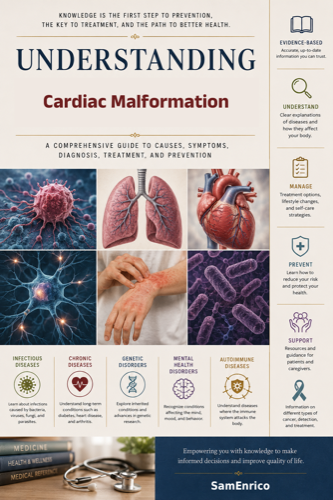 Understanding Cardiac MalformationRau Sheilah$17.99
 Service AdvisorRau Sheilah$11.99
 The Serpent's CycleRau Sheilah$8.99
You may also like
 Hong Kong Handover 1997Dunn Johnnie$11.99
 Zumba For Postnatal Recovery CourseNeal Christian$11.99
 Zumba for BeginnersLadner Nikia$11.99
 YouTube Comment Mining GuideHumes Pandora$12.99
 Worry Box MeditationCarlin Rudy$11.99
 Workplace Stress MeditationNguyen Lynn$11.99
 Workplace Stress and Sleep RepairHawley Ivory$11.99
 Workplace Perfectionism CureDelaney Jeffry$11.99
 Workplace Injustice Anger GuideWallen Isabelle$11.99
 Work Addiction and Burnout LinkGreenwood Ester$11.99
 Women in Yoga and WellnessBeattie Galina$11.99
 Women in Stand Up ComedyChun Evangeline$11.99