
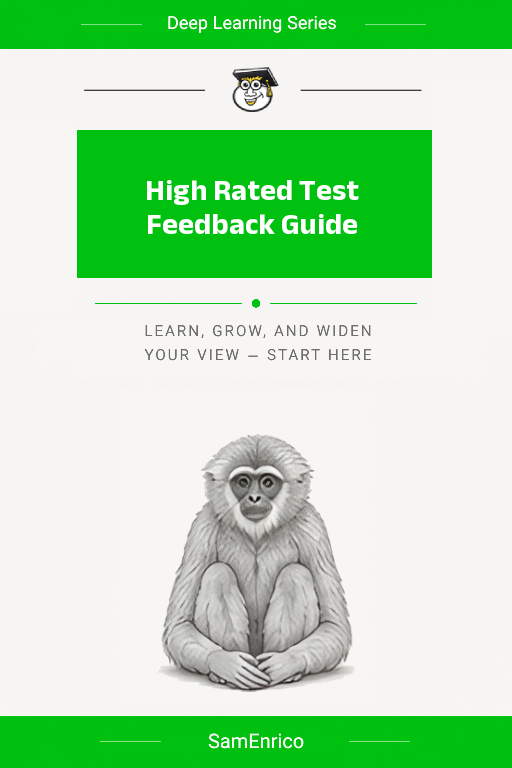
High Rated Test Feedback Guide eBook
Delivers 5-star test feedback that gets you invite
by Inman Quinn
Delivers 5-star test feedback that gets you invited to more 60 tests, including actionable insights and professional communication.
Formats
Free sample
Chapter 1: The Algorithmic Mirror--–- Every time you click “Submit” on a usability test, you are not just sending feedback to a researcher. You are feeding a silent, calculating machine that decides your financial future as a tester. Most people in this industry believe that invitations to high-paying tests are distributed randomly, like lottery tickets pulled from a spinning drum. They are wrong. The reality is far more precise, far less forgiving, and far more within your control than you have ever been told.The platforms that connect testers to researchers—User Testing, User Zoom, Intellizoom, Beta Testing, and a dozen smaller competitors—operate on reputation algorithms that would be instantly familiar to anyone who has studied how Amazon ranks third-party sellers, how Uber matches riders with drivers, or how Airbnb prioritizes hosts in search results. These algorithms are not mysterious black boxes controlled by faceless engineers. They are predictable, logical systems that weigh three core metrics with mathematical precision: your historical average star rating, the consistency of your completion speed, and the keyword tags that previous researchers have attached to your work. Words like “actionable,” “clear,” “professional,” “strategic,” and “invite again” float you to the top of the queue. Words like “vague,” “rambling,” “negative tone,” “off-task,” or “unhelpful” sink you into an invisibility cloak from which few testers ever escape.This chapter will do something that no other testing guide has attempted. It will pull back the curtain on the algorithmic customer. You will learn exactly how researchers select which testers to invite, how platform algorithms prioritize some testers over others, and most importantly, how to signal high value in the first five seconds of a researcher’s attention. By the time you finish this chapter, you will never look at a “Submit” button the same way again. You will understand that every test is not just an opportunity to earn money. It is an investment in your reputation algorithm. And that algorithm, once understood, becomes the most powerful tool you own.The Three Metrics That Control Your Invitation Rate Every platform’s algorithm is slightly different in its exact weighting, but they all share a common architectural DNA. Think of your reputation as a three-legged stool. If any leg is weak, the entire structure collapses, and you will find yourself staring at an empty dashboard while other testers receive invitation after invitation.Metric One: Historical Average Star Rating This is the most obvious metric and the one most testers obsess over. A 4.8-star average will get you significantly more invites than a 4.2-star average. A 4.9-star average places you in the top tier of testers on most platforms, giving you access to tests that are never shown to the general population.But here is what most testers miss: platforms do not treat all ratings equally. A recent 3-star rating hurts far more than an old 3-star rating from six months ago. The reason is simple: algorithms weight recent activity more heavily because they assume your current performance is more predictive of your future performance than your historical average. One bad week can erase three months of excellent work if you do not respond quickly. Conversely, a string of five 5-star ratings in a single week will boost your visibility more than twenty 5-star ratings spread across six months. The algorithm has a short memory for excellence and a long memory for failure—unless you overwrite the failure with a cascade of new successes.The practical implication: If you receive a low rating, do not retreat. Do not stop testing. Double your efforts immediately. The fastest way to bury a 3-star rating is to submit ten 5-star reports in the following week. The algorithm will see the trend, not the isolated data point.Metric Two: Consistency of Completion Speed Platforms track how long you take to complete tests, but here is the counterintuitive truth: they are not simply rewarding speed. They are rewarding predictability. A tester who finishes a 15-minute test in anywhere from 12 to 22 minutes is a risk to the platform because researchers schedule their entire day around expected delivery times. They have meetings. They have deadlines. They have stakeholders waiting for answers.A tester who consistently finishes 15-minute tests in 14 to 16 minutes is algorithmically valuable. The platform can promise the researcher: “Your results will arrive within a predictable window, and you can plan your day accordingly.” This predictability is why some testers with 4.9-star ratings receive fewer invitations than testers with 4.7-star ratings. The 4.7 tester is more reliable. The algorithm does not care about perfection. It cares about consistency.The practical implication: Time yourself on every test. Learn your natural pace for different test types (e-commerce, Saa S, mobile apps, financial services). If you finish a test significantly faster than usual, slow down and review your work. If you finish significantly slower, identify what caused the delay and address it before your next test. Your goal is not to be the fastest tester. Your goal is to be the most predictable tester.Metric Three: Keyword Tags This is the most underleveraged metric in the entire testing ecosystem, and understanding it will separate you from 95% of your competition. After every completed test, researchers have the option to tag the tester with descriptive keywords. These tags are not visible to testers—you will never see them on your dashboard—but they are fed directly into the matching algorithm that determines who receives future invitations.Positive tags include: “actionable,” “clear,” “concise,” “professional,” “strategic,” “high business value,” “great communicator,” “invite again,” and “top tester.” Each positive tag increases your match score for similar tests in the future.Negative tags include: “rambling,” “off-task,” “vague,” “negative tone,” “unhelpful,” “difficult,” “argumentative,” and “do not invite.” A single negative tag can reduce your invitation rate by 50% or more because the algorithm assumes that if one researcher found you difficult, others will too.Here is the painful truth that most testers never realize: you cannot see these tags, so you never know why your invitation rate suddenly dropped. You might assume the platform is dead or that researchers are biased against you. In reality, you earned a negative tag months ago, and the algorithm has been quietly deprioritizing you ever since.The practical implication: By the time you finish this book, you will know exactly how to earn every positive tag and avoid every negative tag. The techniques in later chapters—the CAIS framework, Multiplier language, the inverted pyramid structure—are not arbitrary writing advice. They are specific strategies designed to trigger positive keywords in the researcher’s mind as they fill out your rating form.What Researchers Actually Want (It Is Not Just Bugs)Before you can write feedback that earns 5-star ratings, you must understand the person on the other side of the screen. The researcher is not sitting in a dark room, rubbing their hands together, waiting to judge you. They are almost certainly overworked, under pressure from their manager, and deeply uncertain about whether the product they are building will succeed or fail in the real world.Researchers have two distinct needs, and most testers only serve one of them. Serving both is the fastest path to 5-star ratings.Need One: Validation Sometimes, the researcher already knows what they want to do, but they need evidence to convince their team or their boss.…
This is the end of the free sample. Get the eBook to keep going. Buy now
About this book
Details
- Author
- Inman Quinn
- Publisher
- SamEnrico
- Language
- English
- Genre
- Non-Fiction, Side Hustle Architect, Quality
- Released
- 2026-06-01
- Pages (approx.)
- 148
- Available as
- eBook, Audiobook

Read better in the ZLOADR app
Your eBooks on your phone or tablet. Sign in with your SamEnrico account and start reading.
More by Inman Quinn
 The High Achiever Tech StackInman Quinn$11.99
 Literacy Nonprofit Fraud Cases CourseInman Quinn$11.99
 Weekend Sleep ScheduleInman Quinn$11.99
 Perfectionism Recovery for TeensInman Quinn$11.99
 Difficult Conversations For ManagersInman Quinn$11.99
 The Architect of the Skyline: Gaudí’s Unfinished DreamInman Quinn$11.99
 Understanding Wyburn–mason's SyndromeInman Quinn$17.99
 CAC Dashboard BlueprintInman Quinn$12.99
 How to Start a Barrels Made of Aluminium Business (Beginners Guide)Inman Quinn$11.99
 Elon Musk: The World's Most Disruptive BillionaireInman Quinn$11.99