
Non-FictionHealth & WellnessDiagnostics
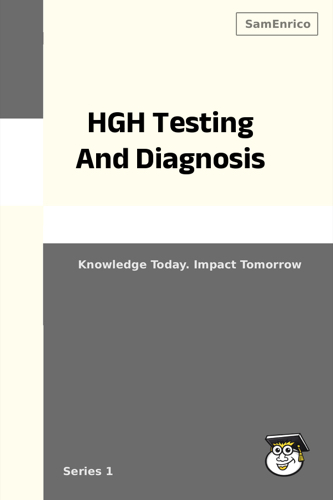
HGH Testing And Diagnosis
Learn about stimulation tests for measuring growth
by Roby Cecila
Learn about stimulation tests for measuring growth hormone deficiency.
Formats
About this book
Free sample
Chapter 1: The Pulsatile Puzzle--Every endocrinologist remembers the case that changed their practice. For Dr. Maria Chen, it was a fourteen-year-old boy named Jacob. He had grown less than two centimeters in the past year. His parents were frantic.
His pediatrician had drawn a random growth hormone level at 10:00 AM. The result came back: 0.1 ng/m L. “Profound deficiency,” the report read. “Consider stimulation testing.”Jacob underwent an insulin tolerance test the following week. His peak growth hormone level exceeded 18 ng/m L – perfectly normal.
The random draw had been not just misleading but dangerously wrong. Jacob did not have growth hormone deficiency. He had something far more common: normal physiology.This case illustrates the single most important concept in the diagnosis of growth hormone deficiency (GHD): you cannot measure what is not there. Growth hormone is not like thyroid hormone or cortisol. It does not circulate at steady, predictable levels throughout the day.
Instead, it appears in brief, explosive pulses and then disappears, hidden from view until the next stimulus awakens it.The Pulsatile Nature of Growth Hormone Secretion Understanding why basal GH measurement fails requires a deep dive into the neuroendocrine control of the somatotroph axis. Growth hormone is secreted by somatotroph cells in the anterior pituitary gland. These cells do not release hormone continuously. Rather, they fire in coordinated bursts under the dual control of two hypothalamic hormones: growth hormone-releasing hormone (GHRH), which stimulates secretion, and somatostatin, which inhibits it.The interplay between GHRH and somatostatin creates a pulsatile pattern. A pulse begins when GHRH is released from the hypothalamus into the hypothalamic-pituitary portal system.
GHRH travels to the anterior pituitary, binds to specific receptors on somatotrophs, and triggers a cascade of intracellular events culminating in GH secretion. Within minutes, somatostatin tone increases, shutting off the pulse. The GH that was released has a short half-life in circulation – approximately 20 minutes – after which it is cleared by the liver and kidneys.This system produces a characteristic pattern. In healthy children and adults, GH is secreted in 8 to 12 pulses per 24 hours. The pulses are not evenly spaced.
The largest pulses occur at night, beginning about 60 to 90 minutes after the onset of slow-wave sleep. During the…
This is the end of the free sample. Get the eBook to keep going. Buy now
Contents
- Chapter 1
- Chapter 2
- Chapter 3
- Chapter 4
- Chapter 5
- Chapter 6
- Chapter 7
- Chapter 8
- Chapter 9
- Chapter 10
- Chapter 11
- Chapter 12
Details
- Author
- Roby Cecila
- Publisher
- SamEnrico
- Language
- English
- Genre
- Non-Fiction, Health & Wellness, Diagnostics
- Released
- 2026-06-07
- Pages (approx.)
- 155
- Available as
- eBook, Audiobook

Read better in the ZLOADR app
Your eBooks on your phone or tablet. Sign in with your SamEnrico account and start reading.
More by Roby Cecila
 HGH Children Short StatureRoby Cecila$11.99
 Caregiver Employee Stress GuideRoby Cecila$11.99
 Italian Green Incentives GuideRoby Cecila$11.99
 The Teen Confidence WorkbookRoby Cecila$11.99
 Nicotine Cravings Hypnosis ScriptsRoby Cecila$11.99
 Addressing Addiction in FamilyRoby Cecila$11.99
 Antwerp Heist Children's BookRoby Cecila$11.99
 TM for Student AthletesRoby Cecila$11.99
 Silent Siege: The 1977 Entebbe Hijackers Who VanishedRoby Cecila$11.99
 The Tsar's Falcon: A Russian Imperial AdventureRoby Cecila$11.99
 The Last Cabin at Camp Crystal LakeRoby Cecila$11.99
 Blockchain Security FundamentalsRoby Cecila$11.99
You may also like
 Hong Kong Handover 1997Dunn Johnnie$11.99
 Zumba For Postnatal Recovery CourseNeal Christian$11.99
 Zumba for BeginnersLadner Nikia$11.99
 YouTube Comment Mining GuideHumes Pandora$12.99
 Worry Box MeditationCarlin Rudy$11.99
 Workplace Stress MeditationNguyen Lynn$11.99
 Workplace Stress and Sleep RepairHawley Ivory$11.99
 Workplace Perfectionism CureDelaney Jeffry$11.99
 Workplace Injustice Anger GuideWallen Isabelle$11.99
 Work Addiction and Burnout LinkGreenwood Ester$11.99
 Women in Yoga and WellnessBeattie Galina$11.99
 Women in Stand Up ComedyChun Evangeline$11.99