
Non-FictionHealth & WellnessBone Health
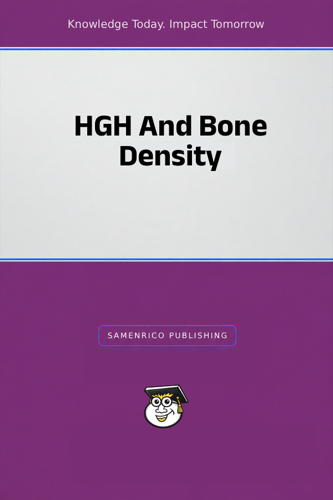
HGH And Bone Density eBook
Prevent osteoporosis by maintaining growth hormone
by Hughey Raina
Prevent osteoporosis by maintaining growth hormone into older age.
Formats
Free sample
Chapter 1: The Calcium Lie...--–- Margaret had done everything right. For twelve years, she had swallowed her 1,200 milligrams of calcium citrate every morning with orange juice (because vitamin C enhances absorption, as her rheumatologist told her). She ate Greek yogurt for lunch, sprinkled cheese on her evening salads, and took a weekly vitamin D supplement. She walked three miles every day. She had never smoked.
She rarely drank. By every conventional measure, Margaret Ellsworth of Des Moines, Iowa, was a model patient for osteoporosis prevention.So when she stepped off a six-inch curb outside the post office on a Tuesday afternoon in April and felt her left hip shatter like a dinner plate dropped on a tile floor, she was not just in agony. She was bewildered. The orthopedic surgeon who implanted a metal rod into her femur the next morning reviewed her DEXA scan and delivered the news: her T-score was -3.1, well into the osteoporotic range. At sixty-two years old, Margaret had the bones of an eighty-five-year-old."How is this possible?" she asked her primary care doctor at her follow-up visit.
"I did everything you told me to do."The doctor looked at her chart, shrugged, and said, "Some people are just unlucky."But Margaret was not unlucky. She was not a genetic anomaly. She was not secretly taking bone-thinning medications or hiding an eating disorder. Margaret was the victim of the single most pervasive, expensive, and dangerous lie in all of bone health: the belief that osteoporosis is a calcium deficiency disease.The $4 Billion Lie You've Been Sold Let us begin with a simple question: if osteoporosis were primarily a calcium deficiency disease, then countries with the highest calcium intake would have the lowest rates of hip fractures. This is not merely a logical assumption—it is a testable hypothesis.
And it fails spectacularly.The United States has one of the highest per capita dairy and calcium supplement intakes in the world. The average American consumes approximately 1,100 milligrams of calcium per day, well above the recommended dietary allowance of 1,000 to 1,200 milligrams. Yet the United States also has one of the highest hip fracture rates in the industrialized world. Scandinavia, where dairy consumption is even higher than in the US, has even higher fracture rates. Meanwhile, countries with much lower calcium intake—Japan, China, Peru, and much of sub-Saharan Africa—have significantly lower hip fracture rates, sometimes by a factor of two to three times.This is not a statistical anomaly that has been hiding from researchers.
The data have been staring us in the face for decades. A landmark 1997 study published in the American Journal of Epidemiology analyzed hip fracture rates across thirty-three countries and found no relationship between calcium intake and fracture risk. None. A 2005 meta-analysis in the Journal of the American Medical Association examining over 170,000 women found that increasing calcium intake beyond 800 milligrams per day produced no additional reduction in fracture risk. And a 2015 systematic review in the British Medical Journal concluded that increasing calcium intake from dietary sources or supplements had no effect on fracture risk in community-dwelling adults over fifty.Let that sink in.
Decades of public health messaging. Billions of dollars in supplement sales. Thousands of newspaper articles urging women to drink more milk. And the evidence says: it does not work.But the lie does not end with ineffectiveness. The deeper truth is that excess calcium—calcium that cannot be incorporated into bone because the hormonal signals required for bone formation are absent—does not simply float harmlessly out of your body.
It ends up elsewhere. Specifically, it ends up in your arteries.When Calcium Goes Rogue The same 2015 BMJ meta-analysis that found no fracture benefit from calcium supplementation also found a troubling signal: calcium supplements were associated with a 15 to 20 percent increase in the risk of myocardial infarction (heart attack). A subsequent 2016 study in the Journal of the American Heart Association found that women who took calcium supplements had a 25 percent higher risk of coronary artery calcification—the buildup of calcium plaques in the arteries that supply blood to the heart—compared to women who did not take supplements.This is the dark irony of the calcium lie. Your body cannot distinguish between calcium that arrives with the proper hormonal instructions (HGH, IGF-1, and sex hormones all saying, "Deposit this in bone") and calcium that arrives without those instructions. In the absence of those signals, the calcium settles where it is least helpful: in your blood vessel walls, your kidneys (as stones), and your soft tissues.Think of it this way.
You are building a house. The foundation is cracked, the framing is rotted, and the roof leaks. Someone delivers a truckload of bricks and dumps them on the front lawn. Then they leave. Do you have a house?
No. You have a pile of bricks on a broken foundation. The bricks are not the problem. The problem is that no one is directing the construction. There is no foreman, no blueprint, no workers.
The bricks are useless.Calcium is the brick. HGH is the foreman.The Bone Remodeling Cycle: Why You Need a Foreman To understand why HGH is indispensable for bone health, you must first understand how bone actually works. Most people imagine bone as a static, dead structure—like a dried twig or a piece of chalk. This is dangerously wrong. Bone is one of the most dynamic, metabolically active tissues in the human body.
Every single year, your body replaces approximately 10 percent of your entire skeleton. Over a decade, you have essentially a completely new set of bones.This process is called remodeling, and it involves two distinct types of cells with opposite jobs.The first type is the osteoclast. The name comes from Greek roots meaning "bone breaker," and that is exactly what these cells do. Osteoclasts are large, multinucleated cells that secrete acid and enzymes to dissolve old, damaged, or unnecessary bone tissue. This process is called resorption.
It is not a sign of disease—it is the necessary first step in bone renewal. Without osteoclasts, you would accumulate microdamage in your skeleton until it became as brittle as old concrete, cracking under its own weight.The second type is the osteoblast. Again, the name tells the story: "bone builder." Osteoblasts are smaller cells that synthesize new bone matrix, primarily a protein called Type 1 collagen. They then mineralize that collagen matrix by depositing calcium and phosphate crystals. This process is called formation.
In a healthy young adult, resorption and formation are perfectly balanced. Your osteoclasts remove a tiny volume of bone, and your osteoblasts fill it back in within a few months.Here is where HGH enters the story. HGH is the master regulator of this entire cycle. When HGH is released from your pituitary gland (in pulses, not a steady stream), it travels to your liver, which converts it into Insulin-like Growth Factor 1 (IGF-1). IGF-1 then circulates throughout your body, and when it reaches your bones, it does three critical things.First, it stimulates the proliferation of osteoblast precursor cells.
Without IGF-1, your bone marrow simply does not produce enough new osteoblasts to keep up with demand.Second, it increases the activity of…
This is the end of the free sample. Get the eBook to keep going. Buy now
About this book
Details
- Author
- Hughey Raina
- Publisher
- SamEnrico
- Language
- English
- Genre
- Non-Fiction, Health & Wellness, Bone Health
- Released
- 2026-06-06
- Pages (approx.)
- 158
- Available as
- eBook, Audiobook

Read better in the ZLOADR app
Your eBooks on your phone or tablet. Sign in with your SamEnrico account and start reading.
More by Hughey Raina
 Retirement Assets CPA GuideHughey Raina$11.99
 Growth Hormone Childhood vs AdultHughey Raina$11.99
 Resigning From a Job GracefullyHughey Raina$11.99
 Athlete Student Stress GuideHughey Raina$11.99
 Medical Residency MemoryHughey Raina$11.99
 Social Smoker Recovery PlanHughey Raina$11.99
 Antwerp Heist WikiLeaks CableHughey Raina$11.99
 Yoga For Menstruation GuideHughey Raina$11.99
 The Artful Heist: How a Masterpiece Vanished in Broad DaylightHughey Raina$11.99
 Love Letters in Verse: The Eternal Bond of the Golden Poets of TimbuktuHughey Raina$11.99
 Blood and Silk: The Untold Wars of the Opium QueensHughey Raina$11.99
 Air and Water Quality Monitoring via UAVsHughey Raina$11.99
You may also like
 Hong Kong Handover 1997Dunn Johnnie$11.99
 Zumba For Postnatal Recovery CourseNeal Christian$11.99
 Zumba for BeginnersLadner Nikia$11.99
 YouTube Comment Mining GuideHumes Pandora$12.99
 Worry Box MeditationCarlin Rudy$11.99
 Workplace Stress MeditationNguyen Lynn$11.99
 Workplace Stress and Sleep RepairHawley Ivory$11.99
 Workplace Perfectionism CureDelaney Jeffry$11.99
 Workplace Injustice Anger GuideWallen Isabelle$11.99
 Work Addiction and Burnout LinkGreenwood Ester$11.99
 Women in Yoga and WellnessBeattie Galina$11.99
 Women in Stand Up ComedyChun Evangeline$11.99