
Non-FictionInformativeEducational
Health Physicist eBook
A Coursebook on Health Physicist
by Currie Suzan
A Coursebook on Health Physicist
Formats
Free sample
Chapter 1: The Invisible Threat...--It begins without warning, without sound, without smell, and without sight. A single atom of cesium-137, forged in the heart of a nuclear reactor decades ago, undergoes spontaneous transformation. Its nucleus, burdened with too many neutrons, ejects a high-energy electron—a beta particle—traveling at 98% of the speed of light. Simultaneously, the newly stabilized daughter nucleus, barium-137m, sheds its excess energy as a gamma ray, a photon of pure electromagnetic force with enough energy to penetrate walls, flesh, and bone. In a fraction of a second, this one atom has launched two invisible projectiles into the world.
One will travel perhaps ten meters in air before colliding with something. The other, the gamma ray, could travel hundreds of meters, potentially kilometers, depending on what stands in its path.This is not a rare event. Every second, across the planet, trillions upon trillions of atoms decay in exactly this manner. Some occur in the granite beneath your feet, where uranium-238 has been decaying slowly for 4.5 billion years. Some occur in your own body, from potassium-40—a naturally occurring isotope that makes up about 0.0117% of all potassium—which undergoes radioactive decay approximately 4,600 times per second inside a typical human.
Some occur in the spent fuel pools of nuclear power plants, in the medical waste bins of hospitals after a thyroid cancer treatment, in the cargo containers scanning for stowaways at international ports, and in the smoke detector mounted on your ceiling.Yet you remain unaware. Not because nothing happened—something always happens—but because the language of radiation is not written in sensations accessible to human biology. We have no evolved organ for detecting ionizing radiation. No pain receptors fire when DNA is fractured. No alarm sounds in the brain when a free radical carves through a cellular membrane.
The threat is invisible, and that invisibility is precisely why the profession of the Health Physicist exists.This chapter establishes the absolute fundamental building blocks for understanding everything that follows in this book. To protect against radiation, to measure it, to set limits, to respond to emergencies, and to design shielding—all of it rests upon one foundational question: what is this thing we cannot see, and how do we think about it mathematically?The Atomic Landscape: Where Instability Begins Before discussing radioactivity, one must understand the atom itself—not as the featureless sphere of high school diagrams, but as a dynamic, quantum mechanical system governed by forces that defy classical intuition. The atom consists of a nucleus, dense and positively charged, surrounded by a cloud of electrons occupying probabilistic orbitals. The nucleus, approximately 10,000 times smaller than the atom itself (1 femtometer vs. 0.1 nanometers), contains 99.95% of the atom's mass in a volume so small that if an atom were the size of a football stadium, the nucleus would be a marble on the fifty-yard line.The nucleus is composed of protons and neutrons, collectively called nucleons.
Protons carry positive electric charge and repel each other via the Coulomb force. Neutrons are electrically neutral. What holds this unlikely assembly together against the overwhelming electrostatic repulsion of multiple positive charges packed into an impossibly small space? The strong nuclear force—the most powerful force in nature, approximately 100 times stronger than electromagnetism at nuclear distances, but with an extremely short range of about 2 to 3 femtometers. Beyond that distance, the strong force vanishes almost entirely.
This means that every proton in a nucleus is pulling against every other proton via electromagnetism over the entire volume of the nucleus, but the strong force only acts between nearest neighbors. Beyond approximately the size of a uranium nucleus (about 15 femtometers in diameter), adding more protons becomes increasingly unstable.Stability, therefore, is a delicate balance. For any given number of protons (the atomic number Z), there exists an optimal number of neutrons (N) that maximizes binding energy—the energy required to disassemble the nucleus into its constituent nucleons. This optimal N is approximately 1.5 times Z for heavy elements (the neutron-proton ratio increases with atomic mass because extra neutrons add strong force attraction without adding electrostatic repulsion), and approximately 1:1 for light elements.The Chart of Nuclides: A Map of Possibility Not all combinations of Z and N are possible. The Chart of Nuclides—sometimes called the Segrè chart after physicist Emilio Segrè—is the periodic table's more complete cousin.
Whereas the periodic table shows only stable elements by atomic number, the Chart of Nuclides plots Z (protons) on the horizontal axis and N (neutrons) on the vertical axis. Every box represents a specific isotope of an element. Stable nuclides form a narrow band called the valley of stability, winding upward as Z increases. Unstable nuclides—the vast majority—exist on either side of this valley, with lifetimes ranging from fractions of a nanosecond to billions of years.The neutron drip line marks the boundary beyond which adding neutrons causes immediate neutron emission (lifetimes less than 10^-20 seconds). The proton drip line marks the same for excess protons.
Between these extremes, thousands of nuclides exist, each with its own unique decay pathway, half-life, and emission characteristics.A Health Physicist does not memorize the chart—that would be impossible, with over 3,000 known nuclides. Instead, the Health Physicist learns to read the chart: to identify stable isotopes, to predict likely decay modes based on position relative to the valley of stability, and to recognize which radionuclides are relevant to specific applications (medicine, power generation, industry, research, or waste disposal). When a sample is brought to a Health Physicist for identification—perhaps a sealed source found in a decommissioned laboratory, or a suspicious powder detected at a border crossing—the gamma spectrum provides photopeak energies. The Health Physicist then consults the chart, matching those energies to specific radionuclides, and from the position on the chart infers the likely decay chain, progeny, and potential hazards.Defining Activity: The Language of Decay Radioactive decay is a random process at the individual atom level but a highly predictable process at the population level. This is the central paradox of quantum mechanics: no one can say when a specific atom will decay, but for a large sample of identical atoms, the decay rate follows an exact mathematical law.Activity (A) is the number of decays occurring per unit time in a sample.
The SI unit of activity is the Becquerel (Bq), defined as one decay per second. The historical unit, still widely used in the United States, is the Curie (Ci), defined originally as the activity of one gram of radium-226: exactly 3.7 × 10^10 decays per second. One Curie is an enormous activity—the material that poisoned Alexander Litvinenko in London was approximately 0.1 Ci of polonium-210, enough to deliver a fatal dose in micrograms. One Becquerel is a very small activity, representing a single atom decaying each second. To put this in perspective: a typical banana contains approximately 15 Bq of potassium-40.
A smoke detector contains approximately 1 μCi (37,000 Bq) of americium-241. A typical medical dose of technetium-99m for a bone scan is 20 to 30 m Ci (740 million to 1.1 billion Bq). A spent nuclear fuel assembly contains billions of Curies.The relationship between activity and the number of atoms is given by the decay constant:A =…
This is the end of the free sample. Get the eBook to keep going. Buy now
About this book
Details
- Author
- Currie Suzan
- Publisher
- SamEnrico
- Language
- English
- Genre
- Non-Fiction, Informative, Educational
- Released
- 2026-05-11
- Pages (approx.)
- 150
- Available as
- eBook, Audiobook

Read better in the ZLOADR app
Your eBooks on your phone or tablet. Sign in with your SamEnrico account and start reading.
More by Currie Suzan
 Military Family Childhood Self Worth GuideCurrie Suzan$11.99
 Speaker's Self Compassion DoseCurrie Suzan$11.99
 Relationship Anger Journal CourseCurrie Suzan$11.99
 Uber Destination Filter UseCurrie Suzan$11.99
 The Malta Nomad Residency GuideCurrie Suzan$11.99
 Frozen Fury: The Race to Save the Terra NovaCurrie Suzan$11.99
 How to Become a Lapping-machine Set-up OperatorCurrie Suzan$11.99
 LatAm Venture Capital GuideCurrie Suzan$12.99
 Executive Summary For Business PlansCurrie Suzan$12.99Executive Summary For Business PlansCurrie Suzan$12.99
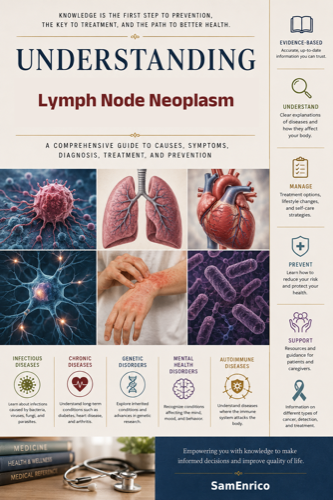 Understanding Lymph Node NeoplasmCurrie Suzan$17.99
You may also like
 Hong Kong Handover 1997Dunn Johnnie$11.99
 Zumba For Postnatal Recovery CourseNeal Christian$11.99
 Zumba for BeginnersLadner Nikia$11.99
 YouTube Comment Mining GuideHumes Pandora$12.99
 Worry Box MeditationCarlin Rudy$11.99
 Workplace Stress MeditationNguyen Lynn$11.99
 Workplace Stress and Sleep RepairHawley Ivory$11.99
 Workplace Perfectionism CureDelaney Jeffry$11.99
 Workplace Injustice Anger GuideWallen Isabelle$11.99
 Work Addiction and Burnout LinkGreenwood Ester$11.99
 Women in Yoga and WellnessBeattie Galina$11.99
 Women in Stand Up ComedyChun Evangeline$11.99