
Non-FictionStrategic AtlasRetention Strategy
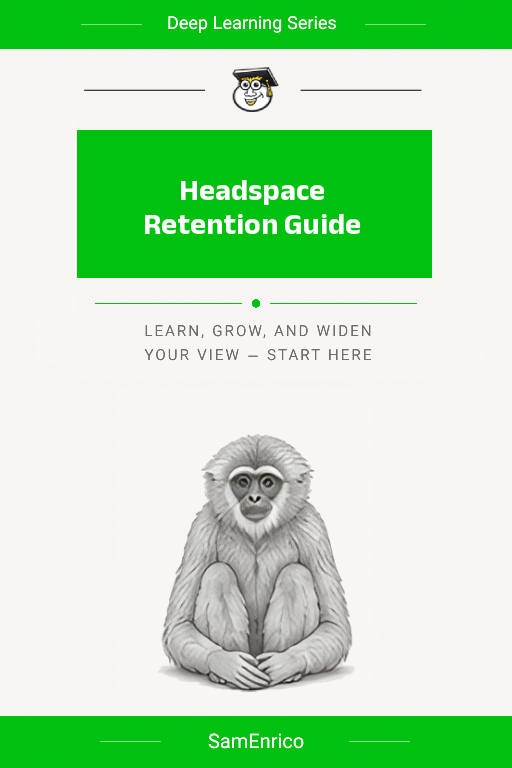
Headspace Retention Guide eBook
Analyze meditation progress, sleep casts, and dail
by Motley Altha
Analyze meditation progress, sleep casts, and daily reminders that drive wellness app retention.
Formats
Free sample
Chapter 1: The Impossible Easy Thing--–- At 2:17 on a Tuesday morning, Sarah Chen did something she had done forty-seven times before. She downloaded a meditation app.Her phone screen cast the only light in her bedroom. Her husband slept beside her, undisturbed by the glow or the soft thud of her thumb against glass. Outside, the San Francisco fog pressed against the window like a held breath. Inside, Sarah’s mind was doing what it always did at 2:17 AM: running through every email she hadn’t sent, every conversation she’d mishandled that day, every possible future in which her startup failed and her team lost their salaries and her reputation crumbled into something unrecognizable.She had downloaded Calm in January.
Headspace in March. Ten Percent Happier in June. A forgettable white-label app called “Mindful Minutes” in August. Each time, the ritual was the same: the hopeful installation, the earnest first session, the brief sense of having finally found the solution. And then, by the second week, the slow fade.
The notifications that stopped feeling like invitations and started feeling like accusations. The quiet shame of deleting an app that promised only good things.This time, she told herself, would be different. This time, she was using Headspace again, but she would actually stick with it. She had read the studies. She knew that meditation reduced cortisol, increased gray matter density, improved emotional regulation.
She knew that Andy Puddicombe’s voice was scientifically calibrated to soothe. She knew all of it.She also knew, with the certainty of someone who had failed forty-seven times, that she would probably fail again.What Sarah did not know—what almost no user knows—is that her failure was not a personal weakness. It was not a lack of willpower, discipline, or spiritual seriousness. Her failure was a design problem. And the app she was downloading had been built, quite intentionally, to exploit the very patterns that had caused her to fail.The Contradiction at the Heart of Wellness Here is the central paradox of modern meditation: the practice requires absolutely nothing.
No equipment. No gym membership. No special clothing. No expensive ingredients. No travel.
No partner. No certification. No app, even, though apps have become the primary delivery mechanism for millions of people.And yet: most people cannot maintain a daily practice.The data is startling. Across the major meditation apps—Headspace, Calm, Ten Percent Happier, Insight Timer—the median user completes fewer than six sessions before churning. Six sessions.
That is less than one week of the vaunted “Take 10” challenge that Headspace pioneered. Of users who complete the first ten days, fewer than twenty percent make it to thirty days. Of those who make it to thirty days, fewer than half make it to ninety days. The dropout curve is exponential, not linear.This is not because meditation is ineffective. The clinical literature is unambiguous: mindfulness meditation reduces symptoms of anxiety, depression, and chronic pain.
It improves attention, working memory, and emotional regulation. It changes the brain in measurable ways—increased cortical thickness in the hippocampus, decreased amygdala volume. The effects are real, replicable, and substantial.So why do people quit?The standard answer—the one whispered in wellness circles and self-help books—is that people lack discipline. They want the benefits without doing the work. They are lazy, distracted, addicted to their phones, incapable of sitting still.
The implication is moral: quitting is a failure of character.This book argues the opposite. The barrier to meditation is not a lack of willpower. It is psychological friction—the mind’s innate, evolutionarily hardwired resistance to silence and introspection. And the apps that succeed are not the ones that teach meditation most effectively. They are the ones that engineer the habit most cleverly.The 2026 Wellness Boom: A Market Built on Anxiety To understand retention in wellness apps, one must first understand the context in which they operate.
The mid-2020s have seen an unprecedented surge in what industry analysts call “the anxiety economy.” In 2025 alone, global spending on digital wellness reached 87billion,upfrom87 billion, up from 87billion,upfrom42 billion in 2020. Meditation apps captured roughly $4.2 billion of that market, with Headspace and Calm accounting for nearly two-thirds of all paying subscribers.What drives this growth? Not a sudden mass conversion to spiritual practice. The primary driver is a sustained, multi-year increase in clinical and subclinical anxiety. The American Psychological Association’s 2025 Stress in America survey found that 67% of adults reported feeling “completely overwhelmed” by stress at least once in the preceding month—up from 55% in 2019.
Among adults aged 18–34, the figure was 81%.These numbers translate directly into app downloads. When a person feels anxious, they search for solutions. Meditation apps are inexpensive, accessible, and carry no social stigma. They promise relief in ten minutes or less. They are, in many ways, the perfect product for an anxious age.But they also face a fundamental problem: anxiety is a terrible foundation for habit formation.Why Anxiety Undermines Consistency This is the hidden dynamic that most retention strategies ignore.
Anxiety drives the initial download—the 2:17 AM panic, the desperate search for something that will make the feeling stop. But anxiety also undermines the consistency required to build a lasting practice.Here is why. When a person is acutely anxious, their nervous system is in a state of high arousal. The sympathetic nervous system—the “fight or flight” response—is activated. Cortisol and adrenaline are elevated.
The default mode network of the brain, which generates self-referential thought and rumination, is hyperactive.Meditation, particularly mindfulness meditation, asks the user to do the opposite of what their anxious brain wants to do. It asks them to sit still when every instinct says to move. It asks them to observe thoughts without engaging when every instinct says to problem-solve. It asks them to breathe slowly when every instinct says to breathe quickly and shallowly.The result is that the first few meditation sessions for an anxious user are often unpleasant. The mind races.
The body fidgets. The experience feels less like relief and more like being trapped in a room with a screaming child. Many users conclude, reasonably, that meditation “doesn’t work for them.”But the problem is not meditation. The problem is that the user started with the wrong intervention at the wrong time. An acutely anxious person may need breathwork, progressive muscle relaxation, or simply a sleep cast—not a mindfulness meditation that asks them to observe their racing thoughts with equanimity.This is where app design becomes retention engineering.
The apps that succeed are the ones that match the intervention to the user’s current state, not to an idealized version of what the user should be doing.The Take 10 Solution: Lowering the Barrier to Entry Headspace’s most famous product feature—the “Take 10” challenge—is often described as a content strategy. Ten sessions, ten minutes each, ten days. The framing is simple: just ten minutes a day for ten days. What could be easier?But Take 10 is not primarily a content strategy. It is a behavioral intervention disguised as content.
And its genius lies in three specific design choices that have nothing to do with meditation and everything to do…
This is the end of the free sample. Get the eBook to keep going. Buy now
About this book
Details
- Author
- Motley Altha
- Publisher
- SamEnrico
- Language
- English
- Genre
- Non-Fiction, Strategic Atlas, Retention Strategy
- Released
- 2026-06-01
- Pages (approx.)
- 157
- Available as
- eBook, Audiobook

Read better in the ZLOADR app
Your eBooks on your phone or tablet. Sign in with your SamEnrico account and start reading.
More by Motley Altha
 Dry Cleaning Chemical AlternativesMotley Altha$11.99
 Partner Family DisapprovalMotley Altha$11.99
 Body Scan For Migraine AuraMotley Altha$11.99
 The Apology That Repairs TrustMotley Altha$11.99
 Nairobi Founder Dilution GuideMotley Altha$11.99
 The Dreaming Stage: How John Bell Revived Shakespeare in the OutbackMotley Altha$11.99
 Employee Relations ConsultantMotley Altha$11.99
 Commission Agreement TrapsMotley Altha$12.99
 Understanding PseudopolycythaemiaMotley Altha$17.99
You may also like
 Hong Kong Handover 1997Dunn Johnnie$11.99
 Zumba For Postnatal Recovery CourseNeal Christian$11.99
 Zumba for BeginnersLadner Nikia$11.99
 YouTube Comment Mining GuideHumes Pandora$12.99
 Worry Box MeditationCarlin Rudy$11.99
 Workplace Stress MeditationNguyen Lynn$11.99
 Workplace Stress and Sleep RepairHawley Ivory$11.99
 Workplace Perfectionism CureDelaney Jeffry$11.99
 Workplace Injustice Anger GuideWallen Isabelle$11.99
 Work Addiction and Burnout LinkGreenwood Ester$11.99
 Women in Yoga and WellnessBeattie Galina$11.99
 Women in Stand Up ComedyChun Evangeline$11.99