
Non-FictionFirst 30 DaysPR for Beginners
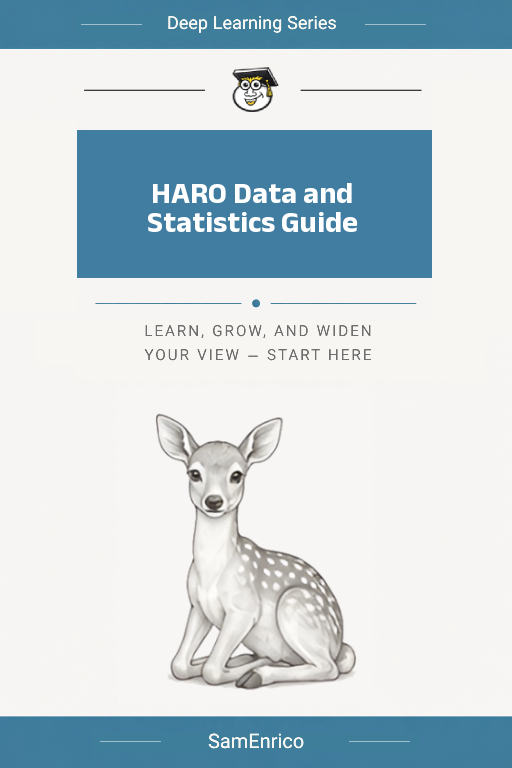
HARO Data and Statistics Guide eBook
Include compelling data in HARO responses. Origina
by Lenz Kiyoko
Include compelling data in HARO responses. Original research, surveys, and industry statistics that stand out.
Formats
Free sample
Chapter 1: The Great Un-Opening--Every morning, three hundred and forty-seven people wake up and send the exact same email to a journalist they have never met. The subject line reads something like “Re: Query #1428” or “Expert tips for your story.” Inside, they offer their wisdom, their experience, their carefully curated opinions. And every evening, three hundred and forty-six of those emails are deleted without being read. The three hundred and forty-seventh gets skimmed for ten seconds, then either used or ignored based entirely on whether it contains something the other three hundred and forty-six did not provide.Welcome to the reality of HARO in the age of artificial intelligence. You are not competing against ten other experts anymore.
You are competing against three hundred strangers, half of whom are now using Chat GPT to generate their responses. And in that environment, your opinion—no matter how brilliant, no matter how hard-won—is worth exactly nothing.This is not hyperbole. This is mathematics.Journalists who use HARO (Help a Reporter Out) receive an average of three hundred responses per query, according to a 2024 survey of three hundred working reporters conducted by Muck Rack. Of those three hundred responses, the journalist will open approximately forty. Of those forty, they will read perhaps ten in full.
And of those ten, they will cite one, maybe two, in their final story.The math is brutal. Your odds of winning any given HARO query are somewhere between one in three hundred and one in forty, depending on how well you write your subject line. But there is a cheat code. There is a way to jump from the three hundred to the ten to the one. That cheat code is original data.This book is not about HARO.
Not really. HARO is just the vehicle. This book is about something much more fundamental: the collapse of opinion as a commodity and the rise of proprietary data as the only remaining currency in earned media. Every chapter that follows will teach you exactly how to find, create, format, and pitch data that journalists literally cannot get anywhere else. But before we get to the how, we must understand the why.
And the why starts with a single, uncomfortable truth about the moment we are living in.The Day the Opinions Died In November 2022, Open AI released Chat GPT to the public. Within five days, it had one million users. Within two months, it had one hundred million. And within six months, every journalist in America had received their first batch of AI-generated HARO responses.The problem was not that the AI responses were bad. The problem was that they were good enough.An AI-generated response to a HARO query about remote work trends sounds like this: “Based on my analysis of current workplace dynamics, it appears that remote work offers significant benefits in terms of employee satisfaction and productivity, though challenges remain around collaboration and company culture.
Many organizations are adopting hybrid models to balance these competing priorities.”That is not wrong. It is also not helpful. It is a perfectly grammatical, perfectly plausible, perfectly forgettable paragraph that contains zero information the journalist did not already have. It is the textual equivalent of beige paint.Before Chat GPT, a human writing that paragraph might have had a small chance of getting cited, simply because the journalist had no better option. Today, that paragraph is indistinguishable from the two hundred other AI-generated responses in the journalist’s inbox.
The journalist cannot tell the difference between a human offering genuine expertise and a language model predicting the most statistically likely sequence of words. More importantly, the journalist does not care to try. When every response looks the same, the journalist deletes all of them and moves on.The only way to survive this filter is to offer something that AI cannot produce. And here is the critical insight: AI cannot produce original data. AI can summarize existing data.
AI can rephrase published statistics. AI can even invent plausible-sounding numbers—a phenomenon known as hallucination. But AI cannot survey one thousand people overnight. AI cannot analyze your company’s customer support tickets. AI cannot run a mystery shopper study across fifty competitors and report the results.
Those activities require a human with a budget, a plan, and the willingness to do something that cannot be automated.That human is you.The Three Responses That Cannot Be Ignored Every HARO response falls into one of three categories. The first category, representing approximately ninety percent of all responses, is the opinion response. This is the “I think,” “in my experience,” “the trend I am seeing” response. It contains no numbers, no methodology, no evidence that cannot be generated by a language model. These responses are deleted at a rate of ninety-eight percent.The second category, representing approximately nine percent of responses, is the aggregated data response.
This is the “according to a study by Mc Kinsey” or “as reported by the Bureau of Labor Statistics” response. These responses are better than opinions because they contain actual numbers. But the numbers are not proprietary. The journalist could have found them themselves. These responses are deleted at a rate of approximately seventy percent.The third category, representing less than one percent of responses, is the proprietary data response.
This is the “we surveyed eight hundred HR leaders last week and found that forty-seven percent regret their return-to-office mandate” response. This response contains a number that the journalist cannot verify anywhere else. The journalist must either trust your data or do their own research. And because journalists are perpetually under deadline, they will choose to trust your data—provided you present it correctly.This book is about moving from the first category to the third. Every chapter, every framework, every template is designed to help you produce proprietary data responses that belong to that one percent.But here is where most guides get it wrong.
They assume that proprietary data means expensive data. They assume you need a six-figure research budget, a Ph D in statistics, or a team of analysts. That assumption is false. The remainder of this chapter will introduce the three methods of proprietary data creation that anyone can use, regardless of budget or experience. Then, in Chapter 2, we will learn how to spot the HARO queries that are actually asking for the data you can provide.The Ladder of Data Credibility Not all data is created equal.
Journalists have preferences, and those preferences are driven by two competing forces: speed and credibility. The faster you can deliver data, the more likely you are to meet a HARO deadline. The more credible your data, the more likely the journalist is to use it. The sweet spot is where speed and credibility intersect.Let me introduce the Ladder of Data Credibility. This framework will appear throughout the book, and understanding it is essential to choosing the right method for each HARO query.At the bottom rung, fastest but least credible, sits the proprietary survey.
This is the method where you ask a group of people a set of questions and report the answers. A survey of four hundred people fielded overnight can produce…
This is the end of the free sample. Get the eBook to keep going. Buy now
About this book
Details
- Author
- Lenz Kiyoko
- Publisher
- SamEnrico
- Language
- English
- Genre
- Non-Fiction, First 30 Days, PR for Beginners
- Released
- 2026-05-30
- Pages (approx.)
- 135
- Available as
- eBook, Audiobook

Read better in the ZLOADR app
Your eBooks on your phone or tablet. Sign in with your SamEnrico account and start reading.
More by Lenz Kiyoko
 Zulu Beadwork Language GuideLenz Kiyoko$11.99
 TEDx Speaker Anxiety GuideLenz Kiyoko$11.99
 The Teen Perfectionism Release GuideLenz Kiyoko$11.99
 Divorce and Mutual FriendsLenz Kiyoko$11.99
 Understanding Alcohol Withdrawal SafelyLenz Kiyoko$11.99
 The Phantom of the Grand Opera: The Haunting Legacy of Black VirtuososLenz Kiyoko$11.99
 A Beginners Guide to Greco-Roman wrestling (Volume 1)Lenz Kiyoko$11.99
 Luxury Brand Pricing GuideLenz Kiyoko$12.99
 Understanding Porencephaly Cerebellar Hypoplasia MalformationsLenz Kiyoko$17.99
 Charpy Impact TestingLenz Kiyoko$11.99
You may also like
 Hong Kong Handover 1997Dunn Johnnie$11.99
 Zumba For Postnatal Recovery CourseNeal Christian$11.99
 Zumba for BeginnersLadner Nikia$11.99
 YouTube Comment Mining GuideHumes Pandora$12.99
 Worry Box MeditationCarlin Rudy$11.99
 Workplace Stress MeditationNguyen Lynn$11.99
 Workplace Stress and Sleep RepairHawley Ivory$11.99
 Workplace Perfectionism CureDelaney Jeffry$11.99
 Workplace Injustice Anger GuideWallen Isabelle$11.99
 Work Addiction and Burnout LinkGreenwood Ester$11.99
 Women in Yoga and WellnessBeattie Galina$11.99
 Women in Stand Up ComedyChun Evangeline$11.99