
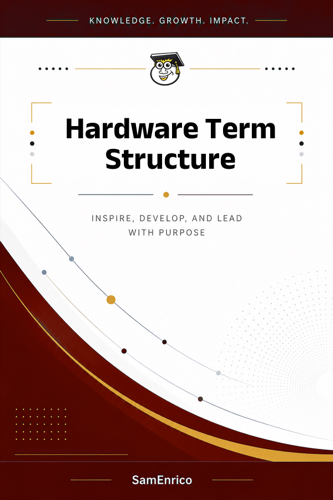
Hardware Term Structure Audiobook
Product development financing terms from 200 hardw
by Bair Valda
Product development financing terms from 200 hardware deals.
Formats
Free sample
Chapter 1: The Silicon Pledge--–- On a Tuesday morning in Dresden, Germany, a lone semiconductor fabrication facility sat silent. The year was 1997. Advanced Micro Devices had poured nearly $2 billion into building what was supposed to be Europe's most advanced chip factory. The machines were installed. The cleanrooms were certified.
The wafers were loaded. And then the money ran out.Not because the technology failed. Not because the market collapsed. But because the lenders and the borrowers had fundamentally misunderstood what "completion" meant. The construction was finished.
The building was beautiful. But the fab could not produce a single sellable microprocessor. And under the loan agreements signed eighteen months earlier, no one had bothered to define what "done" actually looked like.The lenders—a syndicate led by Dresdner Bank—faced a horrifying realization. They had lent against equipment that was bolted to a concrete floor in a building they did not own, in a country where foreclosure laws favored the tenant, not the bank. The borrower, AMD, faced an equally terrifying problem: they had spent the money, but they could not draw the next tranche because they could not prove the fab worked.
The facility was too expensive to abandon and too incomplete to operate.For six months, the two sides circled each other. Lawyers drafted competing definitions of "technical completion." Engineers argued over yield percentages. Accountants debated whether a wafer that failed electrical testing was "work in progress" or "scrap." And somewhere in the middle of this chaos, a junior associate at Dresdner wrote a memo that would become the template for every major hardware financing for the next twenty-five years. The memo had three sentences:"We cannot lend against future revenue. We cannot lend against the building.
We can only lend against the machine's ability to make something someone will buy. Therefore, the loan draws when the machine makes that thing, not when the contractor finishes the roof."That memo was the birth of modern hardware term structure. And everything you think you know about borrowing money for physical products is wrong.The Great Misunderstanding: Code vs. Atoms If you have ever raised money for a software company, you understand a certain set of rules. You sign a term sheet.
You close the round. The money hits the bank account. You spend it on engineers, servers, and marketing. The investor's only collateral is your future revenue and whatever intellectual…
This is the end of the free sample. Get the Audiobook to keep going. Buy now
About this book
Details
- Author
- Bair Valda
- Publisher
- SamEnrico
- Language
- English
- Genre
- Non-Fiction, Capital & Valuation Register, Hardware
- Released
- 2026-06-08
- Pages (approx.)
- 144
- Available as
- eBook, Audiobook

Listen in the VoxFlicks app
Audiobooks and audio dramas wherever you go. Sign in with your SamEnrico account and press play.
More by Bair Valda
 Ventriloquist MeltdownBair Valda$11.99
 Napping For Pregnancy FatigueBair Valda$11.99
 Caregiver for Developmental DisabilitiesBair Valda$11.99
 Trance for Stammering ReductionBair Valda$11.99
 Fibromyalgia and Mental HealthBair Valda$11.99
 MBSR for Travel StressBair Valda$11.99
 Grief Processing Hypnosis GuideBair Valda$11.99
 Hiring Property Management FirmBair Valda$11.99
 Echoes of the Last Lighthouse KeeperBair Valda$11.99
 The Lost Kingdoms: Explorers of the Sahara's Forgotten GoldBair Valda$11.99
 The Last Letter: The Untold Story of the Titanic's Forgotten HeroBair Valda$11.99
 How to Become a Dehairing-machine TenderBair Valda$11.99