
Hand Gesture Avoidance Guide eBook
Prevents escalation when receiving or feeling prov
by Cave Flor
Prevents escalation when receiving or feeling provoked by gestures.
Formats
Free sample
Chapter 1: The Primal Code...--–- The middle finger, in its sudden, silent appearance, has ended more marriages, terminated more jobs, and started more fistfights than any slur ever uttered. Yet no one teaches you how to survive it.You are walking through a parking lot. A driver cuts you off, then slams on his brakes. You honk—lightly, you think—only as a warning. He steps out.
He doesn't shout. He doesn't curse. He simply raises his right hand, extends his middle finger, and holds it there like a monument to your failure. Your chest tightens. Your face flushes.
Your hands begin to tremble. In less than one second, a single hand gesture has bypassed every ounce of your rationality and plunged you directly into the oldest chemical bath the human body possesses: the fight-or-flight response.Why? Why does a raised finger—a piece of bone and tendon wrapped in skin—possess more power than a shouted insult? Why can you shrug off someone calling you a fool, yet a simple "come here" curl of a finger from your boss can ruin your entire afternoon? Why does a pointed finger aimed at your chest make you want to swat it away like a venomous insect, even when the person pointing is physically smaller than you?The answer lies not in psychology, nor in sociology, nor in the study of manners.
It lies in neurobiology. The hand gesture is the oldest language on earth—older than spoken words, older than written symbols, older even than the human species itself. And your brain is hardwired to obey it, fear it, and react to it before your conscious mind has any say in the matter.This chapter is not a history lesson. It is a tour of the machinery inside your skull that determines, in the span of a heartbeat, whether a gesture will pass through you like a ghost or detonate inside you like a bomb. You will learn why your middle finger means more than words, why a pointing finger can feel like a physical invasion, and why the open palm is the single most powerful peace signal you possess.
More importantly, you will learn the one thing no self-defense book tells you: gestures do not trigger your anger. They trigger your survival system. And survival systems do not care about being right. They only care about staying alive.By the end of this chapter, you will never look at a raised hand the same way again.The 30-Millisecond Head Start Let us begin with a simple experiment you can conduct on yourself. Stand in front of a mirror.
First, say the word "stop" out loud. Notice how long it takes to form the word: your tongue presses against the roof of your mouth, your vocal cords engage, air passes through your larynx, and finally the sound emerges. Now, without speaking, raise your open palm in the "stop" gesture. Notice the difference. The palm is instantaneous.
There is no breath, no vibration, no delay between intention and expression.This is not merely a convenience of anatomy. It is an evolutionary advantage. Your visual system processes threat cues approximately 30 milliseconds faster than your auditory system processes the same information. Thirty milliseconds may sound insignificant. In terms of survival, it is an eternity.
A snake striking from the grass, a club swinging toward your head, a hand reaching for your throat—all of these threats register in your visual cortex before the sound of the attack even reaches your ears.Your brain learned this lesson long before you were born. The primate ancestors from whom you descend did not survive because they listened carefully to warnings. They survived because they saw the threat first. As a result, the neural pathways from your eyes to your amygdala (the brain's threat detection center) are shorter, faster, and more myelinated than the pathways from your ears. In a very real sense, you are built to see danger before you hear it.This is why a pointing finger can raise your heart rate faster than a shouted insult.
The insult must travel from the speaker's mouth, through the air, into your ear canal, be converted into electrical signals, be interpreted by your auditory cortex, and then be passed along to your emotional centers. The finger, by contrast, arrives directly at your amygdala through a high-speed visual expressway. By the time the words "You have a problem?" have been fully processed, your body has already decided whether to fight, flee, or freeze based entirely on the gesture that accompanied them.This is the first and most important truth of gesture avoidance: you are not overreacting when a hand signal disturbs you. You are reacting precisely as your biology intends. The problem is not your sensitivity.
The problem is that modern life is filled with gestures that your ancient nervous system was never designed to interpret safely.The Two Brains: Monkey and Lizard To understand why gestures provoke such powerful reactions, we must temporarily abandon the idea that you have one brain. You do not. You have at least two, and they are constantly competing for control of your behavior. Drawing on the taxonomy developed by conflict researcher Rory Miller, we will call these the Monkey Brain and the Lizard Brain.The Monkey Brain: Status, Symbols, and Social Order The Monkey Brain is your social processor. It is responsible for hierarchy, reputation, belonging, and the endless calculation of where you stand relative to other people.
When you feel embarrassed because someone laughed at you, that is your Monkey Brain. When you feel proud because your boss praised you, that is your Monkey Brain. When you obsess over whether your joke landed well at a dinner party, that is your Monkey Brain working overtime.The Monkey Brain is deeply concerned with gestures because gestures are a primary currency of social status. A wave can mean "hello" or "goodbye." A thumbs-up can mean "good job" or, in certain cultures, an obscenity. A pointed finger can mean "look over there" or "you are the problem." The Monkey Brain is constantly decoding these signals, asking: "Is this person respecting me?
Are they trying to dominate me? Are they including me or excluding me?"When the Monkey Brain interprets a gesture as a status attack, it generates emotions like shame, indignation, and resentment. These are unpleasant, but they are not immediately dangerous. You can feel ashamed and still walk away. You can feel indignant and still choose not to escalate.
The Monkey Brain's reactions are social, not survival-based. They hurt your ego, but they do not threaten your life.The Lizard Brain: Survival, Predators, and Physical Threat The Lizard Brain is older than the Monkey Brain by hundreds of millions of years. It is the part of your neural architecture that you share with reptiles, amphibians, and fish. It does not care about your reputation. It does not care about your feelings.
It cares about one thing and one thing only: keeping your body alive for the next sixty seconds.The Lizard Brain is not triggered by symbolic gestures. It is triggered by movements that resemble predator attacks. A hand moving rapidly toward your…
This is the end of the free sample. Get the eBook to keep going. Buy now
About this book
Details
- Author
- Cave Flor
- Publisher
- SamEnrico
- Language
- English
- Genre
- Non-Fiction, Self-Help, Non-escalation
- Released
- 2026-06-07
- Pages (approx.)
- 144
- Available as
- eBook, Audiobook

Read better in the ZLOADR app
Your eBooks on your phone or tablet. Sign in with your SamEnrico account and start reading.
More by Cave Flor
 The Yelling ApologyCave Flor$11.99
 Group Mentorship Program DesignCave Flor$11.99
 The MBSR for Clergy GuideCave Flor$11.99
 Lawyer Active Listening GuideCave Flor$11.99
 Redgrave DynastyCave Flor$11.99
 Creative Collaboration BoostCave Flor$11.99
 Basketball Injury PreventionCave Flor$11.99
 Short Stature Childhood WorthCave Flor$11.99
 The Billionaire’s Shadow: How Warren Buffett’s Secretive Right-Hand Man Built an EmpireCave Flor$11.99
 The Battle of the Euphrates Delta: The First Environmental WarCave Flor$11.99
 Ragnarok Unbound: The Wolf's Howl at the End of DaysCave Flor$11.99
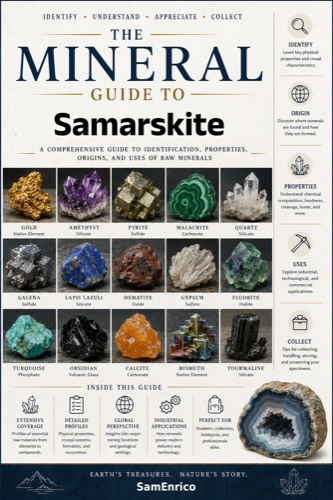 The Mineral Guide to SamarskiteCave Flor$11.99