
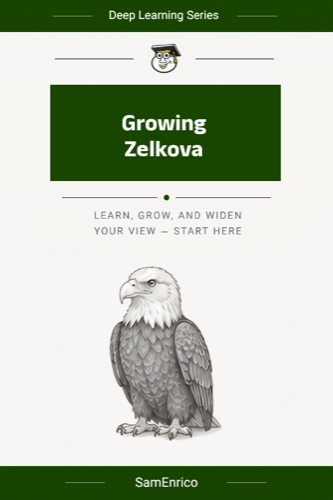
Non-FictionInformativeEducational
Growing Zelkova eBook
This publication, published by SamEnrico, covers G
by Rush Meta
This publication, published by SamEnrico, covers Growing Zelkova
Formats
Free sample
Chapter 1: The Elm That Survived...--–- In the summer of 1945, a young tree growing less than a mile from the epicenter of the atomic blast in Hiroshima was stripped of every leaf, every branch, and every sign of life. Its bark was blackened and cracked. Its cambium layer – the thin, green, living tissue just beneath the bark – was scorched beyond recognition. Any reasonable observer would have declared it dead. The following spring, that tree sprouted.
Today, more than seven decades later, that Zelkova serrata stands as a living monument in the Hiroshima Peace Memorial Park. It is called a hibakujumoku – a “survivor tree” – and it has become a symbol of resilience that draws visitors from around the world.This is not a miracle. It is biology. But it is biology that tells us something profound about the tree you are about to plant, nurture, and one day leave for future generations. The Zelkova is not merely a shade tree.
It is not simply a replacement for the American Elms that Dutch Elm Disease stole from our Main Streets. It is a living testament to what happens when nature builds for endurance rather than speed, for adaptability rather than convenience.If you are reading this book, you have likely felt the absence of the great elms. Perhaps you remember streets lined with cathedral-like canopies, the branches of American Elms meeting overhead to form a green tunnel. Or perhaps you have only heard stories from your parents or grandparents – stories of trees that turned small towns into shaded sanctuaries before a fungal disease carried by a tiny bark beetle swept across the continent and killed an estimated 77 million trees. That loss left a wound in the American landscape that has never fully healed.We tried replacements.
We planted silver maples, which grew fast but shattered in ice storms. We planted callery pears, which smelled unpleasant and split apart at their weak branch unions. We planted ashes, which now face their own extinction from the emerald ash borer. We planted oaks, which are magnificent but slow. And all the while, a better answer waited quietly in botanical gardens and arboretums, overlooked because its name was unfamiliar and its reputation unknown.Zelkova.
Say it slowly: Zel-ko-va. The name comes from the Georgian language of the Caucasus Mountains, where one species, Zelkova carpinifolia, has grown for millennia. But it is the Japanese species, Zelkova serrata – known as Keyaki or Keaki – that has captured the hearts of gardeners, bonsai artists, and city foresters around the world. This is the tree that survived Hiroshima. This is the tree that resists the disease that killed the elms.
This is the tree that, planted today, will shade your grandchildren.The Great Dying: What We Lost To understand why Zelkova matters, you must first understand what we lost. Dutch Elm Disease (DED) is not a Dutch disease at all – it was first identified in the Netherlands, but its origins trace to Asia. The fungus, Ophiostoma ulmi (and its more aggressive relative Ophiostoma novo-ulmi), is spread by elm bark beetles. When an infected beetle tunnels into the bark of a healthy elm, the fungus enters the tree’s vascular system – the xylem that carries water from roots to leaves. The tree responds by plugging its own vessels to contain the infection, but in doing so, it starves itself.
A tree that might have lived 300 years can die in a single season.The first wave of DED hit the United States in the 1920s. A second, more virulent wave began in the 1960s. By the 1980s, the American Elm – Ulmus americana, the tree that defined the character of countless towns from New England to the Pacific Northwest – had been functionally eliminated as a street tree. A few survivors remain, treated with expensive fungicide injections and protected by vigilant monitoring. But the elm-lined streets of America’s imagination are now mostly ghosts.Gardeners and foresters have searched for alternatives ever since.
Some have turned to hybrid elms, crossing American Elms with Asian species that show resistance. ‘Princeton,’ ‘Valley Forge,’ and ‘New Harmony’ are worthy trees. But they are still elms, still susceptible – though less so – and still require careful management. Others have turned to completely different genera: zelkova, for reasons we will explore, offers something distinct.Enter the Keaki: A Tree Apart The Zelkova serrata is not an elm. It is a cousin, belonging to the same family – Ulmaceae – but a different genus.
Think of it as the elm’s hardier, more reserved relative. Where the American Elm grows fast and tall – up to 120 feet – with a weeping, fountain-like habit, the Zelkova is more restrained. It reaches 60 to 80 feet in cultivation, with a distinctive vase-shaped crown that broadens at the top like a goblet turned upright. Its bark is smooth and mottled, flaking off in plates to reveal patches of gray, orange, and brown – a texture that invites touch and rewards close inspection. Its leaves are smaller than those of the American Elm, more sharply serrated, and they turn a reliable yellow, orange, or brick red in autumn.But the quality that matters most to the modern planter is this: Zelkova serrata is highly resistant to Dutch Elm Disease.
Not immune – no plant is truly immune to anything – but so resistant that infection is vanishingly rare in cultivated settings. The tree’s vascular system simply does not react to the fungus the way an elm’s does. It is as if the Zelkova has a genetic memory of the disease, having co-evolved with it in its native range of Japan, Korea, and eastern China. The beetles may land on a Zelkova. The fungus may enter its xylem.
But the tree does not panic. It does not plug its own vessels. It carries on.This resistance is not the result of genetic engineering or selective breeding. It is the gift of deep time – millions of years of evolution in a landscape where the fungus was present. The American Elm evolved in isolation, never encountering the pathogen until humans brought it across oceans.
The Zelkova, by contrast, learned to live with its enemy long before the first gardener picked up a pruning saw.The Three Faces of Zelkova Before we go further, you should know which Zelkova you are likely to encounter. The genus contains five or six species, depending on which botanist you consult, but only three are relevant to most growers.Zelkova serrata – Japanese Zelkova, also called Keyaki or Keaki. This is the species you will plant 95 percent of the time. It is the most widely available, the most adaptable, and the best choice for both street planting and bonsai. Its fall color is spectacular.
Its growth rate is moderate – one to two feet per year – which means you will wait longer for shade than you would with a silver maple, but you will be rewarded with stronger wood and a longer-lived tree. Hardy to USDA Zone 5 (minimum winter temperatures of -20°F / -29°C), with some cultivars surviving in Zone 4 with protection.Zelkova carpinifolia – Caucasian Zelkova. This is the giant of the genus, reaching up to 100 feet in its native range of the Caucasus Mountains. Its leaves…
This is the end of the free sample. Get the eBook to keep going. Buy now
About this book
Details
- Author
- Rush Meta
- Publisher
- SamEnrico
- Language
- English
- Genre
- Non-Fiction, Informative, Educational
- Released
- 2026-05-18
- Pages (approx.)
- 141
- Available as
- eBook, Audiobook

Read better in the ZLOADR app
Your eBooks on your phone or tablet. Sign in with your SamEnrico account and start reading.
More by Rush Meta
 Pet Loss For Dog WalkersRush Meta$11.99
 Micronutrients For Migraine GuideRush Meta$11.99
 Heart Health Napping GuideRush Meta$11.99
 Venture Debt TermsRush Meta$11.99
 Fibromyalgia Fatigue SolutionsRush Meta$11.99
 Imposter Syndrome For New GradsRush Meta$11.99
 Caregiver for Alzheimer's PatientsRush Meta$11.99
 The Comedy Store DiariesRush Meta$11.99
 Fair Housing Compliance GuideRush Meta$11.99
 The Golden Ledgers of Timbuktu: Africa's Financial GeniusesRush Meta$11.99
 Rum Wars: The Caribbean’s Bootlegger KingpinsRush Meta$11.99
 Prompting for Real-Time Decision SystemsRush Meta$11.99
You may also like
 Hong Kong Handover 1997Dunn Johnnie$11.99
 Zumba For Postnatal Recovery CourseNeal Christian$11.99
 Zumba for BeginnersLadner Nikia$11.99
 YouTube Comment Mining GuideHumes Pandora$12.99
 Worry Box MeditationCarlin Rudy$11.99
 Workplace Stress MeditationNguyen Lynn$11.99
 Workplace Stress and Sleep RepairHawley Ivory$11.99
 Workplace Perfectionism CureDelaney Jeffry$11.99
 Workplace Injustice Anger GuideWallen Isabelle$11.99
 Work Addiction and Burnout LinkGreenwood Ester$11.99
 Women in Yoga and WellnessBeattie Galina$11.99
 Women in Stand Up ComedyChun Evangeline$11.99