
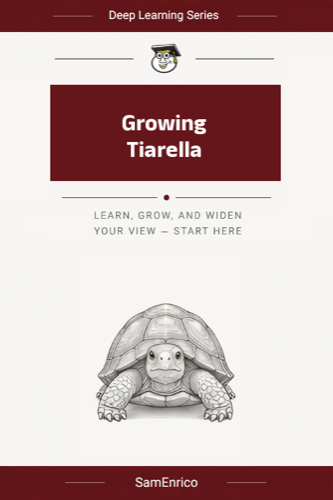
Non-FictionInformativeEducational
Growing Tiarella eBook
This publication, published by SamEnrico, covers G
by Becnel Burt
This publication, published by SamEnrico, covers Growing Tiarella
Formats
Free sample
Chapter 1: The Shade Garden’s Secret Weapon...--Every gardener has a shame spot. It’s that corner of the yard where nothing seems to grow—the bare, dusty patch beneath the sprawling oak, the narrow alley between the house and the garage that receives only an hour of fractured afternoon light, the north-facing foundation where grass turns to moss and then to mud. You’ve tried everything. You planted hostas, only to watch them become a slug buffet. You tried impatiens, but they petered out by August.
You scattered shade mix seed packets, and nothing happened at all. You’ve spent money, you’ve spent weekends, and you’ve spent your patience. Eventually, you gave up and learned to look away from that spot—or worse, you covered it with landscape fabric and a thin layer of decorative gravel, pretending it wasn’t there.I know because I had that spot. For three years, I fought a twenty-foot stretch of dry, root-choked soil under a massive sugar maple in my backyard. It was the kind of shade that felt aggressive: no direct sun from April through October, a dense canopy that shed water like an umbrella, and soil so fibrous with maple roots that I broke two trowels trying to dig.
I tried ferns, which turned brown. I tried astilbe, which wilted. I tried lamium, which spread for one glorious summer and then vanished the next. I even resorted to the classic homeowner’s defeat: a concrete birdbath surrounded by mulch, a monument to my failure.Then, on a whim, I bought a flat of something I had never heard of at a local plant sale. The label said “Tiarella—Foamflower.” The plant was unassuming—a low rosette of maple-shaped leaves with dark burgundy veins running through bright green tissue.
It looked like a modest little groundcover that might survive a season before joining the cemetery of perennials under the maple. I planted it in the fall, said a small prayer, and forgot about it.The following spring, I walked out to the backyard and stopped. That ugly patch of bare soil was gone. In its place was a lush, knee-high carpet of foliage, each leaf individually patterned like a tiny work of art. Above the leaves, delicate wands of pale pink flowers rose six inches, creating a soft, foamy haze that caught the early morning light.
Bees I had never seen before—small, metallic-green sweat bees—were working the flowers with focused intensity. The birdbath was no longer a monument to failure; it was an accent piece in a thriving garden. I hadn’t just planted a groundcover. I had discovered a secret.That secret is Tiarella, a genus of woodland perennials native to North America and Asia that may be the most underappreciated plant in the shade garden. For decades, Tiarella has lived in the shadow of its flashy relatives Heuchera (coral bells) and the intergeneric hybrid Heucherella (foamy bells).
Walk through any garden center in spring, and you will find whole tables of Heuchera in colors ranging from lime green to black-purple. You will find Heucherella marketed as the “best of both worlds.” But Tiarella? Tiarella is usually relegated to a few sad six-packs on a bottom shelf, labeled with nothing more than a Latin name and a price.This is a shame, because Tiarella does things its cousins cannot. It spreads—politely but persistently—to fill in bare spots where other shade plants refuse to grow. It blooms earlier and longer than Heuchera, providing nectar for native pollinators at a critical time of year.
It is almost entirely resistant to deer, rabbits, and slugs—three creatures that can devastate a shade garden overnight. Its foliage changes with the seasons, offering spring patterns, summer texture, autumn color, and winter structure in ways that few perennials can match. And perhaps most importantly, it thrives in the kinds of conditions that make other plants fail: dry shade, root competition, clay soil, and the dappled light beneath deciduous trees.This book is the result of my obsession with that unassuming flat of foamflower. Over the past twelve years, I have grown more than a hundred Tiarella cultivars, tracked their performance across different light and soil conditions, corresponded with breeders and nursery owners, and converted dozens of skeptical gardeners into foamflower evangelists. What I have learned is simple: if you have a shady spot in your yard—any shady spot—there is a Tiarella that will thrive there.
You do not need a green thumb. You do not need a degree in horticulture. You do not even need to be particularly good at keeping plants alive. Tiarella wants to live, and it will do most of the work for you.But before we get into the how—the planting, the care, the propagation, the design—we need to start with the what. What exactly is Tiarella?
Where did it come from? Why has it been overlooked for so long? And most importantly, why should you, the gardener reading this book, care enough to give it a place in your garden?Let us begin with a confession. I am a recovering plant snob. For years, I dismissed native plants as “weedy.” I favored exotic specimens with dramatic flowers and complicated cultivation requirements because they made me feel like a skilled gardener.
I grew Himalayan blue poppies (which died). I grew tree peonies (which sulked). I grew Japanese forest grass (which burned in summer). I was collecting trophies, not creating a garden. The plants that actually performed—that filled space, looked good, and asked for nothing—I treated as boring.
They were the wallpaper of the garden, not the art.Tiarella changed that perspective. It forced me to appreciate subtlety: the way a leaf’s veining deepens from pale green to burgundy as temperatures cool, the way a patch of foamflower will knit together to create a seamless carpet that suppresses every weed within reach, the way the flowers don’t shout but whisper, building a soft texture that makes bolder plants look even better. Tiarella taught me that the best plants are not the ones that demand attention but the ones that do their job so quietly and effectively that you only notice them when they are missing.So let this chapter serve as your introduction to a plant that deserves to be far better known. Whether you are a beginner who has never planted a perennial before, a frustrated homeowner trying to solve a bare-shade problem, or an experienced gardener looking to add something new to your collection, Tiarella has something to offer you. By the end of this book, you will know exactly how to choose, plant, care for, propagate, and design with this remarkable genus.
And you will wonder, as I did, how you ever gardened without it.What Is Tiarella? A Clear Definition Tiarella is a genus of herbaceous perennials in the Saxifragaceae family, which also includes Heuchera, Mitella (bishop’s cap), and Tellima (fringe cups). The name “Tiarella” comes from the Greek “tiara,” meaning a small crown or diadem, referring to the tiny, pointed fruits that follow the flowers. The common name “foamflower” describes the frothy appearance of the…
This is the end of the free sample. Get the eBook to keep going. Buy now
About this book
Details
- Author
- Becnel Burt
- Publisher
- SamEnrico
- Language
- English
- Genre
- Non-Fiction, Informative, Educational
- Released
- 2026-05-11
- Pages (approx.)
- 154
- Available as
- eBook, Audiobook

Read better in the ZLOADR app
Your eBooks on your phone or tablet. Sign in with your SamEnrico account and start reading.
More by Becnel Burt
 ABCDE For Team PrioritizationBecnel Burt$11.99
 Toothpaste Chemical GuideBecnel Burt$11.99
 Postpartum Single Parent GuideBecnel Burt$11.99
 Bipolar Tips GuideBecnel Burt$11.99
 MBSR Stress Reactivity ReductionBecnel Burt$11.99
 Capsaicin Cream GuideBecnel Burt$11.99
 Sarcopenia Electrolyte BalanceBecnel Burt$11.99
 Herbal Dream Enhancement GuideBecnel Burt$11.99
 Role Playing User FlowsBecnel Burt$11.99
 The Alchemist of Timbuktu: The Lost Genius of Muhammad al-WasitiBecnel Burt$11.99
 The Frozen Exiles: A Viking Rescue in the Arctic UnknownBecnel Burt$11.99
 Crowns and Conquest: The Forbidden Love of Queen Hortense and Napoleon’s NephewBecnel Burt$11.99
You may also like
 Hong Kong Handover 1997Dunn Johnnie$11.99
 Zumba For Postnatal Recovery CourseNeal Christian$11.99
 Zumba for BeginnersLadner Nikia$11.99
 YouTube Comment Mining GuideHumes Pandora$12.99
 Worry Box MeditationCarlin Rudy$11.99
 Workplace Stress MeditationNguyen Lynn$11.99
 Workplace Stress and Sleep RepairHawley Ivory$11.99
 Workplace Perfectionism CureDelaney Jeffry$11.99
 Workplace Injustice Anger GuideWallen Isabelle$11.99
 Work Addiction and Burnout LinkGreenwood Ester$11.99
 Women in Yoga and WellnessBeattie Galina$11.99
 Women in Stand Up ComedyChun Evangeline$11.99