
Non-FictionInformativeEducational
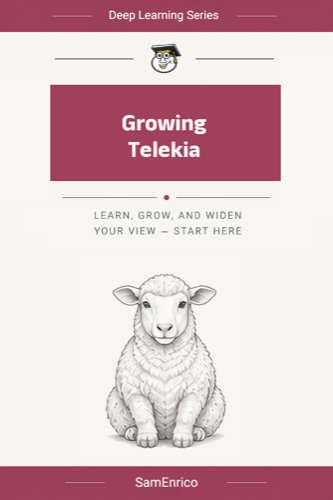
Growing Telekia
This publication, published by SamEnrico, covers G
by Ortiz Juana
This publication, published by SamEnrico, covers Growing Telekia
Formats
About this book
Free sample
Chapter 1: Beyond the Daisy...--When we think of bold, sun-drenched perennials, the mind often wanders to the ubiquitous sunflower or the familiar daisy. But there exists a plant that combines the architectural ambition of a sunflower with the effortless grace of a wildflower, a plant so resilient and striking that it commands attention without demanding servitude. This is Telekia speciosa, the Heartleaf Oxeye, or as it is known in the quiet corners of Europe’s damp meadows, the Yellow Oxeye. For decades, this perennial has been a whispered secret among cottage gardeners and a staple of the naturalistic planting movement, yet it remains curiously absent from the mainstream gardening conversation. This book aims to change that.
Before we delve into the soil sciences, the propagation techniques, and the seasonal choreography required to make this plant thrive, we must first understand what Telekia is, where it came from, and why this moderate-maintenance giant deserves a place in your garden.The Botanical Identity of a Giant To truly grow a plant, one must first respect its lineage. Telekia speciosa is a member of the vast Asteraceae family, the same tribe that gifts us the aster, the dandelion, and the chrysanthemum. Specifically, it belongs to the small genus Telekia, named in honor of the Hungarian patron of botany, Count Sámuel Teleki. While there are a handful of species within this genus, such as the smaller Telekia speciosissima, Telekia speciosa is the undisputed heavyweight champion. It is a herbaceous perennial, meaning it dies back to the ground in winter and re-emerges with vigor each spring.
Unlike the invasive tendencies of some of its cousins, Telekia is a well-behaved clump-former, expanding slowly over time without threatening to take over your border.The foliage is the first clue to its character. Emerging in mid-spring, the basal leaves are colossal, often measuring up to 50 centimeters (roughly 20 inches) in length. They are heart-shaped—cordate, in botanical terms—with a rough, almost sandpaper-like texture and serrated edges. These leaves are not merely functional; they are structural. They form a dense, weed-suppressing canopy at the base of the plant, creating…
This is the end of the free sample. Get the eBook to keep going. Buy now
Contents
- Chapter 1
- Chapter 2
- Chapter 3
- Chapter 4
- Chapter 5
- Chapter 6
- Chapter 7
- Chapter 8
- Chapter 9
- Chapter 10
- Chapter 11
- Chapter 12
Details
- Author
- Ortiz Juana
- Publisher
- SamEnrico
- Language
- English
- Genre
- Non-Fiction, Informative, Educational
- Released
- 2026-06-02
- Pages (approx.)
- 150
- Available as
- eBook, Audiobook

Read better in the ZLOADR app
Your eBooks on your phone or tablet. Sign in with your SamEnrico account and start reading.
More by Ortiz Juana
 Postpartum Relationship Strain GuideOrtiz Juana$11.99
 Bipolar in SeniorsOrtiz Juana$11.99
 Children's AssessmentOrtiz Juana$11.99
 Low FODMAP Pasta GuideOrtiz Juana$11.99
 Canned Food BPA PreventionOrtiz Juana$11.99
 Transcendental Meditation and TelomeresOrtiz Juana$11.99
 Divorce Attorney PressureOrtiz Juana$11.99
 Sarcopenia Medication Side GuideOrtiz Juana$11.99
 Arthritis Clinical Trials GuideOrtiz Juana$11.99
 The Last Supper: How a 24-Hour Diner Defied the OddsOrtiz Juana$11.99
 The Astronomers of the Alhambra: Andalusia's Celestial LegacyOrtiz Juana$11.99
 The Last Broadcast: When the World Held Its BreathOrtiz Juana$11.99
You may also like
 Hong Kong Handover 1997Dunn Johnnie$11.99
 Zumba For Postnatal Recovery CourseNeal Christian$11.99
 Zumba for BeginnersLadner Nikia$11.99
 YouTube Comment Mining GuideHumes Pandora$12.99
 Worry Box MeditationCarlin Rudy$11.99
 Workplace Stress MeditationNguyen Lynn$11.99
 Workplace Stress and Sleep RepairHawley Ivory$11.99
 Workplace Perfectionism CureDelaney Jeffry$11.99
 Workplace Injustice Anger GuideWallen Isabelle$11.99
 Work Addiction and Burnout LinkGreenwood Ester$11.99
 Women in Yoga and WellnessBeattie Galina$11.99
 Women in Stand Up ComedyChun Evangeline$11.99