
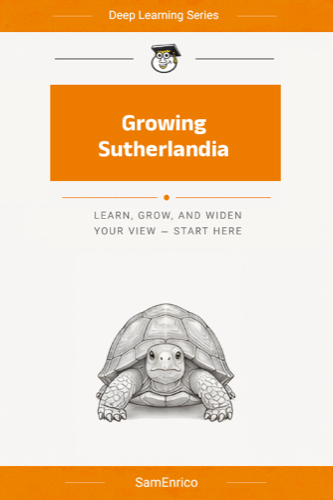
Non-FictionInformativeEducational
Growing Sutherlandia eBook
This publication, published by SamEnrico, covers G
by Vallejo Fay
This publication, published by SamEnrico, covers Growing Sutherlandia
Formats
Free sample
Chapter 1: The Silver Healer...--The first time I held a Sutherlandia seed pod, I almost threw it away.It was no larger than my thumbnail, papery, brittle, and the color of a dying ember. The farmer who handed it to me—a weathered man named Pieter from the Cederberg region of South Africa—had pulled it from a burlap sack tied to the back of his pickup truck. He didn't speak English well, but he pointed to the pod, then to his own chest, then to the dry, rocky mountains behind us."Medicine," he said. "For everything."I was skeptical. I had spent fifteen years as a commercial horticulturist, growing everything from hydroponic tomatoes to rare orchids.
I had seen "miracle plants" come and go—goji berries, noni fruit, moringa, each one hyped as the next cure-all, each one failing to live up to the marketing. But Pieter wasn't selling anything. He was offering me a seed, and a warning."The wild ones are disappearing," he said. "Too many people take. Not enough put back."That was 2017.
Today, that single seed pod has become four hundred thriving plants across three separate growing sites, a small business that pays my mortgage, and a decade of research that I have distilled into this chapter. But more importantly, that seed pod taught me something that no textbook could: the difference between knowing a plant's name and understanding its soul.Sutherlandia is not a plant for the impatient. It is not a plant for the gardener who wants instant gratification, who measures success by inches of growth per week, who believes that more water and more fertilizer is always better. Sutherlandia is a plant that evolved in one of the harshest environments on Earth—the Karoo Desert, where summer temperatures regularly exceed 40°C (104°F), where rain falls only in winter if it falls at all, and where the soil is so poor that most plants simply give up.And yet, Sutherlandia thrives.It thrives because it learned, over millions of years, to do something extraordinary. When the environment becomes harsh—when water is scarce, when soil nutrients are depleted, when pests arrive—Sutherlandia does not simply survive.
It fights back. It produces a cascade of secondary metabolites: alkaloids, flavonoids, saponins, and amino acid analogs that defend it from herbivores, pathogens, and environmental stress. These same compounds, it turns out, have profound effects on the human body. The Khoisan people knew this for millennia. Modern science is only now catching up.This chapter is not a botanical encyclopedia entry.
It is not a dry list of Latin names and morphological features for you to memorize and forget. This chapter is an invitation to see Sutherlandia the way a grower must see it—as a living system, a chemical factory, a partner in a relationship that will reward you handsomely if you understand its rules, and punish you swiftly if you do not.We will begin with the basics: what Sutherlandia is, how to identify it with absolute certainty (because mistakes here can be dangerous), and which varieties you should grow depending on your goals. We will explore the taxonomic confusion that has plagued this plant for centuries, and I will give you the simple, practical tools to cut through the academic debates. We will examine how genetics and environment interact to determine the medicinal quality of your harvest, and I will show you why two plants grown from seeds from the same mother plant can produce completely different results.But more than anything, this chapter will establish a mindset that will guide you through the rest of this book. Sutherlandia is not a crop to be forced.
It is a crop to be understood. And understanding begins with knowing exactly what you are looking at.What's in a Name? The Taxonomy Trap Let me save you hours of confusion right now.If you search online for "Sutherlandia," you will quickly encounter a debate that has occupied botanists for decades: is it Sutherlandia or Lessertia? Some sources use one name, some use the other, and few explain why.Here is the truth, stripped of academic jargon.In 1779, the Swedish botanist Carl Peter Thunberg—a student of Linnaeus himself—collected specimens of this plant during his travels in southern Africa. He classified it under the genus Lessertia, naming it after a Swiss botanist named Jules Paul Benjamin Delessert.
For more than two centuries, that classification held.Then, in the 1990s, a team of South African botanists re-examined the plant's morphology, seed structure, and genetic markers. They concluded that the "cancer bush" group of plants was sufficiently distinct from other Lessertia species to warrant its own genus. They named it Sutherlandia, after James Sutherland (1639–1719), the first superintendent of the Edinburgh Physic Garden.So which one is correct?For the purposes of this book—and for your purposes as a grower—the answer is Sutherlandia. This is the name accepted by the South African National Biodiversity Institute (SANBI), the Royal Botanic Gardens at Kew, and the overwhelming majority of scientific literature published after 2010. If you are purchasing seeds or seedlings, look for Sutherlandia.
If you are reading a research paper published in the last fifteen years, it will almost certainly use Sutherlandia.However, you may still encounter Lessertia in older texts, in some seed catalogs, and occasionally in European botanical gardens that have not updated their records. Do not let this confuse you. It is the same plant.The more important distinction—the one that actually matters for your success—is the difference between the species within the Sutherlandia genus. And that brings us to the heart of this chapter.The Three Sisters: Understanding Sutherlandia Varieties The genus Sutherlandia contains approximately six recognized species, but only three are relevant to growers. I call them the Three Sisters, not because they are identical, but because they are closely related and share the same medicinal properties—just in different proportions and with different growth habits.Let me introduce you to each one.Sutherlandia frutescens: The Workhorse If you grow only one variety, grow this one.Sutherlandia frutescens is the most widespread and adaptable of the three.
It grows naturally from the Cederberg mountains in the west to the Eastern Cape in the east, from sea level up to elevations of 1,500 meters (4,900 feet). It tolerates a wider range of soil types and rainfall patterns than its relatives, which makes it the safest choice for first-time growers and for cultivation outside of South Africa.What does it look like? Imagine a small shrub, typically 1 to 1.5 meters (3 to 5 feet) tall, with a similar spread. The leaves are compound—meaning each "leaf" is actually a stem with multiple small leaflets arranged in pairs. The leaflets are silvery-gray, covered with fine hairs (pubescent) that give the plant a soft, almost velvety appearance.
This pubescence is not decorative; it reduces water loss by reflecting sunlight and trapping a thin layer of humid air against the leaf surface.The flowers are the most distinctive feature. They are orange-red, shaped like typical pea flowers (reflecting the plant's membership in the Fabaceae family), and they appear in clusters at the tips of branches. Flowering typically occurs in spring and early summer…
This is the end of the free sample. Get the eBook to keep going. Buy now
About this book
Details
- Author
- Vallejo Fay
- Publisher
- SamEnrico
- Language
- English
- Genre
- Non-Fiction, Informative, Educational
- Released
- 2026-05-06
- Pages (approx.)
- 146
- Available as
- eBook, Audiobook

Read better in the ZLOADR app
Your eBooks on your phone or tablet. Sign in with your SamEnrico account and start reading.
More by Vallejo Fay
 Social Media Comparison and BipolarVallejo Fay$11.99
 Sleep Optimization Skin Repair CourseVallejo Fay$11.99
 The Self Talk for Men GuideVallejo Fay$11.99
 Gluten Free Travel GuideVallejo Fay$11.99
 Breath for First RespondersVallejo Fay$11.99
 Breastfeeding and Toxins GuideVallejo Fay$11.99
 Carnegie Personal LifeVallejo Fay$11.99
 Joseph StoryVallejo Fay$11.99
 Online Bereavement GroupsVallejo Fay$11.99
 The Corsair's Canvas: Titian and the Venetian Golden AgeVallejo Fay$11.99
 The Codebreakers: How a Secret War Changed the WorldVallejo Fay$11.99
 Raven’s Gambit: Loki’s Double GameVallejo Fay$11.99
You may also like
 Hong Kong Handover 1997Dunn Johnnie$11.99
 Zumba For Postnatal Recovery CourseNeal Christian$11.99
 Zumba for BeginnersLadner Nikia$11.99
 YouTube Comment Mining GuideHumes Pandora$12.99
 Worry Box MeditationCarlin Rudy$11.99
 Workplace Stress MeditationNguyen Lynn$11.99
 Workplace Stress and Sleep RepairHawley Ivory$11.99
 Workplace Perfectionism CureDelaney Jeffry$11.99
 Workplace Injustice Anger GuideWallen Isabelle$11.99
 Work Addiction and Burnout LinkGreenwood Ester$11.99
 Women in Yoga and WellnessBeattie Galina$11.99
 Women in Stand Up ComedyChun Evangeline$11.99