
Non-FictionInformativeEducational
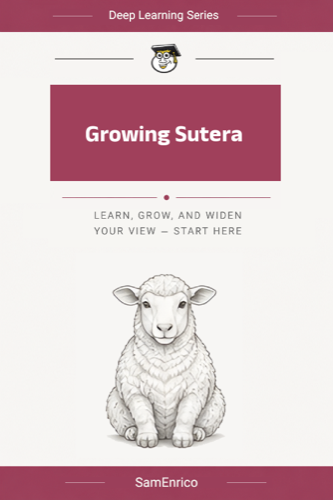
Growing Sutera eBook
This publication, published by SamEnrico, covers G
by Amaya Adrian
This publication, published by SamEnrico, covers Growing Sutera
Formats
Free sample
Chapter 1: The Serpentine Deception...--–- On a humid July afternoon in Atlanta, a master gardener named Eleanor wept over a hanging basket. She had done everything right—or so she believed. She had purchased premium potting soil, fertilized religiously every ten days, watered whenever the surface looked dry, and placed her new plant in a spot that received exactly six hours of gentle morning sun. The tag on the plastic nursery pot read "Bacopa 'Snowstorm' – Full sun to partial shade – Keep evenly moist." Eleanor followed those instructions with the devotion of a acolyte. And yet, six weeks after bringing the plant home, its once-luminous white flowers had vanished entirely.
The stems had grown long and woody, stretching across the top of the soil like a tangle of abandoned fishing line, with leaves only at the very tips. The few remaining buds were brown and crisp. When she touched the soil, it felt damp—not wet, but certainly not dry. She could not understand where she had gone wrong.The answer lies not in what Eleanor did, but in what she did not know. The plant in her basket was not a Bacopa at all.
It was a Sutera. And the instructions she followed, printed by a wholesale grower who had never visited the plant's homeland, had been written for an entirely different kind of organism. Eleanor was not a bad gardener. She was merely a misinformed one. And this chapter exists to ensure that you, reading these words, never shed a single tear over a Sutera basket again.The most expensive mistake in ornamental horticulture is not the cost of the plant.
It is the cost of treating a plant as something it is not. When we misunderstand a plant's evolutionary story, we apply the wrong water, the wrong soil, the wrong light, and the wrong expectations. Then, when the plant fails to thrive, we blame ourselves. We assume we lack a "green thumb." We give up. But the truth is far simpler and far more hopeful: you cannot grow a cliff-dwelling plant as if it were a riverbank plant.
You cannot nurture a lithophyte as if it were a hydrophyte. And you cannot raise Sutera as if it were Petunia.This chapter rewinds the clock. It takes you back millions of years to the rugged, sun-scorched, wind-battered cliffs of southern Africa. It follows the botanical misadventures of nineteenth-century explorers who carried Sutera seeds across the ocean under the wrong name. And it reveals, for the first time in a consumer gardening book, the single most important fact about this plant: Sutera does not want what you think it wants.
It wants less. It wants harder. It wants leaner. And once you understand why, you will never lose another Sutera to the mid-summer collapse.The Geological Truth Beneath the Petals Let us begin with a exercise in radical honesty. Take your hand and place it flat against the nearest wall.
Now imagine that wall is not plaster or drywall but ancient volcanic rock—dolerite, to be precise—exposed to the full fury of the African sun for twelve hours a day. Imagine that the only "soil" available to you is a thin crust of decomposed granite, no deeper than two inches, that has been baking at 140 degrees Fahrenheit all afternoon. Imagine that when rain comes—and it comes infrequently, perhaps five or six times a year—it sheets across the rock face and disappears within minutes, leaving behind only a faint trace of dissolved minerals. This is the world that shaped Sutera.The genus Sutera (family Scrophulariaceae) contains approximately 130 species, most of which are endemic to southern Africa. The two species of horticultural significance are Sutera cordata (the familiar white-flowered trailing plant) and the less common Sutera grandiflora (a mauve-flowered, more upright form).
Both evolved as lithophytes—plants that grow on rocks rather than in deep soil. Their ancestors colonized the vertical and sloping rock faces of the Drakensberg mountains, the Cape Fold Belt, and the cliffs of the Great Escarpment. In these environments, competition from grasses and shrubs is minimal, but so is moisture, nutrients, and substrate depth.Consider the adaptive strategies that Sutera developed over millions of years. First, it evolved a fibrous, shallow root system that spreads horizontally rather than vertically. Deep roots would be useless where there is no deep soil.
Instead, Sutera roots form a dense mat that clings to rock surfaces and absorbs water from brief, intense rainfall events. Second, it developed small, thick, slightly waxy leaves that minimize transpirational water loss. These leaves are not the lush, broad, water-guzzling leaves of a Petunia or a Begonia. They are built for endurance, not indulgence. Third, and most critically for the home gardener, Sutera evolved a reproductive strategy that prioritizes survival over beauty during stress.
When water becomes scarce, the plant does not wilt. Wilting is a slow process that signals dehydration over hours or days. Instead, Sutera aborts its flowers and buds almost instantly. From an evolutionary perspective, this makes perfect sense: a flower is a costly structure. Producing nectar, attracting pollinators, and developing seeds consumes water and energy.
If the plant cannot sustain itself, it will shut down reproduction first. The leaves may remain turgid and green for another week or more, but the flowers will vanish overnight.This is the paradox that kills more Suteras than any pest, disease, or nutrient deficiency. The gardener looks at the plant, sees healthy green leaves, and assumes everything is fine. But the plant has already sounded an internal alarm. It has already decided that conditions are too harsh to reproduce.
And because there is no visible wilt, the gardener continues the same watering routine—or worse, waters even less, believing the plant to be drought-tolerant in the conventional sense. Meanwhile, the root zone dries further, the flower buds abort, and the gardener enters a downward spiral of confusion and frustration.The Misnomer That Confused a Continent If the botanical adaptations of Sutera are the first layer of the deception, the second layer is linguistic. Walk into any garden center in North America or Europe, and you will find Sutera labeled as "Bacopa." This is not a minor error. It is a categorical misidentification that has caused incalculable damage to the horticultural success of home growers. Bacopa is a genus of aquatic and semi-aquatic plants in the family Plantaginaceae.
True Bacopa species—such as Bacopa monnieri (water hyssop) and Bacopa caroliniana—grow in marshes, along stream banks, and in shallow water. They thrive in saturated soil. They can grow with their roots fully submerged. They are, in every meaningful sense, the opposite of Sutera.How did this confusion arise? The answer lies in nineteenth-century botanical exploration.
When European botanists first collected Sutera specimens in South Africa, they noted a superficial resemblance to certain tropical Bacopa species: small, opposite leaves; five-petaled flowers; a creeping or trailing growth habit. The Linnaean classification system of the era emphasized floral morphology over ecological context. A botanist examining a pressed, dried specimen in a herbarium could not see that one plant lived on a waterfall-drenched rock face and the other lived in a stagnant marsh. The pressed flowers looked similar…
This is the end of the free sample. Get the eBook to keep going. Buy now
About this book
Details
- Author
- Amaya Adrian
- Publisher
- SamEnrico
- Language
- English
- Genre
- Non-Fiction, Informative, Educational
- Released
- 2026-06-03
- Pages (approx.)
- 151
- Available as
- eBook, Audiobook

Read better in the ZLOADR app
Your eBooks on your phone or tablet. Sign in with your SamEnrico account and start reading.
More by Amaya Adrian
 Mangrove Tunnel GuideAmaya Adrian$11.99
 Breath for Healthcare WorkersAmaya Adrian$11.99
 Comparison Culture for First GenAmaya Adrian$11.99
 Teen Jealousy ManagementAmaya Adrian$11.99
 Pregnancy Toxin Prevention GuideAmaya Adrian$11.99
 Ford Business StrategiesAmaya Adrian$11.99
 Submarine Crew StressAmaya Adrian$11.99
 Sarcopenia Supplement Stack GuideAmaya Adrian$11.99
 Arthritis Blood Tests ExplainedAmaya Adrian$11.99
 Bottled Lightning: The Untold Story of the 1976 Judgment of ParisAmaya Adrian$11.99
 Whispers of the Pacific: Decoding the Lost Tongues of the South SeasAmaya Adrian$11.99
 Mishipeshu: The Great Lynx of the Northern LakesAmaya Adrian$11.99
You may also like
 Hong Kong Handover 1997Dunn Johnnie$11.99
 Zumba For Postnatal Recovery CourseNeal Christian$11.99
 Zumba for BeginnersLadner Nikia$11.99
 YouTube Comment Mining GuideHumes Pandora$12.99
 Worry Box MeditationCarlin Rudy$11.99
 Workplace Stress MeditationNguyen Lynn$11.99
 Workplace Stress and Sleep RepairHawley Ivory$11.99
 Workplace Perfectionism CureDelaney Jeffry$11.99
 Workplace Injustice Anger GuideWallen Isabelle$11.99
 Work Addiction and Burnout LinkGreenwood Ester$11.99
 Women in Yoga and WellnessBeattie Galina$11.99
 Women in Stand Up ComedyChun Evangeline$11.99