
Non-FictionInformativeEducational
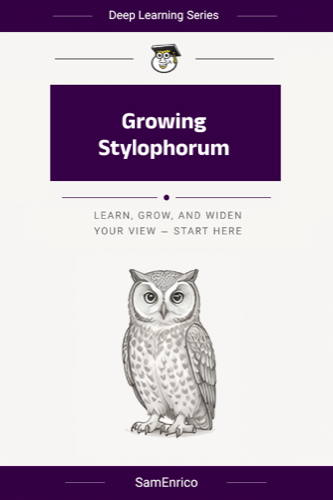
Growing Stylophorum eBook
This publication, published by SamEnrico, covers G
This publication, published by SamEnrico, covers Growing Stylophorum
Formats
Free sample
Chapter 1: The Yellow Secret--– In the spring of 1876, a Victorian plant hunter named Archibald Menzies found himself kneeling in a damp Ohio woodland, his tweed trousers soaked through, his fingers stained the color of egg yolks. He had traveled three thousand miles for this moment, though he didn't yet know it. What he held was a small, unassuming perennial with four-petaled golden flowers and leaves that looked like something between a columbine and a buttercup. The plant had no common name that mattered to Europeans. It was simply another American weed to most.
But Menzies noticed something the others had missed.When he snapped a stem, a bright yellow-orange sap oozed out—thick, almost creamy, and shockingly vivid against the brown forest floor. He touched it to his tongue without thinking (a habit that would eventually kill more than one plant collector) and tasted bitterness so profound it made his eyes water. That bitterness was alkaloids. That yellow sap was a chemical fortress. And that unremarkable little plant was about to embark on a journey from Appalachian obscurity to Victorian conservatories, from Native American medicine bundles to modern native plant gardens, all without ever once demanding more than the gardener was willing to give.The plant was Stylophorum diphyllum.
And this book is its story.The Curious Case of the Wood Poppy If you have picked up this book, chances are you have already encountered a wood poppy somewhere—perhaps in a friend's shade garden, where it naturalized into a golden drift beneath a sugar maple. Perhaps in a native plant catalog, where its description promised "bright yellow blooms" and "deer resistance" and "easy perennial for moist shade." Or perhaps you have simply stared at a bare, muddy patch under your own backyard trees, wondering what on earth could possibly grow there, and someone—a nursery employee, a master gardener, a desperate internet forum commenter—whispered the words "try wood poppies."You are not alone. The shade garden is the final frontier of American horticulture, the last unconquered territory for millions of homeowners who have inherited tree-filled lots and discovered that hostas (while reliable) are also slug buffets, that impatiens (while colorful) are annuals requiring replanting every single spring, and that "shade mix" grass seed is a lie sold by people who have never actually met a tree. The wood poppy offers something radically different: a native perennial that asks almost nothing and gives almost everything. But to understand why, you first need to understand what Stylophorum actually is—and what it emphatically is not.Let us begin with taxonomy, because names matter.
The genus Stylophorum belongs to the Papaveraceae, the poppy family. This places it in the company of the opium poppy (Papaver somniferum), the field poppy (Papaver rhoeas), and the beloved but finicky Oriental poppy (Papaver orientale). Unlike these famous cousins, however, Stylophorum has never been cultivated for narcotics, has never become an invasive weed, and does not require the gardener to treat it like a bomb about to go off at transplanting time. More on that last point in Chapter 5, where we will dismantle one of gardening's most persistent myths.Within the genus Stylophorum, there are two species that matter to gardeners: the North American Stylophorum diphyllum (the subject of most of this book) and the Asian Stylophorum lasiocarpum (which we will explore in Chapter 10). The American species is the star of the show, and for good reason.
It is native to the eastern deciduous forests of the United States, ranging from Pennsylvania and New York west to Wisconsin and Iowa, and south through the Appalachian spine into Tennessee and northern Alabama. Its native range overlaps almost perfectly with the range of sugar maples, oaks, and beeches—which is to say, it grows exactly where most American gardeners have shade.The species name diphyllum means "two leaves," a reference to the fact that each flowering stem typically produces two deeply lobed, opposite leaves. This is not a plant that forms dense, shrubby thickets. Instead, a mature wood poppy consists of loose clumps of stems rising 12 to 18 inches tall, each stem topped with one to four flowers that open sequentially rather than all at once. The flowers themselves are a true, pure yellow—not the pale cream of some celandines, not the orange-yellow of many garden poppies, but the bright, clear yellow of a buttercup or a lemon peel.
Each flower lasts only a few days, but because the plant produces new flowers over a four-to-six-week period, the overall bloom season feels generous rather than fleeting.The Sap That Explains Everything That yellow sap I mentioned earlier? It deserves more than a passing mention. The sap contains a cocktail of alkaloids, primarily sanguinarine and chelerythrine, which serve as the plant's chemical defense system. When a deer, rabbit, or woodchuck bites into a leaf or stem, the sap releases a bitter, burning sensation that most mammals find deeply unpleasant. This is why wood poppies are among the most reliably deer-resistant woodland perennials you can grow.
It is also why the plant has a history of medicinal use among Native American tribes, who applied the sap to warts, ringworm, and other skin conditions—an application that modern research suggests might actually have merit, as sanguinarine has demonstrated antimicrobial properties in laboratory studies.But the sap is also a warning. The same alkaloids that deter deer can irritate human skin in sensitive individuals, and ingestion of significant quantities (do not make wood poppy tea, please) can cause vomiting, diarrhea, and other unpleasantness. In Chapter 8, we will discuss safe handling practices. For now, know this: the sap is the wood poppy's superpower. It allows the plant to thrive in woodland settings where hostas get devoured, where impatiens get nibbled to nubs, where trilliums (beloved by deer) often vanish overnight.
If you have ever watched a herd of deer methodically strip your shade garden bare, you will understand why a plant with chemical weapons is not a problem but a solution.The Look-Alike That Causes Confusion Before we go any further, we must address the elephant in the room. Actually, not an elephant—a weedy, invasive European import called greater celandine, Chelidonium majus. This plant looks superficially similar to Stylophorum. Both have yellow flowers. Both have divided leaves.
Both produce yellow-orange sap. And herein lies the problem: Chelidonium majus is a nuisance. It self-sows aggressively, forms dense stands, and has escaped cultivation across much of North America, where it is listed as invasive in several states. Many gardeners have encountered greater celandine, hated it, and assumed that wood poppies are the same plant.They are not even close.The differences are real and observable. Greater celandine has smaller flowers (usually less than one inch across, compared to the wood poppy's one-and-a-half to two-inch blooms).
Its seed pods are smooth and cylindrical, while Stylophorum pods are fuzzy and pendulous. More importantly, greater celandine is an annual or biennial that spreads exclusively by seed, whereas wood poppy is a long-lived perennial that forms stable clumps. And while greater celandine can be genuinely aggressive in disturbed areas, wood poppy is what ecologists call a "polite spreader"—it will self-sow within a few feet of the parent plant…
This is the end of the free sample. Get the eBook to keep going. Buy now
About this book
Details
- Author
- Charlton Nova
- Publisher
- SamEnrico
- Language
- English
- Genre
- Non-Fiction, Informative, Educational
- Released
- 2026-05-06
- Pages (approx.)
- 145
- Available as
- eBook, Audiobook

Read better in the ZLOADR app
Your eBooks on your phone or tablet. Sign in with your SamEnrico account and start reading.
More by Charlton Nova
 Social Media Comparison for TeensCharlton Nova$11.99
 Gluten Free Baking HandbookCharlton Nova$11.99
 Breath for TinnitusCharlton Nova$11.99
 Breast Milk After LossCharlton Nova$11.99
 Transcendental Meditation Starter GuideCharlton Nova$11.99
 Biologics For Rheumatoid ArthritisCharlton Nova$11.99
 Mindfulness For Insomnia MBSRCharlton Nova$11.99
 Gilded Age TitansCharlton Nova$11.99
 Skin Hydration Wrinkle Reduction ManualCharlton Nova$11.99
 The Last Scribe: How a Humble Librarian Saved a Lost CivilizationCharlton Nova$11.99
 The Djinn of the Empty Quarter: Architect of the Forgotten CityCharlton Nova$11.99
 The Silk Road's Digital Heist: How a 20-Year-Old Hacker Toppled a $4 Billion EmpireCharlton Nova$11.99
You may also like
 Hong Kong Handover 1997Dunn Johnnie$11.99
 Zumba For Postnatal Recovery CourseNeal Christian$11.99
 Zumba for BeginnersLadner Nikia$11.99
 YouTube Comment Mining GuideHumes Pandora$12.99
 Worry Box MeditationCarlin Rudy$11.99
 Workplace Stress MeditationNguyen Lynn$11.99
 Workplace Stress and Sleep RepairHawley Ivory$11.99
 Workplace Perfectionism CureDelaney Jeffry$11.99
 Workplace Injustice Anger GuideWallen Isabelle$11.99
 Work Addiction and Burnout LinkGreenwood Ester$11.99
 Women in Yoga and WellnessBeattie Galina$11.99
 Women in Stand Up ComedyChun Evangeline$11.99