
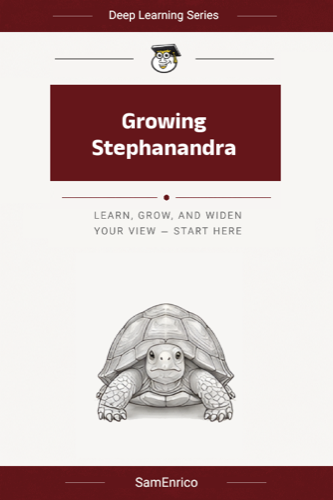
Non-FictionInformativeEducational
Growing Stephanandra eBook
This publication, published by SamEnrico, covers G
by Coker Crissy
This publication, published by SamEnrico, covers Growing Stephanandra
Formats
Free sample
Chapter 1: The Crown You’ve Never Heard Of--–- Every spring, millions of gardeners drive past the perfect plant for their most frustrating problems. They don’t see it. It hides in plain sight at botanical gardens, old estate landscapes, and the forgotten corners of progressive nurseries. It lacks the screaming pink blooms of a hydrangea, the architectural arrogance of a boxwood, and the celebrity status of a rose. And for precisely those reasons, it might be the most valuable shrub you will ever plant.This is a book about a plant that does not demand your attention.
It does not require weekly deadheading, ritualistic pruning, or prayers during drought. Instead, it solves problems that expensive, high-maintenance plants often create or ignore. Do you have a shady slope where nothing grows and every spring your topsoil washes into the driveway? Do you have a dark corner under a maple tree where grass turns into mud and hostas slowly disappear? Do you want a garden that looks intentional and beautiful without becoming a second job?
If you answered yes to any of these questions, you need to meet Stephanandra.The name, for those who care about such things, comes from the Greek words stephanos, meaning “crown,” and aner, meaning “man.” The reference is to the stamens in the small flowers, which are arranged in a wreath-like pattern. It is a lovely bit of botanical poetry, but it also misleads. The flowers are not the point. The crown in question is not a showy display but a quiet sovereignty. This plant rules the difficult places where showier plants abdicate.
It wears its crown in the shade, on the slope, in the dry soil beneath thirsty trees. And it asks almost nothing in return.This chapter is not a dry botanical description. It is an invitation to rethink what makes a plant valuable. The gardening industry has spent decades training us to value the spectacular over the reliable, the novel over the proven, the thirsty over the drought-tolerant. We are sold plants that require professional watering schedules, specialized fertilizers, and the kind of attention usually reserved for newborn infants.
Then we are made to feel inadequate when those plants fail. Stephanandra offers an escape from that cycle. It is the plant for gardeners who have killed enough expensive specimens to know better. It is the plant for people who want their yard to look good without their life revolving around it.Let me tell you a story. A few years ago, a homeowner in upstate New York called me with a familiar problem.
His house sat on a hill. The front lawn, such as it was, sloped steeply down to the road. Every time it rained, rivulets of muddy water carved tiny canyons through his grass. He had tried everything: erosion control blankets, reseeding, even a expensive retaining wall that cracked within a year. He was ready to pave the whole thing.
Instead, I sent him to a small nursery that carried a plant he had never heard of. He planted thirty small Stephanandra incisa ‘Crispa’ shrubs on two-foot centers. He watered them for one summer. Then he mostly forgot about them. Two years later, he sent me a photograph.
The slope was covered in a dense, waving carpet of bright green, finely cut foliage. The erosion had stopped. His only regret was that he had not done it sooner. That is the power of this plant.The Problem with the Plants You Already Know Before we fall in love with Stephanandra, we have to acknowledge what is broken about the way most of us shop for shrubs. The standard nursery is a gallery of beautiful failures.
You walk down the aisles and see hydrangeas with blooms the size of dinner plates, roses in colors that seem to glow from within, and boxwoods clipped into perfect green spheres. These plants are gorgeous, and they are also high-maintenance, disease-prone, and often poorly suited to the conditions of an actual garden.Hydrangeas demand consistent moisture. Miss a week of watering during a dry spell and the flowers collapse like disappointed soufflés. Boxwoods, the darlings of formal gardens, have become a heartbreaking gamble in many regions due to boxwood blight and the relentless appetite of box tree moths. Roses require a chemical regimen that would make a pharmaceutical company blush.
We plant these divas because we have been told they are the standards of a beautiful garden. Then we spend our weekends nursing them through their various crises, convinced that our failures are due to our own lack of skill rather than the inherent demands of the plants themselves.This is not to say that hydrangeas, boxwoods, and roses do not have their place. They do, in the hands of dedicated gardeners who enjoy the ritual of care. But for the vast majority of homeowners, these plants are a trap. They create a cycle of expectation, effort, disappointment, and self-blame.
The gardening industry profits from this cycle. Every time a plant dies, you buy another one. Every time a disease strikes, you buy a spray. Every time the blooms are sparse, you buy a fertilizer.Stephanandra breaks this cycle because it was never marketed as a star. It has no television personality promoting it.
It is rarely featured on the cover of garden magazines. It is the character actor in the film of your landscape—never the lead, but absolutely essential to making the scene work. And like a great character actor, it shows up every day, does its job perfectly, and never complains about the catering.What This Plant Actually Does Let us be precise about the superpowers of Stephanandra. The first is texture. The leaves are sharply lobed, resembling miniature maple leaves.
They are finely cut, almost feathery, giving the plant a soft, lace-like appearance. In a landscape dominated by broad, coarse leaves—think hostas, rhododendrons, and viburnums—Stephanandra provides a visual counterpoint. It is the plant that makes everything around it look better because its fine texture creates contrast and depth.The second superpower is shade tolerance. Most flowering shrubs demand full sun. They need those six to eight hours of direct light to produce blooms and maintain dense growth.
Stephanandra is different. It grows happily in part shade, defined as three to four hours of direct sun or dappled light beneath trees. It will even tolerate deeper shade, though the growth becomes looser and the fall color less intense. If you have a north-facing foundation, a grove of mature trees, or any of the other dark corners that plague suburban landscapes, Stephanandra will thrive where sun-worshipping shrubs would slowly decline.The third superpower is the root system. Stephanandra does not just sit in the soil; it binds it.
The fibrous, spreading roots create a dense mat that holds soil in place better than almost any other shrub of its size. This is why the homeowner in upstate New York solved his erosion problem. Grass roots are shallow and temporary. The roots of a mature Stephanandra extend laterally and downward, creating a biological net that resists the force of running water. On a slope, this is the difference between topsoil and mud.The…
This is the end of the free sample. Get the eBook to keep going. Buy now
About this book
Details
- Author
- Coker Crissy
- Publisher
- SamEnrico
- Language
- English
- Genre
- Non-Fiction, Informative, Educational
- Released
- 2026-06-02
- Pages (approx.)
- 126
- Available as
- eBook, Audiobook

Read better in the ZLOADR app
Your eBooks on your phone or tablet. Sign in with your SamEnrico account and start reading.
More by Coker Crissy
 Air Purifier for Indoor ToxinsCoker Crissy$11.99
 Financial Stress And Divorce Recovery GuideCoker Crissy$11.99
 Breath for AnxietyCoker Crissy$11.99
 The Menstruation ConfidenceCoker Crissy$11.99
 Etsy Shop Sales Envy GuideCoker Crissy$11.99
 Ford Vertical IntegrationCoker Crissy$11.99
 Protein Timing for SarcopeniaCoker Crissy$11.99
 Crisis Hotline Operator StressCoker Crissy$11.99
 Tycho Brahe and the Celestial Revolution: The Man Who Measured the HeavensCoker Crissy$11.99
 The Silent Summit: How a Forgotten Climber Conquered Kilimanjaro’s Deadly SecretsCoker Crissy$11.99
 The Last Dance of the Red Baron: Aerial ObsessionCoker Crissy$11.99
 The Dancer's Guide to SiganosCoker Crissy$11.99
You may also like
 Hong Kong Handover 1997Dunn Johnnie$11.99
 Zumba For Postnatal Recovery CourseNeal Christian$11.99
 Zumba for BeginnersLadner Nikia$11.99
 YouTube Comment Mining GuideHumes Pandora$12.99
 Worry Box MeditationCarlin Rudy$11.99
 Workplace Stress MeditationNguyen Lynn$11.99
 Workplace Stress and Sleep RepairHawley Ivory$11.99
 Workplace Perfectionism CureDelaney Jeffry$11.99
 Workplace Injustice Anger GuideWallen Isabelle$11.99
 Work Addiction and Burnout LinkGreenwood Ester$11.99
 Women in Yoga and WellnessBeattie Galina$11.99
 Women in Stand Up ComedyChun Evangeline$11.99