
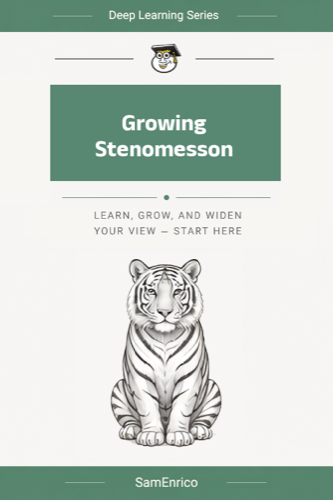
Non-FictionInformativeEducational
Growing Stenomesson eBook
This publication, published by SamEnrico, covers G
This publication, published by SamEnrico, covers Growing Stenomesson
Formats
Free sample
Chapter 1: The Accidental Obsession--–- It began with a photograph. Not a glossy print in a gardening magazine or a curated image on Instagram, but a grainy, poorly lit snapshot posted on a obscure forum for bulb collectors. The image showed a single cluster of pendant flowers, each one a slender tube of burnt orange that flared at the mouth like a tiny trumpet. They hung from a leafless stem, backlit by weak Andean sun, and they looked like nothing I had ever grown. The caption read simply: Stenomesson pearcei – flowering after three years from seed.
Below that, in smaller text, a warning: Not for beginners.I had been growing plants for over a decade at that point. I had coaxed finicky orchids into reblooming, nursed carnivorous plants through winter dormancy, and kept a collection of succulent lithops alive for five years—a feat that felt, at the time, like the pinnacle of botanical achievement. But something about that image lodged itself in my mind like a splinter. It wasn't just the flower's unusual shape or its almost unnatural color. It was the casual, almost dismissive tone of the grower.
Not for beginners. Those three words were a dare. And I have never been able to resist a dare.The bulb arrived six weeks later, wrapped in newspaper inside a small cardboard box. It was, to be honest, unremarkable. About the size of a golf ball, covered in papery brown tunics that flaked off at the slightest touch, with a few desiccated roots curling from its base like dead insect legs.
No green shoots. No sign of life whatsoever. It looked like something you would sweep off a garage floor and throw away without a second thought. I had paid forty-five dollars for this.I remember holding it in my palm, turning it over, and wondering if I had been scammed. The seller had included a handwritten note on a scrap of paper: Plant in sharp mix.
Water when leaves appear. Do not let it sit wet. Patience. That was it. No encouragement.
No promises of spectacular blooms. Just instructions and a warning. I set the bulb on my kitchen counter and stared at it for a long time.That was ten years ago. Today, I grow seventeen species of Stenomesson. I have flowered S.
pearcei from my own seed, hybridized two crosses that may (or may not) be new to cultivation, and killed more bulbs than I care to admit. I have learned that these Andean jewels are not difficult in the way orchids are difficult—they do not require constant misting, precise humidity, or weekly fungicide applications. They are difficult in a more fundamental way. They require you to unlearn almost everything you think you know about growing bulbs.The Taxonomy Trap: What Stenomesson Is (and Isn't)Before we go any further, we need to address the elephant in the greenhouse. The genus Stenomesson has suffered from a long and confusing taxonomic history, and if you have done any preliminary research online, you have almost certainly encountered contradictory information.
Some sources will tell you that Stenomesson is synonymous with Clinanthus. Others will insist that your plant is actually an Urceolina. A few will confidently misidentify a Phycella as a Stenomesson and send you down a completely wrong cultivation path.Here is the current, scientifically accepted picture. Stenomesson is a genus within the Amaryllidaceae family, the same family that gives us daffodils, snowdrops, and the familiar Hippeastrum (the so-called "amaryllis" sold in box stores during the holidays). The genus is native to the Andes mountains of Peru, Ecuador, Colombia, and northern Chile.
For many years, taxonomists lumped Stenomesson together with several related genera, but recent molecular phylogenetics have clarified the boundaries.A true Stenomesson is characterized by several features that set it apart from its close relatives. The most obvious is the flower shape: a long, narrow floral tube that widens abruptly at the mouth into six small lobes. The stamens are inserted at two different levels within the tube—a technical detail that matters mostly to botanists and hybridizers. The leaves are typically strap-shaped, often with a prominent central keel, and they frequently emerge after the flowers have faded, a trait botanists call hysteranthous.The practical implication for you, the grower, is this: do not trust every label you see. If you buy a bulb labeled Stenomesson and it produces upright, cup-shaped flowers, you probably have an Urceolina.
If the flowers are tubular but the stamens all emerge at the same level, you may have a Clinanthus. Neither of these is a bad plant—I grow all three genera—but their cultivation requirements differ slightly. For the remainder of this book, we will focus exclusively on true Stenomesson, and I will point out the distinctions when they matter.Why These Plants Have Remained Obscure If Stenomesson produces flowers as striking as any orchid or lily, why have you never seen one in a garden center? The answer reveals something important about the horticultural industry and, by extension, about the kind of grower you will need to become.The commercial plant trade favors predictability. A successful garden plant must perform reliably across a range of conditions, tolerate some degree of neglect, and look good at the moment of purchase.
Stenomesson fails on all three counts. These bulbs can take three to five years from seed to flower, which makes them unprofitable for mass propagation. Their dormancy requirements mean they look like dead, shriveled objects for several months each year—hardly a compelling display on a nursery bench. And their sensitivity to overwatering means that even experienced growers occasionally lose bulbs to rot.As a result, Stenomesson has remained in the domain of specialist collectors, botanical gardens, and a small international community of obsessive gardeners who trade seeds and bulbs through forums like the Pacific Bulb Society. This is both a disadvantage and an opportunity.
The disadvantage is obvious: these plants can be difficult to find and expensive to acquire. The opportunity is more interesting. When you grow Stenomesson, you are participating in a kind of horticultural preservation. Many species in this genus are threatened in the wild by habitat loss, mining, and climate change. Every gardener who successfully propagates and shares these bulbs is creating an ex situ population, a living backup outside the Andes.
You are not just growing a pretty flower. You are becoming a steward of genetic diversity that may otherwise disappear.The Mental Shift: From Gardener to Habitat Simulator The single most important concept in this entire book—the idea that will determine your success more than any soil recipe or watering schedule—is this: you are not growing a houseplant. You are simulating a habitat.Most gardening advice assumes that plants want to grow continuously. We fertilize, water, and repot with the goal of maximizing vegetative growth and flower production. This works for plants that evolved in environments with consistent moisture and mild temperatures year-round.
But Stenomesson evolved in the high Andes, where conditions swing dramatically between wet and dry, warm and cool, active and dormant.In the wild, a Stenomesson bulb experiences a predictable annual cycle. It emerges from dormancy with the onset of…
This is the end of the free sample. Get the eBook to keep going. Buy now
About this book
Details
- Author
- Villegas Ashely
- Publisher
- SamEnrico
- Language
- English
- Genre
- Non-Fiction, Informative, Educational
- Released
- 2026-06-02
- Pages (approx.)
- 154
- Available as
- eBook, Audiobook

Read better in the ZLOADR app
Your eBooks on your phone or tablet. Sign in with your SamEnrico account and start reading.
More by Villegas Ashely
 Rainbow Baby IntegrationVillegas Ashely$11.99
 Sunflower Field GuideVillegas Ashely$11.99
 The Social Media Comparison WorkbookVillegas Ashely$11.99
 Yoga For Stress ReductionVillegas Ashely$11.99
 Teen Voice Change ConfidenceVillegas Ashely$11.99
 Nose vs Belly BreathingVillegas Ashely$11.99
 Muscle Preservation After SixtyVillegas Ashely$11.99
 Ford Management PhilosophyVillegas Ashely$11.99
 Amy Coney BarrettVillegas Ashely$11.99
 The Vertical Farming Revolution: How One Scientist Fed the FutureVillegas Ashely$11.99
 The Siege of Jinji: Maratha Medicine in the Shadow of the MughalsVillegas Ashely$11.99
 Ghosts of the Green Zone: The Untold War Inside BaghdadVillegas Ashely$11.99
You may also like
 Hong Kong Handover 1997Dunn Johnnie$11.99
 Zumba For Postnatal Recovery CourseNeal Christian$11.99
 Zumba for BeginnersLadner Nikia$11.99
 YouTube Comment Mining GuideHumes Pandora$12.99
 Worry Box MeditationCarlin Rudy$11.99
 Workplace Stress MeditationNguyen Lynn$11.99
 Workplace Stress and Sleep RepairHawley Ivory$11.99
 Workplace Perfectionism CureDelaney Jeffry$11.99
 Workplace Injustice Anger GuideWallen Isabelle$11.99
 Work Addiction and Burnout LinkGreenwood Ester$11.99
 Women in Yoga and WellnessBeattie Galina$11.99
 Women in Stand Up ComedyChun Evangeline$11.99