
Non-FictionInformativeEducational
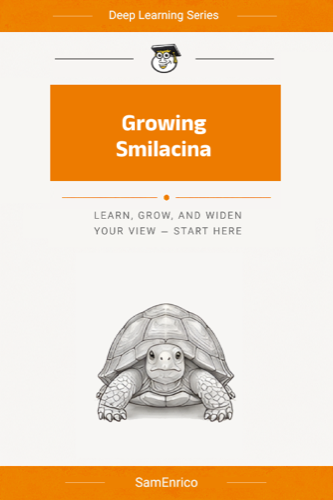
Growing Smilacina eBook
This publication, published by SamEnrico, covers G
This publication, published by SamEnrico, covers Growing Smilacina
Formats
Free sample
Chapter 1: Beyond the Plume...--Every shade garden holds secrets. Some are whispered in the unfurling of a fern’s fiddlehead, others in the patient spread of a moss carpet. But few perennials carry their mysteries as quietly—or as beautifully—as Smilacina. To the casual passerby in early spring, it might appear as nothing more than a cluster of promising green shoots pushing through last year’s leaf litter. By late spring, those same shoots have transformed into elegant, arching stems topped with feathery plumes of tiny, star-like flowers that release a delicate fragrance into the cool woodland air.
And by autumn, when most shade plants have retreated into dormancy, Smilacina offers a final, startling gift: clusters of translucent red berries that glow like stained glass against the yellowing foliage. This is not merely a plant. It is a living chronicle of the forest floor, a perennial that asks almost nothing of the gardener while giving back four full seasons of quiet, undeniable beauty. Yet despite its many virtues, Smilacina remains one of the most underappreciated gems of the shade garden, often overlooked in favor of more flamboyant—and far more demanding—plants. This chapter aims to change that.
Let us pull back the curtain on this woodland wonder, untangle its confusing name and common identities, distinguish it from its look-alike cousins, and make the case for why every shade garden deserves a place for the false Solomon’s seal.What’s in a Name? The Confusion of Common Names Before we can truly grow Smilacina, we must first understand what it is—and what it is not. Gardeners encounter this plant most frequently under one of three common names, each of which tells a slightly different story about its appearance or history. The most widely used name is False Solomon’s Seal, a direct reference to its more famous cousin, true Solomon’s seal (Polygonatum). The name arose because early botanists and herbalists noticed a superficial resemblance between the two plants: both produce arching stems with alternate leaves, both thrive in deep shade, and both have a history of medicinal use.
But as we will see, the differences between them are actually quite striking once you know where to look. The second common name, Solomon’s Plume, describes the plant’s most distinctive feature—the feathery, plume-like cluster of flowers that appears at the very tip of the stem. Unlike true Solomon’s seal, whose flowers dangle like small bells from the leaf axils along the stem, Smilacina carries all its flowers in a single terminal cluster, creating an effect that one 19th-century botanist famously compared to “a miniature lilac blossoming in the understory.” The third common name, Treacleberry, is the most obscure and perhaps the most charming. “Treacle” was an old English word for a medicinal syrup or remedy, and the name referred to the plant’s use in traditional herbal medicine as a cure-all. In some regions of Appalachia, the plant is still called “treacleberry” by older generations who remember their grandparents making poultices from its roots or syrups from its berries.This multiplicity of names can be frustrating for the new gardener.
You might find a plant labeled “False Solomon’s Seal” at one nursery, “Solomon’s Plume” at another, and “Treacleberry” in an heirloom seed catalog—all describing the same genus. The confusion does not end there. Because Smilacina has been reclassified by botanists in recent decades, you may also encounter its older scientific name, Smilacina, alongside its newer one, Maianthemum. The history of this name change is worth understanding. For most of the 19th and 20th centuries, the plant we are discussing was placed in its own genus, Smilacina, which contained about 25 species distributed across North America, Europe, and Asia.
However, DNA analysis in the 1980s and 1990s revealed that Smilacina was not evolutionarily distinct from another genus, Maianthemum (commonly known as Mayflower or false lily-of-the-valley). The two were merged, and most Smilacina species were moved into Maianthemum. The classic North American species we know as Smilacina racemosa is now technically Maianthemum racemosum. For the home gardener, here is the crucial takeaway: the name does not matter for cultivation purposes. Whether your plant tag reads Smilacina or Maianthemum, the care requirements are identical.
Some nurseries have stuck with the older name out of tradition; others have adopted the new taxonomy. Neither is wrong, and neither will affect how your plant grows. Throughout this book, we will use Smilacina for simplicity and historical continuity, but we will note the Maianthemum synonym where appropriate.The Great Distinction: False vs. True Solomon’s Seal Perhaps the most common question new growers ask is, “How do I tell false Solomon’s seal from true Solomon’s seal?” The confusion is understandable, as the two plants are often found growing side by side in woodlands and shade gardens, and they share a preference for similar conditions. However, once you learn the three key distinguishing features, you will never mistake them again.Feature One: Flower and Fruit Placement.
This is the most reliable distinction. True Solomon’s seal (Polygonatum) produces small, bell-shaped flowers that dangle individually from the leaf axils—the points where each leaf joins the main stem. The flowers hang down like little lanterns, usually hidden partly beneath the leaves. After pollination, the flowers give way to round, blue-black berries that hang in the same position. False Solomon’s seal (Smilacina), by contrast, produces a single, large, feathery cluster of flowers at the very tip of the stem, above the highest leaf.
This cluster is called a panicle or raceme, depending on the species. The flowers are tiny, star-shaped, and held upright or slightly nodding as a group. After pollination, the flowers transform into small berries—usually red, sometimes green or purple-spotted—that remain clustered at the stem tip, creating a showy, upright display that persists for weeks. In short: flowers and fruits along the stem = true Solomon’s seal. Flowers and fruits only at the tip = false Solomon’s seal.Feature Two: Leaf Veination.
Look closely at the leaves. True Solomon’s seal has leaves with prominent parallel veins that run from the base to the tip, much like the veins in a lily or hosta leaf. False Solomon’s seal has leaves with a more feather-like venation pattern, with a central midrib and smaller lateral veins branching outward toward the leaf margin. This difference reflects their different plant families: Polygonatum belongs to the asparagus family (Asparagaceae) along with lilies and hostas, while Smilacina is also in Asparagaceae but in a different subfamily. The leaf difference is subtle but becomes obvious when you hold the two plants side by side.Feature Three: Stem Texture and Growth Habit.
True Solomon’s seal produces stems that rise singly from a knobby, jointed rhizome that bears circular scars—the “seals” that give the plant its name. The stems are usually upright and somewhat angled, not perfectly round. False Solomon’s seal produces stems from a longer, more creeping rhizome, and the stems are round, smooth, and often slightly zigzagged between the leaves. The false Solomon’s seal’s rhizome does not have the distinct circular scars of its true counterpart. Additionally, false Solomon’s seal tends…
This is the end of the free sample. Get the eBook to keep going. Buy now
About this book
Details
- Author
- Pederson Kirstie
- Publisher
- SamEnrico
- Language
- English
- Genre
- Non-Fiction, Informative, Educational
- Released
- 2026-06-02
- Pages (approx.)
- 138
- Available as
- eBook, Audiobook

Read better in the ZLOADR app
Your eBooks on your phone or tablet. Sign in with your SamEnrico account and start reading.
More by Pederson Kirstie
 Imposter Syndrome For TherapistsPederson Kirstie$11.99
 Vacation Comparison SyndromePederson Kirstie$11.99
 Compulsive Gaming And ADHD GuidePederson Kirstie$11.99
 Cancel Culture Fear WorkbookPederson Kirstie$11.99
 The Rotavirus Vaccine GuidePederson Kirstie$11.99
 The Poverty Childhood WoundPederson Kirstie$11.99
 Postpartum Depression After LossPederson Kirstie$11.99
 Self Talk for Parenting PatiencePederson Kirstie$11.99
 Resilience JournalPederson Kirstie$11.99
 Rommel's Gambit: The Price of Sand and Steel in North AfricaPederson Kirstie$11.99
 Ravana's Last Gambit: The Asura King's Final StandPederson Kirstie$11.99
 Decision-Making in Complex EnvironmentsPederson Kirstie$11.99
You may also like
 Hong Kong Handover 1997Dunn Johnnie$11.99
 Zumba For Postnatal Recovery CourseNeal Christian$11.99
 Zumba for BeginnersLadner Nikia$11.99
 YouTube Comment Mining GuideHumes Pandora$12.99
 Worry Box MeditationCarlin Rudy$11.99
 Workplace Stress MeditationNguyen Lynn$11.99
 Workplace Stress and Sleep RepairHawley Ivory$11.99
 Workplace Perfectionism CureDelaney Jeffry$11.99
 Workplace Injustice Anger GuideWallen Isabelle$11.99
 Work Addiction and Burnout LinkGreenwood Ester$11.99
 Women in Yoga and WellnessBeattie Galina$11.99
 Women in Stand Up ComedyChun Evangeline$11.99