
Non-FictionInformativeEducational
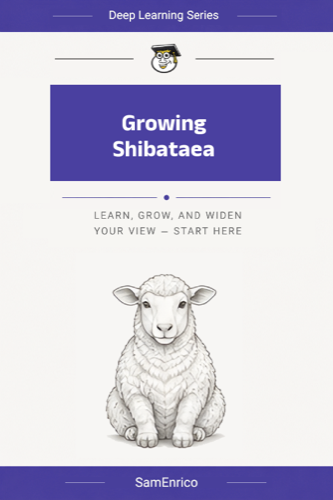
Growing Shibataea eBook
This publication, published by SamEnrico, covers G
This publication, published by SamEnrico, covers Growing Shibataea
Formats
Free sample
Chapter 1: The Bamboo That Wasn't Scary--–- Every gardener I know has a bamboo story. Most of them are horror stories.It begins innocently enough. A friend has a small stand of bamboo in their backyard—graceful, swaying, making that gentle rustling sound that somehow quiets the mind. They offer you a division. "It's a clumping kind," they say.
"It won't spread." And because you trust your friend, and because you've always loved the way bamboo looks against a wooden fence or a grey winter sky, you plant it in a sunny corner of your garden.Two years later, that sunny corner looks like a bamboo forest. Three years after that, your neighbor's yard looks like a bamboo forest. And five years on, you're contemplating a backhoe, a bottle of glyphosate, and a new identity in a town where no one knows you as "the person who planted the running bamboo."This is not an exaggeration. I have been that person. I have spent a long weekend—three full days, from dawn until the streetlights came on—digging, chopping, and cursing a single patch of Phyllostachys aurea that had traveled under a driveway, through a retaining wall, and into a compost bin on the other side of the property.
I found rhizomes as thick as my wrist and as long as my car. I filled a dump trailer twice. And when I was done, I sat on my back steps, drank a beer that tasted like failure, and swore a sacred oath: never again would I plant a bamboo without knowing exactly what I was getting into.That oath is what led me, years later, to Shibataea.The Problem with Bamboo (And Why You're Right to Be Afraid)Let me be direct with you. Your fear of bamboo is not irrational. It is not a sign of gardening inexperience or a lack of courage.
It is a perfectly reasonable response to a plant group that includes some of the most aggressive, unstoppable, boundary-ignoring organisms on the planet.Running bamboos—the vast majority of species in the genus Phyllostachys, as well as Pleioblastus, Pseudosasa, and Sasa—possess a rhizome system that is effectively a subterranean railroad network. These rhizomes are not roots. They are modified stems that run horizontally underground, sending up new shoots at intervals like trains pulling into stations. A single Phyllostachys rhizome can travel ten meters in a single growing season. It can punch through asphalt.
It can lift concrete patios. It can find its way into your basement through a crack you didn't know existed.Here is the statistic that should make any sane gardener pause: a mature stand of Phyllostachys aureosulcata can produce forty linear meters of new rhizome growth per year. Per year. That means if you plant one small division in a corner of a suburban lot, and you do absolutely nothing to contain it, that bamboo could theoretically reach every corner of that lot within three to five years.And removal? Removal is a nightmare.
You cannot simply dig up running bamboo. The rhizomes break easily, and every broken piece left in the soil—even a fragment the size of your thumb, with a single viable node—can regenerate into a new plant. I have spoken to gardeners who have spent thousands of dollars on excavation, only to see shoots emerge again the following spring. I have read forum posts from people who have sold their homes specifically to escape bamboo infestations.So yes. You are right to be afraid.But here is the thing that most gardening books do not tell you: not all bamboos are running bamboos.
And among the running bamboos—because I want to be completely honest with you from the very first chapter—some run so slowly, so politely, so manageably that they might as well be clumpers for all the trouble they cause.Shibataea is one of those bamboos.The Discovery That Changed Everything After my Phyllostachys nightmare, I avoided bamboo entirely for nearly a decade. I would walk past the bamboo section at nurseries with the same tight-lipped suspicion I reserve for used car salesmen and timeshare presentations. I had been burned. I had learned my lesson. Bamboo was beautiful, yes, but so are tigers, and I had no intention of inviting either into my garden.Then, in the autumn of 2015, I visited the bamboo collection at the Atlanta Botanical Garden.
I was there to see the fall color on the maples, but I wandered into the bamboo grove out of habit—and found myself standing in front of a planting that stopped me cold.It was low. At most, a meter and a half tall. The leaves were unusually broad for a bamboo, almost oval, with a glossy dark green surface that caught the afternoon light like polished jade. The culms—the technical term for bamboo stems—had a distinctive zig-zag shape, bending slightly at each node like a child's drawing of a lightning bolt. And the overall effect was not the vertical, towering screen I associated with bamboo.
It was a hillside. An undulating, wave-like carpet of green that seemed to flow over the ground like water.I spent twenty minutes examining that planting. I read the label three times: Shibataea kumasasa. I had never heard of it. I went home, opened every bamboo book on my shelf, and found almost nothing.
A paragraph here, a sentence there. One reference book dismissed it as "a minor ornamental of little landscape value."That dismissive sentence was the best thing that could have happened to me. Because I am the kind of gardener who responds to "little landscape value" by thinking, I'll be the judge of that.Over the next several years, I tracked down every species of Shibataea I could find. I grew them in containers. I grew them in the ground.
I planted them in full sun and deep shade, in clay and sand, with root barriers and without. I watered some religiously and left others to fend for themselves. I made every mistake a gardener can make—overwatered, underwatered, over-fertilized, under-fertilized, pruned too early, pruned too late, and once, memorably, ran over a newly planted division with a wheelbarrow.And what I discovered, through all that trial and error, was that the books had it exactly backwards. Shibataea is not a minor ornamental. It is, for a specific kind of gardener—the shade gardener, the small-space gardener, the gardener who has been traumatized by running bamboo—one of the most valuable plants in existence.What This Chapter Is Actually Doing Before we go any further, let me tell you what this chapter is for.
Because I have read enough gardening books to know that many of them waste the first chapter on warm-up exercises—a little history, a little author biography, a little throat-clearing before the real information begins.This is not that chapter.By the time you finish reading these pages, you will know exactly what Shibataea is, why it is different from every other bamboo you have encountered, and—most importantly—whether it belongs in your garden. You will have a clear mental picture of the plant's size, growth habit, cultural needs, and aesthetic qualities. You…
This is the end of the free sample. Get the eBook to keep going. Buy now
About this book
Details
- Author
- Maestas Marcela
- Publisher
- SamEnrico
- Language
- English
- Genre
- Non-Fiction, Informative, Educational
- Released
- 2026-05-11
- Pages (approx.)
- 143
- Available as
- eBook, Audiobook

Read better in the ZLOADR app
Your eBooks on your phone or tablet. Sign in with your SamEnrico account and start reading.
More by Maestas Marcela
 Thunberg Autistic PrideMaestas Marcela$11.99
 NXIVM EscapeeMaestas Marcela$11.99
 YouTube Highlight Reel HarmMaestas Marcela$11.99
 WhatsApp Status Anxiety GuideMaestas Marcela$11.99
 Habit for StudentsMaestas Marcela$11.99
 The Grateful Teen JournalMaestas Marcela$11.99
 Childhood Verbal Abuse ScarsMaestas Marcela$11.99
 Adult Vaccination TrackerMaestas Marcela$11.99
 New Job Imposter FixMaestas Marcela$11.99
 Where the Sky Split: The Yoruba's Divine EggMaestas Marcela$11.99
 The Secret War of the Culper Spies: America's First Intelligence NetworkMaestas Marcela$11.99
 The Great Political Flip: How a Conservative Icon Became a Liberal HeroMaestas Marcela$11.99
You may also like
 Hong Kong Handover 1997Dunn Johnnie$11.99
 Zumba For Postnatal Recovery CourseNeal Christian$11.99
 Zumba for BeginnersLadner Nikia$11.99
 YouTube Comment Mining GuideHumes Pandora$12.99
 Worry Box MeditationCarlin Rudy$11.99
 Workplace Stress MeditationNguyen Lynn$11.99
 Workplace Stress and Sleep RepairHawley Ivory$11.99
 Workplace Perfectionism CureDelaney Jeffry$11.99
 Workplace Injustice Anger GuideWallen Isabelle$11.99
 Work Addiction and Burnout LinkGreenwood Ester$11.99
 Women in Yoga and WellnessBeattie Galina$11.99
 Women in Stand Up ComedyChun Evangeline$11.99