
Non-FictionInformativeEducational
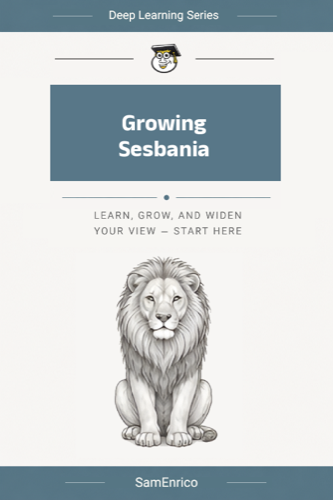
Growing Sesbania
This publication, published by SamEnrico, covers G
by Roby Meaghan
This publication, published by SamEnrico, covers Growing Sesbania
Formats
About this book
Free sample
Chapter 1: The Tree That Ate Urea--It was a hot, dusty morning in the Philippine province of Nueva Ecija when an old farmer named Mang Ramon pressed a handful of small, brown seeds into my palm and said something I would spend the next decade trying to fully understand: “This tree ate all my urea. Now my soil eats nothing but sunshine.”I had arrived at his farm as a young agricultural researcher armed with spreadsheets, soil tests, and the quiet arrogance of someone who believed that modern chemistry had solved the problem of feeding the world. Mang Ramon had not used a bag of synthetic nitrogen fertilizer in seven years. His rice paddies, which had once required 250 kilograms of urea per hectare every season, were now producing higher yields than any of his neighbors who still bought the white granules by the truckload. His secret was not a new chemical formula or a genetically modified miracle seed.
It was a tree. A tree that most Western agronomists had never heard of, that no multinational corporation was patenting, and that you could grow from a seed that cost less than a grain of rice.That tree was Sesbania.And this chapter is the story of why it matters—not just for farmers in the tropics, but for anyone who has ever watched topsoil wash away, paid a fertilizer bill that made their eyes water, or wondered if there might be a better way to grow food than pouring fossil fuels into the ground.The Forgotten Superhero of the Legume Family Let us begin with a confession: I did not believe Mang Ramon at first. I had been trained to trust numbers on a page, and the numbers said that a leguminous tree could fix nitrogen, yes, but not enough to replace synthetic fertilizer entirely. The textbooks I had studied in agricultural school devoted perhaps two paragraphs to “woody legumes” and mentioned Sesbania only as a footnote—a curiosity for smallholders in developing countries, not a serious tool for modern farming.I was wrong.Sesbania belongs to the family Fabaceae, the same family that gives us soybeans, peas, alfalfa…
This is the end of the free sample. Get the eBook to keep going. Buy now
Contents
- Chapter 1
- Chapter 2
- Chapter 3
- Chapter 4
- Chapter 5
- Chapter 6
- Chapter 7
- Chapter 8
- Chapter 9
- Chapter 10
- Chapter 11
- Chapter 12
Details
- Author
- Roby Meaghan
- Publisher
- SamEnrico
- Language
- English
- Genre
- Non-Fiction, Informative, Educational
- Released
- 2026-06-02
- Pages (approx.)
- 156
- Available as
- eBook, Audiobook

Read better in the ZLOADR app
Your eBooks on your phone or tablet. Sign in with your SamEnrico account and start reading.
More by Roby Meaghan
 Thunberg COP SummitsRoby Meaghan$11.99
 Twitter Social Comparison WorkbookRoby Meaghan$11.99
 Living Below Means Without Misery GuideRoby Meaghan$11.99
 The Affirmation Card DeckRoby Meaghan$11.99
 The Scapegoat Child Recovery GuideRoby Meaghan$11.99
 Touchdown Dance Authenticity GuideRoby Meaghan$11.99
 Habit for ADHDRoby Meaghan$11.99
 Decision Fatigue BurnoutRoby Meaghan$11.99
 Perfectionism To ConfidenceRoby Meaghan$11.99
 The Midnight Ride That Wasn’t: The Untold Story of William DawesRoby Meaghan$11.99
 The Purple Veil: The Last Empress of ByzantiumRoby Meaghan$11.99
 Black Gold & Broken Promises: The Exxon Valdez Disaster and the Birth of Environmental ActivismRoby Meaghan$11.99
You may also like
 Hong Kong Handover 1997Dunn Johnnie$11.99
 Zumba For Postnatal Recovery CourseNeal Christian$11.99
 Zumba for BeginnersLadner Nikia$11.99
 YouTube Comment Mining GuideHumes Pandora$12.99
 Worry Box MeditationCarlin Rudy$11.99
 Workplace Stress MeditationNguyen Lynn$11.99
 Workplace Stress and Sleep RepairHawley Ivory$11.99
 Workplace Perfectionism CureDelaney Jeffry$11.99
 Workplace Injustice Anger GuideWallen Isabelle$11.99
 Work Addiction and Burnout LinkGreenwood Ester$11.99
 Women in Yoga and WellnessBeattie Galina$11.99
 Women in Stand Up ComedyChun Evangeline$11.99