
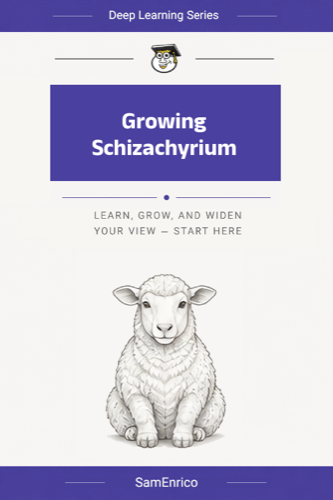
Non-FictionInformativeEducational
Growing Schizachyrium eBook
This publication, published by SamEnrico, covers G
This publication, published by SamEnrico, covers Growing Schizachyrium
Formats
Free sample
Chapter 1: The Grass Before Lawns--– In the beginning, there was no lawn. No suburban expanse of uniform green, no weekend ritual of push mowers and edging shears, no sprinklers hissing at dawn. What existed instead, across nearly 400 million acres of North America, was a sea of grass that moved like water in the wind. Its roots tangled so deep beneath the soil that early settlers spoke of prairie sod as something you could cut into bricks and build houses from. And among the many grasses that composed that living ocean—the big bluestem rising to a man's shoulder, the Indian grass with its golden plumes, the switchgrass that whispered secrets to the bison—there was a smaller, bluer, more unassuming species.
It grew in the shadows of the tallgrass giants and spread across the drier plains where nothing else could survive. Its name, if you care to use the Latin, is Schizachyrium scoparium. But most people simply call it little bluestem. And it is the most resilient, beautiful, and misunderstood grass you will ever grow.This book exists because that grass changed everything about how I garden. But before I tell you about my own stumbling discovery—the forgotten clump behind the garage, the October afternoon when copper and crimson stopped me mid-stride—I need to convince you of something stranger.
I need to convince you that learning to grow one species of grass, this particular species, can rewire your understanding of what a garden is supposed to be. Because little bluestem is not just another ornamental. It is a master class in patience, restraint, and ecological intelligence. It teaches you to stop pampering and start observing. It rewards neglect and punishes effort.
It asks almost nothing and gives everything. And if you can learn to grow it successfully—to pick the right spot, plant it correctly, and then walk away—you will have mastered the single hardest lesson in gardening: knowing when to do nothing at all.The Great American Lawn Lie Let me start with a confession. I was once a lawn person. Not a proud lawn person, mind you. Not the kind who fertilizes on a strict calendar and edges with surgical precision.
But a guilty lawn person. Every spring, I would stare at the patchy fescue behind my suburban house and think, This is the year. This was the year I would aerate and overseed and water and finally achieve that carpet of green I saw in magazine advertisements. And every August, without fail, that same patch of fescue would turn the color of straw. It would crisp and crackle underfoot.
I would run the sprinkler for hours, watching water pool and evaporate, and the grass would stay brown. I spent money on soil tests, on starter fertilizer, on "drought-tolerant" seed blends that were anything but. I spent weekends on my knees, pulling dandelions and crabgrass, and for what? A plant that was never native to my continent, that required constant intervention, that supported almost no wildlife, and that still looked terrible by midsummer.The lie of the American lawn is not that it's possible to achieve perfection. The lie is that perfection is worth achieving in the first place.
We inherited the lawn from 18th-century English estates, where vast green carpets were symbols of wealth—proof that a landowner could afford to grow something utterly useless instead of food. We imported that aesthetic, along with cool-season grasses like Kentucky bluegrass and tall fescue, onto a continent that experiences summer temperatures and drought patterns those grasses never evolved to handle. The result is a 40-million-acre monoculture that consumes more water, fertilizer, and fossil fuel than any other crop in the country, produces nothing edible, and supports almost zero insect life. A lawn is not a meadow. It is a green desert.Little bluestem is the antidote to everything the lawn represents.
It requires no irrigation once established. It demands no fertilizer—in fact, fertilizer kills its character. It hosts dozens of butterfly and moth species, feeds birds through the winter, and builds soil instead of depleting it. And unlike the exhausting cycle of mowing, edging, and reseeding, little bluestem asks you to do exactly two things per year: cut it back once in late winter, and otherwise leave it alone. That's it.
That's the maintenance schedule. Two actions. One of which is doing nothing.The Plant That Refused to Cooperate I met little bluestem by accident. At the time, I was deep in the throes of what I now call "remedial gardening"—the desperate phase where you buy whatever looks good at the big box store, shove it into the ground, and watch half of it die. I had discovered native plants, vaguely, in the sense that I had read an article about pollinators and felt vaguely guilty.
So I went to a native plant sale and bought whatever the volunteer recommended. Among the coneflowers and milkweeds and asters was a single quart pot of something labeled Schizachyrium scoparium 'Standing Ovation'. The tag said "little bluestem." I had no idea what that meant. It looked like a clump of blue-green grass, unremarkable and slightly scruffy. I planted it in the hellstrip between the sidewalk and the street, because that spot was full sun and nothing else had survived there.
My expectations, to be honest, were zero.For the first two months, nothing happened. The fescue lawn I had seeded that spring was already showing green, but the little bluestem just sat there, looking exactly as it had the day I planted it. I watered it once, then forgot about it. By July, the fescue was browning. The little bluestem had grown maybe two inches.
I mentally wrote it off as a dud.Then came fall. Late October. I was out raking leaves—a pointless exercise, given that the maple tree in my front yard produced about four times more leaves than my compost bin could handle—and I happened to glance at the hellstrip. What I saw stopped me cold. The clump I had dismissed as a dud had transformed.
Its leaves, which had been a quiet blue-green all summer, were now a riot of copper, burnt orange, and deep burgundy. The stems stood upright in a perfect vase shape, each one tipped with a wispy silver seed head that caught the low autumn light like a tiny exploding firework. The whole plant looked like it was on fire from the inside. I stood there for a full minute, rake in hand, trying to understand how an unwatered, unfertilized, completely ignored plant in the worst soil on my property had produced the most beautiful thing in my garden.That moment was the crack in my lawn-addicted worldview. I started paying attention.
I noticed that the little bluestem held its seed heads all winter, and that the chickadees and finches came to pick at them on cold mornings. I noticed that when the first hard freeze hit, the plant didn't collapse—it just stood there, frost tracing the edges of each blade. I noticed that in spring, when I finally cut it back to a few inches, I could see the tiny green shoots already pushing up from…
This is the end of the free sample. Get the eBook to keep going. Buy now
About this book
Details
- Author
- Wallen Lashanda
- Publisher
- SamEnrico
- Language
- English
- Genre
- Non-Fiction, Informative, Educational
- Released
- 2026-05-08
- Pages (approx.)
- 150
- Available as
- eBook, Audiobook

Read better in the ZLOADR app
Your eBooks on your phone or tablet. Sign in with your SamEnrico account and start reading.
More by Wallen Lashanda
 Fasting Hunger ManagementWallen Lashanda$11.99
 Academic Resilience Building GuideWallen Lashanda$11.99
 Talking to Kids About DivorceWallen Lashanda$11.99
 Peruvian Green Tax CreditsWallen Lashanda$11.99
 Primary Market Research MethodsWallen Lashanda$11.99
 TM for DiplomatsWallen Lashanda$11.99
 The Inner Voice Rewire CourseWallen Lashanda$11.99
 Nicotine Memory And Focus WorkbookWallen Lashanda$11.99
 HGH And TelomeresWallen Lashanda$11.99
 The Last Broadcast: The Day Time Stopped for 59 MinutesWallen Lashanda$11.99
 Echoes of the Forgotten: The Battle of Pork Chop HillWallen Lashanda$11.99
 Burke and Wills: The Perilous Quest for Australia's HeartWallen Lashanda$11.99
You may also like
 Hong Kong Handover 1997Dunn Johnnie$11.99
 Zumba For Postnatal Recovery CourseNeal Christian$11.99
 Zumba for BeginnersLadner Nikia$11.99
 YouTube Comment Mining GuideHumes Pandora$12.99
 Worry Box MeditationCarlin Rudy$11.99
 Workplace Stress MeditationNguyen Lynn$11.99
 Workplace Stress and Sleep RepairHawley Ivory$11.99
 Workplace Perfectionism CureDelaney Jeffry$11.99
 Workplace Injustice Anger GuideWallen Isabelle$11.99
 Work Addiction and Burnout LinkGreenwood Ester$11.99
 Women in Yoga and WellnessBeattie Galina$11.99
 Women in Stand Up ComedyChun Evangeline$11.99