
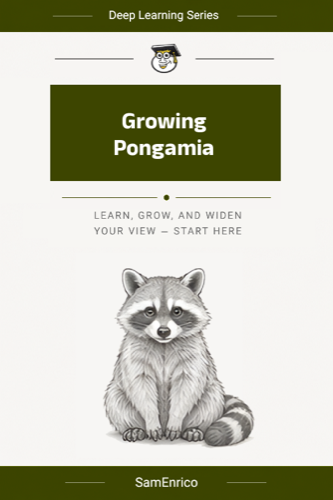
Non-FictionInformativeEducational
Growing Pongamia eBook
This publication, published by SamEnrico, covers G
This publication, published by SamEnrico, covers Growing Pongamia
Formats
Free sample
Chapter 1: Beyond the Food-Fuel Dilemma...--–- The old farmer’s hands were not soft. They were maps—each callus a mountain range, each cracked knuckle a dry riverbed. He held up a single brown pod, no bigger than his thumb, and turned it slowly in the morning light. “This,” he said, “does not ask permission to grow. It does not compete with my children’s dinner.
And it will be here long after I am gone.”That man was Krishnamurthy, and I met him on a degraded patch of land in coastal Andhra Pradesh, India, where the soil had turned white with salt and the groundwater had become too bitter to drink. His neighbors had abandoned their fields a decade earlier, fleeing to overcrowded cities in search of work. But Krishnamurthy stayed. He had planted something unexpected along the brackish creek that still held a whisper of fresh water during the monsoon: a row of unremarkable trees with glossy leaves and clusters of lilac flowers. They were Pongamia trees (Millettia pinnata), and they were thriving in conditions that had killed everything else.That encounter changed how I think about agriculture.
For years, I had accepted a grim trade-off: we could grow fuel for our machines, or we could grow food for our people, but we could not do both on the same land without sacrifice. Corn ethanol devoured Midwestern prairies. Soy biodiesel consumed vast swaths of the Amazon. Palm oil plantations marched across Borneo, leaving smoke and orphaned orangutans in their wake. The math seemed inescapable—every gallon of biofuel was a loaf of bread taken from someone’s table.But Krishnamurthy’s trees whispered a different arithmetic.
His Pongamia pods would never be eaten by humans. The seeds inside tasted so bitter that even rats left them alone. Yet those same seeds contained nearly thirty percent oil—a thick, amber liquid that burned cleanly in diesel engines. He pressed the oil himself, using a centuries-old wooden ghani (a mortar-and-pestle press powered by a bullock), and ran his irrigation pump on the fuel he produced. The remaining press cake, rich in nitrogen, fertilized his vegetable garden.
He had created a closed loop, a small but perfect cycle, on land that everyone else had declared dead.This book is my attempt to share what I have learned since that day. Growing Pongamia is not a theoretical treatise. It is a practical guide born from walking through orchards in Florida, Queensland, Tamil Nadu, and Hawaii, talking with farmers who took a chance on an unfamiliar tree, and digging through the scientific literature to separate myth from measurable reality. Whether you own five acres or five thousand, whether you are motivated by profit or by a desperate hope to heal damaged land, this chapter will lay the foundation for everything that follows. You will learn why Pongamia matters, where it came from, what it can do, and—just as important—what it cannot do.
Because this is not a miracle tree. That is the first honest thing I can tell you.The Global Trap: Food Versus Fuel To understand why Pongamia matters, you must first understand the trap we have built for ourselves. In the early 2000s, as oil prices climbed toward $150 per barrel and climate change shifted from a distant worry to a daily headline, the world turned to biofuels with something like desperation. Governments mandated that a percentage of transportation fuel come from renewable sources. The United States passed the Renewable Fuel Standard.
The European Union set ambitious targets for renewable energy in transport. Brazil had already spent decades perfecting sugarcane ethanol.But there was a problem. The easiest way to make biofuel was to ferment or press food crops. Corn ethanol became the default in the United States. Soybean biodiesel followed close behind.
In Europe, rapeseed oil fueled millions of diesel cars. In Southeast Asia, palm oil plantations exploded across Indonesia and Malaysia.The result was predictable. As demand for biofuel feedstocks rose, so did their prices. Between 2005 and 2008, global food prices spiked dramatically. Corn, wheat, and soy became more expensive.
Riots broke out in more than thirty countries. The United Nations Special Rapporteur on the Right to Food called the diversion of food crops to fuel “a crime against humanity.” Whether that language was too strong or merely premature, the underlying arithmetic was undeniable: we were burning food in our gas tanks.Even when food prices stabilized, the structural problem remained. Good farmland—land with reliable rainfall, deep topsoil, and access to water—is finite. Every acre planted with corn for ethanol is an acre not planted with wheat for bread, or vegetables for a local market, or fallow land resting between seasons. The competition is zero-sum.
You cannot feed a growing population and fuel a global transportation fleet on the same fertile acres without someone losing.This is the trap that Pongamia steps around. It does not require the land that produces your dinner. It asks for the land that nobody else wants.The Third Path: Non-Edible Oil as Ethical Fuel The term “non-edible oilseed” is not a marketing phrase. It is a biological fact. Pongamia seeds contain a suite of flavonoid compounds, most notably karanjin and pongamol, that make them intensely bitter and unpalatable to mammals, including humans.
Bite into a raw Pongamia seed—I do not recommend this—and your mouth will immediately fill with a burning, acrid taste that lingers for hours. In sufficient quantities, these compounds cause nausea and vomiting. The tree evolved this chemical defense to protect its offspring from herbivores. For us, it offers an accidental advantage: nobody will ever secretly harvest your Pongamia orchard to make cooking oil or animal feed.That ethical clarity matters. When you grow Pongamia for fuel, you are not competing directly with anyone’s dinner plate.
You are not bidding against bread makers for wheat or against tofu manufacturers for soybeans. You are producing a commodity that cannot be consumed as food, which means your market does not sit on top of someone else’s survival.But non-edibility alone is not enough. A plant could be utterly inedible and still require prime farmland, massive fertilizer inputs, and endless water. Pongamia’s real genius—and the reason this book exists—is that it thrives where other crops fail.The Tree’s Native Range and Global Journey Let me give you the basic geography. Pongamia is native to a broad belt stretching from India through Southeast Asia, across the islands of Indonesia and the Philippines, all the way to northern Australia and the Pacific islands as far east as Fiji.
Within this range, it grows naturally along coastlines, riverbanks, and tidal estuaries. It is a tree of the transition zone between land and water, equally at home in humid lowlands and on sandy beaches exposed to salt spray.This native habitat tells you almost everything you need to know about what the tree can tolerate. It evolved with periodic flooding, so it sends down a deep taproot that can reach groundwater even when surface soils dry out. It evolved in coastal environments, so it can handle salt levels that would kill most other trees. It evolved in the…
This is the end of the free sample. Get the eBook to keep going. Buy now
About this book
Details
- Author
- Snead Refugio
- Publisher
- SamEnrico
- Language
- English
- Genre
- Non-Fiction, Informative, Educational
- Released
- 2026-05-11
- Pages (approx.)
- 160
- Available as
- eBook, Audiobook

Read better in the ZLOADR app
Your eBooks on your phone or tablet. Sign in with your SamEnrico account and start reading.
More by Snead Refugio
 LTC Insurance Consumer GuideSnead Refugio$11.99
 FCPA Aviation Industry CasesSnead Refugio$11.99
 Gacy's Execution and Final WordsSnead Refugio$11.99
 Refugee Mental Health Low Cost InterventionsSnead Refugio$11.99
 Teen Breath Meditation GuideSnead Refugio$11.99
 Myanmar RohingyaSnead Refugio$11.99
 The Urge Surfing MethodSnead Refugio$11.99
 Sexually Abusive HouseholdSnead Refugio$11.99
 Rewiring Unrequited LoveSnead Refugio$11.99
 The Strategist: Alcibiades and the Art of Athenian PowerSnead Refugio$11.99
 Into the Abyss: The Grand Canyon’s Forgotten Mappers and Their Daring 1920s ExpeditionSnead Refugio$11.99
 The Last Witness: The Trial That Shook a NationSnead Refugio$11.99
You may also like
 Hong Kong Handover 1997Dunn Johnnie$11.99
 Zumba For Postnatal Recovery CourseNeal Christian$11.99
 Zumba for BeginnersLadner Nikia$11.99
 YouTube Comment Mining GuideHumes Pandora$12.99
 Worry Box MeditationCarlin Rudy$11.99
 Workplace Stress MeditationNguyen Lynn$11.99
 Workplace Stress and Sleep RepairHawley Ivory$11.99
 Workplace Perfectionism CureDelaney Jeffry$11.99
 Workplace Injustice Anger GuideWallen Isabelle$11.99
 Work Addiction and Burnout LinkGreenwood Ester$11.99
 Women in Yoga and WellnessBeattie Galina$11.99
 Women in Stand Up ComedyChun Evangeline$11.99