
Non-FictionInformativeEducational
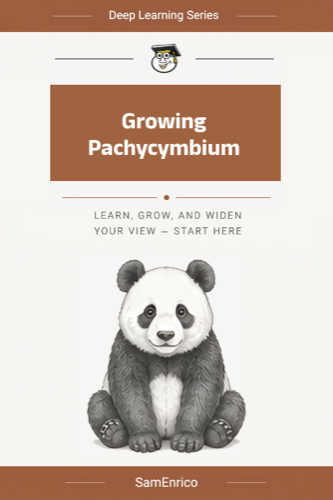
Growing Pachycymbium
This publication, published by SamEnrico, covers G
by Hale Shaun
This publication, published by SamEnrico, covers Growing Pachycymbium
Formats
About this book
Free sample
Chapter 1: The Great Renaming...--Chapter 1: The Great Renaming--The plant sitting on your windowsill has a crisis of identity. Depending on which book you open, which website you visit, or which expert you ask, it might be called Pachycymbium, Orbea, Caralluma, or even Angolluma. Some growers will insist these are all the same thing. Others will argue with religious fervor that the differences are fundamental. And here is the uncomfortable truth that every Pachycymbium collector must eventually confront: the botanists themselves cannot agree.This chapter is not going to pretend that this confusion does not exist or that it is trivial.
It is not going to offer you a tidy, simplified answer that ignores decades of taxonomic debate. Instead, this chapter will do something more useful. It will teach you why the names keep changing, who started the fight, what is at stake, and most importantly, why knowing all of this will make you a better grower. By the time you finish reading, you will understand that the confusion surrounding Pachycymbium is not a flaw in botanical science. It is a window into how we understand evolution itself.The Problem That Started Everything To understand why Pachycymbium is such a taxonomic battleground, you must first understand its family history.
The genus belongs to the Apocynaceae family, specifically the subfamily Asclepiadoideae, which contains the plants commonly known as milkweeds. Within this vast group exists a tribe called the Stapeliae, or as succulent collectors call them, the Stapeliads. This tribe includes the familiar genera Stapelia, Huernia, Hoodia, and of course, the subject of this book.For much of the nineteenth and early twentieth centuries, nearly all Stapeliads with small to medium flowers and toothed stems were dumped into a single genus called Caralluma. This was a convenient wastebasket. If a plant did not clearly belong to Stapelia (large, hairy flowers) or Huernia (cup-shaped flowers with a prominent ring), it went into Caralluma.
By the mid-twentieth century, Caralluma had become a monstrosity. It contained over one hundred species ranging from South Africa to India, with flowers that varied so wildly that the genus had…
This is the end of the free sample. Get the eBook to keep going. Buy now
Contents
- Chapter 1
- Chapter 2
- Chapter 3
- Chapter 4
- Chapter 5
- Chapter 6
- Chapter 7
- Chapter 8
- Chapter 9
- Chapter 10
- Chapter 11
- Chapter 12
Details
- Author
- Hale Shaun
- Publisher
- SamEnrico
- Language
- English
- Genre
- Non-Fiction, Informative, Educational
- Released
- 2026-06-02
- Pages (approx.)
- 150
- Available as
- eBook, Audiobook

Read better in the ZLOADR app
Your eBooks on your phone or tablet. Sign in with your SamEnrico account and start reading.
More by Hale Shaun
 Creative Professional Self EsteemHale Shaun$11.99
 Restless Leg Syndrome Antidepressant ManagementHale Shaun$11.99
 Anger Management for First RespondersHale Shaun$11.99
 Healthcare Burnout PreventionHale Shaun$11.99
 Coen Brothers QuirkHale Shaun$11.99
 Female Rulers Alliance Management CourseHale Shaun$11.99
 Multi Tool and Gear Selection GuideHale Shaun$11.99
 Road Rage Cognitive ShiftHale Shaun$11.99
 Cash Flow for Wedding PlanningHale Shaun$11.99
 The Last Stand of the Iron Queen: A Siege in the SkyHale Shaun$11.99
 Silent Exodus: The Lost Colony of Roanoke’s Final WhispersHale Shaun$11.99
 The Quantum Leap: How a 1970s Math Puzzle Predicted the Future of AIHale Shaun$11.99
You may also like
 Hong Kong Handover 1997Dunn Johnnie$11.99
 Zumba For Postnatal Recovery CourseNeal Christian$11.99
 Zumba for BeginnersLadner Nikia$11.99
 YouTube Comment Mining GuideHumes Pandora$12.99
 Worry Box MeditationCarlin Rudy$11.99
 Workplace Stress MeditationNguyen Lynn$11.99
 Workplace Stress and Sleep RepairHawley Ivory$11.99
 Workplace Perfectionism CureDelaney Jeffry$11.99
 Workplace Injustice Anger GuideWallen Isabelle$11.99
 Work Addiction and Burnout LinkGreenwood Ester$11.99
 Women in Yoga and WellnessBeattie Galina$11.99
 Women in Stand Up ComedyChun Evangeline$11.99