
Non-FictionInformativeEducational
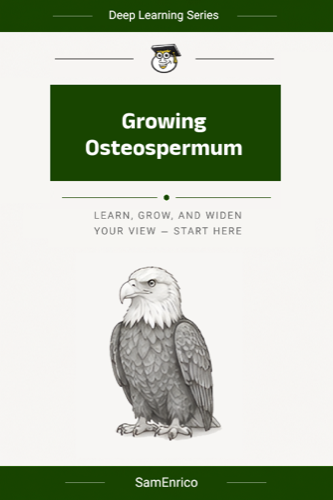
Growing Osteospermum eBook
This publication, published by SamEnrico, covers G
This publication, published by SamEnrico, covers Growing Osteospermum
Formats
Free sample
Chapter 1: The African Secret...--The first time I killed an Osteospermum, I was genuinely confused. I had followed every instruction on the tag attached to the nursery pot. Full sun, it demanded, so I placed it in the brightest corner of my garden. Water regularly, it instructed, so I gave it a gentle drink every evening. The plant responded by turning yellow, then brown, then crispy.
Within three weeks, what had been a promising $4.99 investment in curb appeal had become a sad little corpse with a few wilted petals still clinging to its central disc.I bought another one the following spring, determined to do better. This time, I watered less frequently—every other day instead of every day. I added fertilizer. I whispered encouragement. The plant produced exactly three flowers over two months before succumbing to a powdery white coating that I later learned was mildew.
At that point, I made a reasonable assumption: Osteospermum was difficult. It was a fussy plant for expert gardeners with greenhouses and horticultural degrees. I moved on to marigolds, which seemed to thrive on neglect.I was wrong about everything.The problem was not that Osteospermum is difficult. The problem was that I was treating it like a generic flowering annual, and Osteospermum is anything but generic. It is, in fact, one of the most forgiving, resilient, and rewarding plants you can grow—once you understand where it comes from and what it actually needs.
The journey from that first wilted failure to the explosion of purple, pink, white, and orange that now spills from my containers every summer taught me a lesson that applies to nearly every gardening struggle: plants do not follow instructions on tags. They follow the rules written into their DNA by millions of years of evolution in a very specific place.That place is the Cape Floristic Region of South Africa.The Landscape That Shaped a Flower Close your eyes for a moment and imagine a landscape entirely unlike your garden. You are standing on a rocky slope in the Western Cape of South Africa, near the city of Cape Town but far from any suburban lawn. The ground beneath your feet is not rich, dark loam. It is sandstone and shale, broken into sharp fragments by centuries of weathering.
The soil, where it exists at all, is thin and sandy, barely more than a stain on the bedrock. The sun beats down relentlessly, unsoftened by the kind of tree canopy that shades a typical garden. The wind whips in from the Atlantic Ocean, carrying salt and drying everything it touches.Rain falls here in a pattern that would alarm most gardeners. The winter months bring steady, gentle rain—not the daily thunderstorms of a summer wet season, but a persistent drizzle that keeps the ground moist for weeks. Then comes summer.
From November through March in the Southern Hemisphere, the rain stops almost entirely. For four or five months, this landscape receives little more than the occasional coastal fog. The ground dries to dust. The sun bakes everything exposed.And yet, in the midst of this harsh, dry summer, something remarkable happens. The slopes explode with color.
Daisies of every shade—white, purple, pink, orange, yellow—carpet the ground in such profusion that from a distance, the hillsides look as though someone has spilled paint across them. This is the wild Osteospermum, growing not despite the harsh conditions but because of them.This is the African secret that most gardening books never tell you.Why Your Garden Center Tag Is Lying to You Every Osteospermum plant sold in a garden center, every seed packet you can buy, every cutting you might take from a friend's plant traces its ancestry back to those rocky South African slopes. The plant has been hybridized and selected for larger flowers, longer bloom times, and more varied colors, but it has not been fundamentally changed. The DNA still remembers the Cape.This means that when a tag says "full sun," it is not speaking the language of your garden. In Cape Town, full sun means 10 to 12 hours of intense, unfiltered African light, often accompanied by drying winds and reflected heat from surrounding rocks.
When a tag says "well-drained soil," it means sandy, rocky, almost infertile conditions where water passes through in seconds rather than pooling around roots. When a tag says "moderate water," it means a pattern of winter rain followed by summer drought followed by more winter rain—not the consistent, gentle watering that most annuals prefer.Understanding this context transforms everything about growing Osteospermum. The plant is not delicate. It is not fussy. It is, in fact, a survivor adapted to conditions that would kill most garden plants outright.
It stores water in its fleshy, semi-succulent leaves during the rare rainy periods, then draws on those reserves during the dry summer. It closes its flowers at night and on cloudy days not out of shyness but out of efficiency—by keeping its reproductive organs protected until conditions are optimal for pollination. It thrives in poor soil because its native habitat offers no rich compost to speak of.The reason most gardeners struggle with Osteospermum is that they give it the opposite of what it wants. They plant it in rich, moisture-retentive soil that stays wet too long. They water it daily, keeping the roots constantly damp.
They place it in locations that receive only morning sun or dappled shade. They fertilize it heavily, forcing lush leaf growth at the expense of flowers. In short, they kill it with kindness.The Five Survival Strategies That Make Osteospermum Unique To grow Osteospermum successfully, you must understand the five specific adaptations that allow it to survive in the Cape Floristic Region. These are not abstract botanical facts. They are practical instructions for how to treat the plant in your garden.Strategy One: Succulent Foliage for Water Storage If you look closely at an Osteospermum leaf, you will notice something unusual.
It is thicker and fleshier than the leaves of most daisies. Run your finger along its surface, and you will feel a slight rubberiness, a resistance that suggests water stored within the tissue. This is not an accident. The plant's leaves are modified to function as water reservoirs, allowing it to survive weeks or even months without rainfall.The practical implication for your garden is straightforward: Osteospermum does not need constant watering. In fact, constant watering is actively harmful.
When the soil stays consistently moist, the plant never needs to draw on its leaf reserves. It continues growing, but it grows soft and lush, producing more leaf tissue and fewer flowers. More importantly, consistently wet soil creates conditions where root rot pathogens thrive. The same adaptation that allows the plant to survive drought makes it vulnerable to suffocation and disease when overwatered.The gardener's rule for watering Osteospermum is simple but counterintuitive: wait until the soil is dry to the touch before watering again. In a container, this might mean watering every three to five days in summer and every seven to ten days in spring and autumn.
In the ground, established plants may need water only once a week or even less, depending on rainfall. When in…
This is the end of the free sample. Get the eBook to keep going. Buy now
About this book
Details
- Author
- Castillo Katie
- Publisher
- SamEnrico
- Language
- English
- Genre
- Non-Fiction, Informative, Educational
- Released
- 2026-05-08
- Pages (approx.)
- 128
- Available as
- eBook, Audiobook

Read better in the ZLOADR app
Your eBooks on your phone or tablet. Sign in with your SamEnrico account and start reading.
More by Castillo Katie
 Restless Leg Syndrome Herbal Remedies GuideCastillo Katie$11.99
 Pet Emergency Preparedness KitCastillo Katie$11.99
 Messner Tibet Border EscapeCastillo Katie$11.99
 NVC Workbook For BeginnersCastillo Katie$11.99
 Workplace Anger Consequences GuideCastillo Katie$11.99
 Female Rulers Succession Planning GuideCastillo Katie$11.99
 Johnson BorisCastillo Katie$11.99
 Cash Flow for DaycaresCastillo Katie$11.99
 Anger Thermometer TrackingCastillo Katie$11.99
 Whispers of the Forgotten: The Last Song of the AinuCastillo Katie$11.99
 The Serpent's Whisper: The Rise and Fall of the NXIVM CultCastillo Katie$11.99
 The Mineral Guide to XifengiteCastillo Katie$11.99
You may also like
 Hong Kong Handover 1997Dunn Johnnie$11.99
 Zumba For Postnatal Recovery CourseNeal Christian$11.99
 Zumba for BeginnersLadner Nikia$11.99
 YouTube Comment Mining GuideHumes Pandora$12.99
 Worry Box MeditationCarlin Rudy$11.99
 Workplace Stress MeditationNguyen Lynn$11.99
 Workplace Stress and Sleep RepairHawley Ivory$11.99
 Workplace Perfectionism CureDelaney Jeffry$11.99
 Workplace Injustice Anger GuideWallen Isabelle$11.99
 Work Addiction and Burnout LinkGreenwood Ester$11.99
 Women in Yoga and WellnessBeattie Galina$11.99
 Women in Stand Up ComedyChun Evangeline$11.99