
Non-FictionInformativeEducational
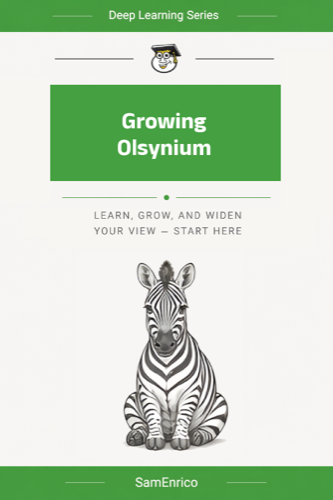
Growing Olsynium eBook
This publication, published by SamEnrico, covers G
This publication, published by SamEnrico, covers Growing Olsynium
Formats
Free sample
Chapter 1: The Plant That Almost Wasn't--The first time I killed an Olsynium, I didn't even know I had grown it.That sentence sounds absurd, I realize. But it is the precise truth, and it is also the reason this book exists. In the spring of 2009, I received a small paper envelope in the mail from a rock garden society seed exchange. The label read: Sisyrinchium douglasii – a name I recognized vaguely as some kind of blue-eyed grass, a plant I assumed would be weedy, perhaps even invasive, something I could toss into a corner of the garden and forget about. I scattered the dust-fine seeds across a pot of standard potting mix, watered them in, and placed the pot on a south-facing windowsill where I assumed they would appreciate the warmth.Nothing happened.For eight weeks, nothing happened.
Then twelve weeks. Then sixteen. The pot sat there, a testament to my presumed incompetence, growing nothing but a thin crust of green algae. Eventually, I did what any frustrated gardener does: I emptied the pot into the compost pile, washed it thoroughly, and planted something else – some annual that would actually perform on schedule, unlike whatever mysterious seeds I had failed to coax into life.I forgot about the whole thing by July.The following March, while turning my compost pile, I noticed a cluster of slender, grass-like leaves emerging from a half-rotted banana peel and coffee grounds. They were not weeds – I knew my weeds, and these were different.
The leaves were too narrow, too blue-green, too perfectly arranged in a fan. I scraped away the compost around them and found a small, fibrous root system attached to a clump of what looked like tiny, dormant bulbs. Something had germinated in the compost pile. Something had grown, flowered, set seed, and died back without my ever noticing. Something had done exactly what it was supposed to do, and I had thrown it away because I didn't understand its rhythm.That something was Olsynium douglasii – the plant that would, over the next fifteen years, teach me everything I thought I knew about gardening was wrong.The Gardener's Greatest Enemy We like to think the greatest threats to our gardens are pests, diseases, weather, or poor soil.
But after fifteen years of growing Olsynium, and after teaching hundreds of gardeners through workshops and garden tours, I have concluded that the single greatest threat to this plant – and to many of the most fascinating plants on earth – is the gardener's own impatience.We live in an age of instant gratification, and our gardens have not been immune. We want plants that bloom the moment they leave the nursery pot. We want foliage that stays green all season, flowers that never fade, and a garden that looks exactly the same in August as it did in April. We have been trained by the horticultural industry to expect performance, predictability, and permanence.Olsynium offers none of these things.What Olsynium offers instead is something far more valuable: a relationship with time that most modern gardeners have lost. It teaches patience.
It teaches observation. It teaches that disappearance is not death, that rest is not laziness, and that the most beautiful things in life are often the most fleeting.This book is not really about how to grow a plant. It is about how to change the way you see your garden.What This Plant Is Not Before we discuss what Olsynium is, let us be clear about what it is not.It is not a houseplant. I have received more emails from frustrated gardeners trying to grow Olsynium on a sunny windowsill than any other question. Olsynium requires a cold winter dormancy period to bloom.
Without temperatures consistently below 50°F for at least eight weeks, the plant will not initiate flower buds. Your warm, cozy living room is its personal hell.It is not a summer annual. If you are looking for something to fill your garden with color from June through September, buy a petunia. Olsynium blooms for approximately three to four weeks in early spring – sometimes as early as late February in mild climates, sometimes as late as April in colder regions. After that, it vanishes.
The foliage yellows, collapses, and by midsummer, there is no visible sign that anything ever grew there at all.It is not a plant for heavy clay soil. I have seen gardeners try to force Olsynium into the same dense, waterlogged soil that supports their hostas and hydrangeas. The plant survives for a season – sometimes two – looking vaguely unhappy, and then rots during a wet winter. Olsynium requires soil that drains so quickly you might wonder if anything can grow in it at all. It can.
It will. But only if you give it what it needs.It is not a plant for the forgetful waterer – at least not in the way you think. Most gardeners assume that drought-tolerant plants require less attention. Olsynium does require less water over the course of a year than almost any plant I know. But the timing of that water matters enormously.
Water it in July, when it is trying to sleep, and you will kill it. Forget to water it in March, when it is trying to bloom, and you will also kill it – just more slowly.It is not a plant that rewards fussing. This may be the hardest lesson for the dedicated gardener. Olsynium does not want to be fertilized frequently, divided regularly, or pruned with precision. It wants to be left alone for most of the year.
The best Olsynium gardeners are not the ones who spend hours tending their plants. They are the ones who know when to walk away.The Taxonomy Trap The name Olsynium is relatively new to horticulture, and that newness has caused no small amount of confusion. If you bought a plant labeled "Grass Widow" before approximately 1990, it was almost certainly sold under the name Sisyrinchium douglasii. This classification placed Olsynium in the same genus as the common blue-eyed grass (Sisyrinchium angustifolium), a plant found in meadows and roadsides across North America.The problem is that Olsynium and true Sisyrinchium are not particularly close relatives.Modern genetic analysis has shown that Olsynium differs from Sisyrinchium in several fundamental ways: flower structure, seed morphology, and most importantly, growth habit. True Sisyrinchium are evergreen or semi-evergreen, keeping their grassy leaves through the summer.
Olsynium, as we have discussed, goes completely dormant. The flowers of Sisyrinchium open flat, revealing a distinctive yellow "eye" at the center. Olsynium flowers hang like tiny bells, with no eye to speak of. Sisyrinchium seeds are round and smooth. Olsynium seeds are angled and textured.In 1990, botanists Goldblatt and Takei formally reclassified the Grass Widows into their own genus: Olsynium, named for the French botanist Olsyn, though the etymology is contested and frankly, not worth losing sleep over.
What matters for the gardener is that this reclassification was not mere academic pedantry. It was a recognition that these plants require different care, occupy different ecological niches, and reward different gardening approaches.If you treat an Olsynium like a Sisyrinchium – keeping it evenly moist all summer, dividing it frequently, planting it…
This is the end of the free sample. Get the eBook to keep going. Buy now
About this book
Details
- Author
- Montoya Chelsey
- Publisher
- SamEnrico
- Language
- English
- Genre
- Non-Fiction, Informative, Educational
- Released
- 2026-06-02
- Pages (approx.)
- 154
- Available as
- eBook, Audiobook

Read better in the ZLOADR app
Your eBooks on your phone or tablet. Sign in with your SamEnrico account and start reading.
More by Montoya Chelsey
 The EQ for Freelancers GuideMontoya Chelsey$11.99
 Restless Leg Syndrome Compression TherapyMontoya Chelsey$11.99
 Messner Manaslu Winter AscentMontoya Chelsey$11.99
 Twelve Step Meeting AnxietyMontoya Chelsey$11.99
 NVC For Conflict Resolution GuideMontoya Chelsey$11.99
 Should Statements Challenging GuideMontoya Chelsey$11.99
 Nuclear Energy Capital AllocationMontoya Chelsey$11.99
 Yehuda Halevi Kuzari ArgumentsMontoya Chelsey$11.99
 Progress Billing GuideMontoya Chelsey$11.99
 The Last Pharaoh's Gambit: Cleopatra's Secret CoronationMontoya Chelsey$11.99
 The Marble and the Myth: The First Olympic Scandal in the Middle EastMontoya Chelsey$11.99
 The Mineral Guide to VanadiniteMontoya Chelsey$11.99
You may also like
 Hong Kong Handover 1997Dunn Johnnie$11.99
 Zumba For Postnatal Recovery CourseNeal Christian$11.99
 Zumba for BeginnersLadner Nikia$11.99
 YouTube Comment Mining GuideHumes Pandora$12.99
 Worry Box MeditationCarlin Rudy$11.99
 Workplace Stress MeditationNguyen Lynn$11.99
 Workplace Stress and Sleep RepairHawley Ivory$11.99
 Workplace Perfectionism CureDelaney Jeffry$11.99
 Workplace Injustice Anger GuideWallen Isabelle$11.99
 Work Addiction and Burnout LinkGreenwood Ester$11.99
 Women in Yoga and WellnessBeattie Galina$11.99
 Women in Stand Up ComedyChun Evangeline$11.99