
Non-FictionInformativeEducational
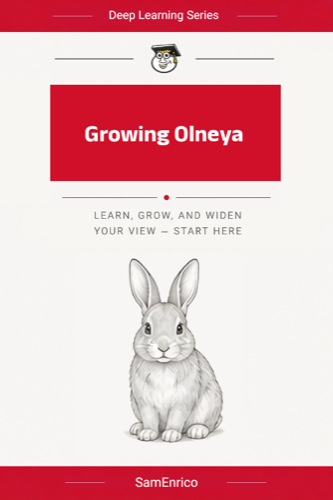
Growing Olneya eBook
This publication, published by SamEnrico, covers G
by Wren Mason
This publication, published by SamEnrico, covers Growing Olneya
Formats
Free sample
Chapter 1: The Living Paradox...–- On a sweltering July afternoon in the Sonoran Desert, where the air temperature touches 48°C (118°F) and the ground radiates heat like a bread oven, most plants have long since surrendered. The creosote bush curls its leaves into tight tubes. The palo verde drops its photosynthetic bark. The cactus flowers close their petals, retreating into spiny fortresses. But one tree stands unbothered, its canopy dense and green, its roots drinking from aquifers that have not seen rain in seven months.
That tree is Olneya tesota, and it is doing something that should be impossible: it is thriving where other plants merely survive.This is the first thing you need to understand about Desert Ironwood: it does not play by the same rules as every other tree. It is a living paradox, a bundle of contradictions wrapped in bark so hard it blunts axe blades. It is a legume that may or may not fix nitrogen, a desert tree that drops its leaves at the slightest chill yet withstands the most extreme heat, a slow-growing giant that can rocket upward when given water, and a tree that lives for four centuries yet resists every attempt to rush its growth. To understand Ironwood is to embrace contradiction, and that is precisely what this chapter will do.The chapter ahead accomplishes three goals. First, it establishes the taxonomic identity of Olneya tesota, explaining where this tree fits in the grand order of plants and why its evolutionary isolation makes it unique among desert species.
Second, it maps the physical limits of the species—where it grows, how tall it becomes, and the precise environmental thresholds that define its existence. Third, it provides the practical identification skills you need to distinguish Ironwood from the look-alikes that share its habitat. By the end of this chapter, you will not merely know about Ironwood; you will be able to spot it from a moving vehicle, understand why it drops its leaves in a cold snap, and explain to a fellow gardener why comparing it to mesquite is both helpful and misleading.Let us begin with the name, because names matter.The Botanist’s Inventory: What We Call It and Why The official scientific name is Olneya tesota A. Gray, named for the American botanist Stephen Thayer Olney (1812–1878) by the Harvard botanist Asa Gray in 1855. Gray, who was the preeminent American botanist of his era and a close correspondent of Charles Darwin, received specimens from the boundary survey that established the US–Mexico border after the Mexican-American War.
He recognized immediately that this tree was something new—not merely a new species but a new genus entirely.The specific epithet tesota comes from the Spanish tesota, which itself derives from the indigenous Ópata language of Sonora, Mexico. Before Linnaean taxonomy arrived in the New World, the Ópata people called this tree tesota, meaning "iron wood" or "hard wood," and Spanish missionaries simply adopted the name. In English, the tree goes by Desert Ironwood (most common), Tesota (less common), and occasionally Palo de Hierro (Spanish for "iron wood"). In the Seri language of coastal Sonora, it is copép quij —pronounced "koh-PEP keeh"—which translates roughly to "hard tree that sinks." All of these names point to the same physical reality: this is the densest wood in North America, and it will not float.But the name Olneya tesota carries more than just etymology. It tells you that this tree is a monotypic genus—a genus containing exactly one species.
Of the roughly 20,000 genera of flowering plants on Earth, monotypic genera are relatively rare. They represent evolutionary dead ends or, more charitably, evolutionary singularities: lineages that diversified once and never again. Olneya has no close living relatives. Its nearest cousins in the pea family (Fabaceae) are so distant that botanists debate whether they belong in the same subfamily. This means that every single Desert Ironwood you will ever see—from a seedling in a nursery pot to a 400-year-old giant in the Ironwood Forest National Monument—is the sole representative of its entire evolutionary lineage.Now, a word of caution.
Saying that Ironwood has "no close relatives" does not mean it cannot be compared to other desert trees. As we will see shortly, Ironwood shares its family (Fabaceae) with mesquite (Prosopis), palo verde (Parkinsonia), and acacia (Vachellia). These are distant cousins, not siblings. The relationship is roughly analogous to the difference between a wolf (Canis lupus) and a fox (Vulpes vulpes)—same family (Canidae), different genera, and not capable of interbreeding. When this book compares Ironwood to mesquite, it does so to help you identify the tree in the field, not to suggest botanical equivalence.
Keep that distinction in mind, and you will avoid confusion.The Family Connection: A Legume in the Desert Place Olneya tesota under a microscope, and the first thing you will notice are its flowers. They are small, typically 10–15 millimeters long, with five petals arranged in the classic pea-flower pattern: a large upright banner petal, two lateral wing petals, and two fused keel petals at the bottom. The color ranges from pale lavender to deep magenta, with a yellow spot at the base of the banner petal that acts as a nectar guide for pollinators. If you have ever grown sweet peas in a garden or seen a wild vetch in a meadow, you will recognize the family resemblance immediately.The flowers appear in dense clusters called racemes, typically in April through June depending on elevation and winter rainfall. In a good year, a mature Ironwood will produce tens of thousands of flowers, turning the canopy into a buzzing cloud of bees, beetles, and flies.
The scent is faint but sweet, not cloying like mesquite but subtly floral with a hint of honey. If you stand beneath a flowering Ironwood on a calm morning, you will hear the hum before you smell the blooms.After pollination, the flowers develop into pods. The pods are the second family clue. Like all Fabaceae, Ironwood produces a legume—a dry, dehiscent fruit that splits along two seams to release the seeds. The pods are 5–10 centimeters long, flattened, and slightly curved, resembling a miniature string bean.
At maturity, the pod walls turn from green to tan to dark brown. Some pods are dehiscent, meaning they split open spontaneously on the tree, raining seeds onto the ground below. Others are indehiscent, remaining closed until something—wind, animals, or human hands—breaks them open. This variation appears to be genetically controlled, meaning some individual trees are "splitters" and some are "holders."The seeds themselves are the third family clue. Each pod contains 2–6 seeds, each seed about 6–10 millimeters long, oval, and flattened.
The seed coat is hard, smooth, and reddish-brown, like a tiny bean. And that is exactly what it is: a bean. Botanically, Olneya tesota is a bean tree, a legume, a member of the same family that gives us green beans, lentils, chickpeas, and peanuts. But unlike those domesticated crops, Ironwood seeds contain a toxic amino acid called canavanine (discussed in depth in Chapter 11), making them inedible raw but perfectly safe after proper preparation.The thorns are the fourth clue. Look at a young…
This is the end of the free sample. Get the eBook to keep going. Buy now
About this book
Details
- Author
- Wren Mason
- Publisher
- SamEnrico
- Language
- English
- Genre
- Non-Fiction, Informative, Educational
- Released
- 2026-06-03
- Pages (approx.)
- 142
- Available as
- eBook, Audiobook

Read better in the ZLOADR app
Your eBooks on your phone or tablet. Sign in with your SamEnrico account and start reading.
More by Wren Mason
 Hillary Everest Fame BurdenWren Mason$11.99
 The Workaholic's Relapse PreventionWren Mason$11.99
 Empathetic Listening NVC GuideWren Mason$11.99
 Twelve Step Co Sponsor GuideWren Mason$11.99
 Stress Histamine IntoleranceWren Mason$11.99
 Emotional Intelligence for Gig WorkersWren Mason$11.99
 Tsunami Wall SurvivorWren Mason$11.99
 Shimon bar Yochai Zohar SecretsWren Mason$11.99
 Ragnarok and the Serpent’s Curse: A Norse-Meets-Hindu Cosmic ClashWren Mason$11.99
 The Architect of the Achaemenid Grandeur: The Black Genius Behind PersepolisWren Mason$11.99
 Midnight in the Millennium: The Y2K Bank Run That Almost Broke the WorldWren Mason$11.99
 How to Start a Cresylic Acid Business (Beginners Guide)Wren Mason$11.99
You may also like
 Hong Kong Handover 1997Dunn Johnnie$11.99
 Zumba For Postnatal Recovery CourseNeal Christian$11.99
 Zumba for BeginnersLadner Nikia$11.99
 YouTube Comment Mining GuideHumes Pandora$12.99
 Worry Box MeditationCarlin Rudy$11.99
 Workplace Stress MeditationNguyen Lynn$11.99
 Workplace Stress and Sleep RepairHawley Ivory$11.99
 Workplace Perfectionism CureDelaney Jeffry$11.99
 Workplace Injustice Anger GuideWallen Isabelle$11.99
 Work Addiction and Burnout LinkGreenwood Ester$11.99
 Women in Yoga and WellnessBeattie Galina$11.99
 Women in Stand Up ComedyChun Evangeline$11.99