
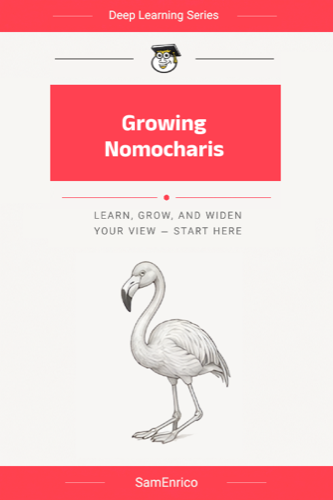
Non-FictionInformativeEducational
Growing Nomocharis eBook
This publication, published by SamEnrico, covers G
This publication, published by SamEnrico, covers Growing Nomocharis
Formats
Free sample
Chapter 1: The Flower That Broke Me...--–- I killed my first Nomocharis within ninety days. The second lasted a full growing season before turning to mush. The third never emerged from the soil at all—I simply forgot where I had planted it, which might have been mercy for both of us. After three failures, I stood in my garden on a gray November afternoon, holding a trowel covered in damp clay, and told myself the lie that every defeated gardener tells: maybe this plant just isn't meant for me.What I did not yet understand was that Nomocharis had already chosen me. The obsession was planted long before the bulbs.The Confession Every gardening book you have ever read starts with success.
The author stands among blooming borders, dispensing wisdom from a position of earned authority. The implicit message is clear: follow these instructions, and you too will achieve this perfection. But I am not that gardener, and this is not that book.This book begins with failure because failure is where I learned everything that matters.My first Nomocharis arrived in a small cardboard box from a specialty nursery in Scotland. I had read about the genus in an obscure alpine gardening journal—a single photograph of flat, saucer-shaped blooms in pale pink with maroon spots, the dark center like a target painted by a meticulous god. The caption read: "Nomocharis pardanthina, the leopard lily of the eastern Himalayas.
Rare. Demanding. Worth every effort."I was thirty-two years old and had been gardening for five years. I had successfully grown tomatoes, dahlias, and a surprisingly resilient rhododendron. I had built a compost bin that actually produced compost.
I believed, with the quiet arrogance of the moderately successful amateur, that I could grow anything.The bulbs arrived firm and white, each one the size of my thumb. I planted them at the recommended depth—four inches—in a spot that received morning sun and afternoon shade. I watered them in. I waited.For two months, nothing happened. I re-read the planting instructions.
I checked the soil moisture. I considered the possibility that I had planted them upside down, though bulbs are not shoes and do not have an obvious top and bottom. Finally, in late spring, tiny green shoots emerged—thin, fragile, hopeful.And then they stopped growing.The shoots remained at two inches tall for three weeks. They turned yellow at the tips. A gentle tug revealed that they had no roots.
When I finally dug up the bulbs, they had transformed from firm white orbs into brown, hollow shells that crumbled in my fingers.I had overwatered them. I knew this because I read it in a forum post three months later, after the second batch had also died.The second attempt was more sophisticated. I built a raised bed. I imported grit from a quarry fifty miles away. I mixed soil according to a recipe posted by a Russian gardener who claimed to grow Nomocharis in Moscow, where winter temperatures drop to negative twenty-two degrees Fahrenheit.
I planted the bulbs in autumn, watered them exactly once, and covered them with three inches of leaf litter for winter protection.In spring, they emerged strong. By June, the plants stood eighteen inches tall with healthy green leaves. I was certain I had solved the puzzle. On June fifteenth, I saw the first flower bud—a small green teardrop at the tip of a stem. I announced to my spouse that I was a botanical genius.On June twenty-third, the bud dropped off.The plant flowered the following week, but the bloom was deformed—half-formed petals, muted colors, no spotting.
The plant looked exhausted. By July, the leaves had yellowed and died. When I dug up the bulb, it had not increased in size. It had not produced offsets. It was, in every meaningful sense, surviving but not thriving.The third attempt never happened because I could not find bulbs for sale.
The nursery I had used went out of business. The seed exchanges were backlogged. For two years, I grew nothing but frustration.And then I received an envelope.The Envelope It arrived in January, during a week of freezing rain. The return address was a name I did not recognize—a member of the North American Rock Garden Society who had seen my post in the forums. Inside was a folded paper packet containing what looked like brown dust.
I held it up to the light. The seeds were tiny, flat, and papery, like flakes of crushed cinnamon.The enclosed note read: "Nomocharis aperta, collected from my garden last September. They germinate immediately. Don't give up."I did not know this person. I had never met them.
They had spent their own postage to send me hope in an envelope.I sowed those seeds in a deep plastic pot—four inches of gritty, humus-rich soil, the seeds pressed lightly onto the surface, barely covered. I placed the pot in an unheated greenhouse where temperatures hovered around fifty degrees Fahrenheit. I watered from below. And then I waited, this time without expectation.Six weeks later, I saw the first cotyledon—a single, thread-like leaf no thicker than a strand of hair. By spring, I had twelve seedlings.
By autumn, they had produced their first true leaves. By the second year, tiny bulbs had formed beneath the soil, each one smaller than a peppercorn.Those seedlings are now mature plants. Seven years after I sowed that envelope of dust, they bloom every June—soft pink flowers with dark centers and scattered maroon spots, nodding gently on two-foot stems. Visitors to my garden assume I bought them at a nursery. They have no idea that these flowers are the product of years, of failure, of an envelope from a stranger.That stranger and I have never met.
But we are connected now, as all Nomocharis growers are connected—by patience, by obsession, by the shared understanding that some things cannot be rushed.Why This Plant?You might be reading this book because you have already tried to grow Nomocharis and failed. Or you have seen a photograph and fallen in love. Or you are simply curious about a plant you have never heard of, drawn by the promise of something rare and beautiful.In any case, you deserve to know what you are getting into.Nomocharis is not a beginner's plant. It is not a plant for the casual gardener who wants weekend satisfaction and immediate results. It does not forgive mistakes.
It does not thrive on neglect. It will not reward you with flowers next spring if you plant it this fall.What it will give you—if you are patient, if you are observant, if you are willing to fail and learn and fail again—is something that few other plants can offer: the experience of earning beauty through time.The genus name comes from the Greek nomos (meadow) and charis (grace). The common name, meadow grace, captures something essential about these flowers. They are not dramatic like roses or ostentatious like peonies. They are quiet, nodding blooms that seem to belong to a slower, more deliberate world.…
This is the end of the free sample. Get the eBook to keep going. Buy now
About this book
Details
- Author
- Wakefield Belle
- Publisher
- SamEnrico
- Language
- English
- Genre
- Non-Fiction, Informative, Educational
- Released
- 2026-05-11
- Pages (approx.)
- 127
- Available as
- eBook, Audiobook

Read better in the ZLOADR app
Your eBooks on your phone or tablet. Sign in with your SamEnrico account and start reading.
More by Wakefield Belle
 Meeting Participation Self EsteemWakefield Belle$11.99
 AA Preamble and TraditionsWakefield Belle$11.99
 Emotional Intelligence for AthletesWakefield Belle$11.99
 Chiropractic for AthletesWakefield Belle$11.99
 The Life of Hillel the ElderWakefield Belle$11.99
 Recurring Dreams of SnakesWakefield Belle$11.99
 Reading for Inspiration RitualWakefield Belle$11.99
 The Latin America Growth OutlookWakefield Belle$11.99
 Trance For NegotiationWakefield Belle$11.99
 The Turkana Boy: A Fossil That Rewrote Human HistoryWakefield Belle$11.99
 Embers of the Big Burn: How 1910 Forged America’s Firefighting FutureWakefield Belle$11.99
 The Bear Trap: The Soviet-Afghan War's Hidden Graveyard (1979-1989)Wakefield Belle$11.99
You may also like
 Hong Kong Handover 1997Dunn Johnnie$11.99
 Zumba For Postnatal Recovery CourseNeal Christian$11.99
 Zumba for BeginnersLadner Nikia$11.99
 YouTube Comment Mining GuideHumes Pandora$12.99
 Worry Box MeditationCarlin Rudy$11.99
 Workplace Stress MeditationNguyen Lynn$11.99
 Workplace Stress and Sleep RepairHawley Ivory$11.99
 Workplace Perfectionism CureDelaney Jeffry$11.99
 Workplace Injustice Anger GuideWallen Isabelle$11.99
 Work Addiction and Burnout LinkGreenwood Ester$11.99
 Women in Yoga and WellnessBeattie Galina$11.99
 Women in Stand Up ComedyChun Evangeline$11.99