
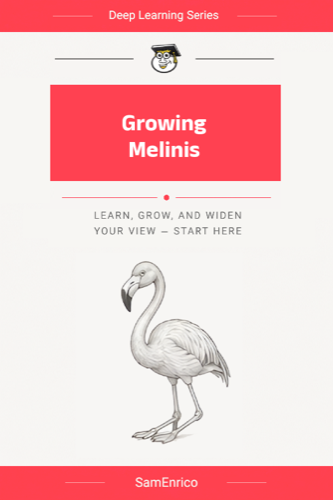
Non-FictionInformativeEducational
Growing Melinis eBook
This publication, published by SamEnrico, covers G
by Alvarado Ira
This publication, published by SamEnrico, covers Growing Melinis
Formats
Free sample
Chapter 1: The Grass Deception--–- Look out your window at the nearest patch of ornamental grass. Go ahead. I will wait. What do you see? If you are like ninety percent of gardeners, you are looking at a Pennisetum, a Miscanthus, or perhaps a Calamagrostis.
You are looking at a plant that demands division every two to three years, resents drought, sulks in heat, and will quietly expand beyond its designated bounds until your neat border resembles a botanical coup. You have been sold a story that ornamental grasses are low-maintenance. That story is a lie. Most are not. They are merely lower-maintenance than hybrid tea roses, which is like saying a house fire is less destructive than a volcanic eruption.
There is a better way. There is a grass that asks for almost nothing and gives everything. There is Melinis.This book exists because the horticultural industry has largely ignored what should be an obvious champion. Walk into any garden center in North America or Europe between April and September, and you will find rows of fountain grass, feather reed grass, and blue fescue. You will search in vain for Ruby Grass, for Molasses Grass, for the pink-flushed clouds of Melinis nerviglumis that florists quietly hoard for wedding arrangements and designers whisper about in trade circles.
The omission is not accidental. It is a failure of imagination and a triumph of inertia. Garden centers sell what they have always sold. Growers produce what garden centers order. And somewhere in this chain of comfortable habits, Melinis fell through the cracks.That changes now.What is a Best-Selling Chapter?Before we proceed, let me be explicit about what you are about to read.
A best-selling gardening book chapter does not simply inform. It transforms. It takes the reader from a state of passive curiosity to active commitment. It replaces vague admiration with specific intention. By the final paragraph of this chapter, you will not merely understand what Melinis is.
You will want to grow it. You will be irritated that no one told you about it sooner. And you will have a clear, actionable framework for deciding which variety belongs in your garden, your field, or your flower farm.This chapter serves as the foundation for everything that follows. Here, we establish the taxonomy, the morphology, and the hardiness realities that govern Melinis cultivation. But more importantly, we dismantle the misconceptions that have kept this genus in the shadows.
Prepare to have your assumptions about ornamental grasses permanently recalibrated.The Three Faces of Melinis The genus Melinis belongs to the grass family Poaceae, subfamily Panicoideae, tribe Paniceae. Its close relatives include Panicum (switchgrass) and Setaria (foxtail grass). But where those genera have produced utilitarian or invasive species, Melinis has produced something genuinely unusual: a grass that serves two entirely different human purposes simultaneously. It is the rare plant that can appear in a florist's wedding bouquet and a rancher's pasture in the same week, pulled from the same field, and serve both masters perfectly.Three species dominate cultivation today. Each has a distinct personality, a different set of strengths, and a non-negotiable set of requirements.
Confusing them is the fastest path to failure. Understanding them is the first step toward mastery.Melinis nerviglumis: The Ruby That Rules The first species, and the one that will occupy most of your attention if you are a gardener or florist, is Melinis nerviglumis. Common names include Ruby Grass, Pink Crystals, and Savannah Grass. Do not let the multiple names confuse you. All refer to the same basic plant: a compact, clump-forming perennial that reaches twelve to twenty-four inches in height and spread, depending on growing conditions and cultivar.What makes nerviglumis extraordinary is its inflorescence.
The flower head is a panicle, a branched cluster of spikelets, each spikelet coated in silky hairs that catch light like nothing else in the grass world. When the flowers first emerge in early to midsummer, depending on your sowing date, the panicles are soft pink, almost cotton-candy in hue. As they mature, the pink deepens to rose, then to ruby, then to a purple-magenta that borders on theatrical. In full sun and lean soil, the effect is almost fluorescent. In shade or rich soil, the same plant produces pale, washed-out flowers that barely register against the foliage.This color progression is not merely aesthetic.
It is a survival strategy. The silky hairs reflect ultraviolet light, making the flowers visible to pollinators from great distances. The color shift signals pollen availability to insects. And the final deep ruby stage, which occurs after pollination, tells pollinators that the flower has nothing left to offer. You will see the same strategy in many wildflowers.
You will rarely see it executed with such visual drama.Two cultivars dominate the commercial market for nerviglumis. 'Savannah' is the workhorse. It reaches eighteen to twenty-four inches, produces abundant panicles on sturdy stems, and holds up well in both fresh and dried arrangements. 'Pink Crystals' is more compact, topping out at twelve to fifteen inches, but its flowers are a deeper, more saturated pink that dries to an almost burgundy color. If you have space for only one, choose 'Savannah' for cut flowers and 'Pink Crystals' for containers or front borders.
If you have space for both, grow both. They are not redundant.A third cultivar, 'Karoo Queen,' appears occasionally in specialty catalogs. It is taller, reaching thirty to thirty-six inches, with silver-pink flowers that lack the ruby intensity of the other cultivars. Its value is architectural rather than colorful. Use it as a backdrop for blue or purple perennials, where its soft texture and neutral color will make neighboring flowers pop.Melinis minutiflora: The Rancher's Secret The second species could not be more different from the first.
Melinis minutiflora, known as Molasses Grass or Sugar Grazing Grass, is not pretty in any conventional sense. Its flowers are unremarkable, small, and easily overlooked. Its foliage is coarse and sprawling. It spreads by stolons, forming dense mats that can cover acres if left unchecked. No florist has ever coveted a stem of minutiflora.And yet, this species may be more valuable to humanity than its showy cousin.
Minutiflora does three things that few other plants can do simultaneously. First, it grows on soils so poor, so eroded, so acidic, that nothing else will establish. Second, it produces eight to twelve percent crude protein on those same soils without fertilizer, lime, or irrigation. Third, its dense mat of roots and stolons binds topsoil on slopes up to thirty degrees, reducing erosion by sixty percent or more compared to bare ground.The secret lies in the leaves. Minutiflora produces a sticky, resinous coating on its stems and foliage.
The resin contains volatile compounds that smell like molasses, which explains the common name. Livestock find the scent irresistible. Cattle will walk past other grasses to reach minutiflora. The resin also deters many insects, though not the ones that matter most, as we will discuss in Chapter 7.But the resin has a cost. The same compounds that attract cattle and repel insects also make minutiflora flammable in dry conditions.
The plant contains volatile oils that can sustain fire. In its native Africa, this is an adaptation: fire clears competing…
This is the end of the free sample. Get the eBook to keep going. Buy now
About this book
Details
- Author
- Alvarado Ira
- Publisher
- SamEnrico
- Language
- English
- Genre
- Non-Fiction, Informative, Educational
- Released
- 2026-06-02
- Pages (approx.)
- 135
- Available as
- eBook, Audiobook

Read better in the ZLOADR app
Your eBooks on your phone or tablet. Sign in with your SamEnrico account and start reading.
More by Alvarado Ira
 Spin Visualization and MindsetAlvarado Ira$11.99
 Virtual Networking Mastery CourseAlvarado Ira$11.99
 The Growth Stage Capital PrimerAlvarado Ira$11.99
 Mentorship for Executive AssistantsAlvarado Ira$11.99
 Self Esteem for Former WorkaholicsAlvarado Ira$11.99
 Wholesaling Due Diligence GuideAlvarado Ira$11.99
 Weapon in Car ResponseAlvarado Ira$11.99
 Satya Nadella MicrosoftAlvarado Ira$11.99
 Actor Breath Before AuditionAlvarado Ira$11.99
 The Unlikely Maestro: How a Janitor Became a Symphony SaviorAlvarado Ira$11.99
 The Billion-Dollar Bet: How a Hedge Fund Titan Short-Sold the 2008 CrisisAlvarado Ira$11.99
 Tamerlane's Shadow: The Timurid Conquest of Delhi (1398)Alvarado Ira$11.99
You may also like
 Hong Kong Handover 1997Dunn Johnnie$11.99
 Zumba For Postnatal Recovery CourseNeal Christian$11.99
 Zumba for BeginnersLadner Nikia$11.99
 YouTube Comment Mining GuideHumes Pandora$12.99
 Worry Box MeditationCarlin Rudy$11.99
 Workplace Stress MeditationNguyen Lynn$11.99
 Workplace Stress and Sleep RepairHawley Ivory$11.99
 Workplace Perfectionism CureDelaney Jeffry$11.99
 Workplace Injustice Anger GuideWallen Isabelle$11.99
 Work Addiction and Burnout LinkGreenwood Ester$11.99
 Women in Yoga and WellnessBeattie Galina$11.99
 Women in Stand Up ComedyChun Evangeline$11.99