
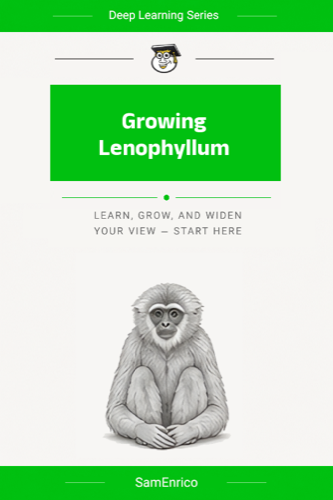
Growing Lenophyllum
This publication, published by SamEnrico, covers G
This publication, published by SamEnrico, covers Growing Lenophyllum
Formats
About this book
Free sample
Chapter 1: Beyond the Sedum Shadow...–- Most succulent enthusiasts have never heard of Lenophyllum, and that is precisely why this book exists. Walk into any garden center, and you will find row after row of Echeveria rosettes, shelves of Haworthia windows, and tables overflowing with Sedum groundcovers. But Lenophyllum—a genus equally deserving of attention—remains nearly invisible, known only to botanical specialists and the most obsessive collectors. This chapter uncovers why this oversight happened, what makes Lenophyllum unique among succulents, and why understanding its botanical identity is the first and most critical step toward successful cultivation.The story of Lenophyllum begins with confusion. For decades, taxonomists placed these plants within the enormous genus Sedum, which contains over 400 species spread across nearly every continent.
A casual observer might understand the mistake: Lenophyllum does look somewhat like a Sedum. It produces small, fleshy leaves in opposite pairs, forms low-growing clumps, and sends up modest flower spikes. But beneath this superficial resemblance lies a fundamental botanical difference that justifies Lenophyllum’s status as a separate genus—a difference that directly affects how you must care for it.The Taxonomic Revolution of 1993The turning point came in 1993, when botanist Charles Uhl published his landmark “Comparium” research on the Crassulaceae family. Uhl did something no one had done before: he systematically crossed species within and between genera to see which combinations produced viable offspring. His results were revolutionary.
While many Sedum species hybridized freely with each other and even with related genera like Echeveria and Graptopetalum, Lenophyllum refused to play along. It formed a closed “comparium”—a reproductive island where Lenophyllum species could hybridize with each other but almost never with anything else.This chromosomal exclusivity matters to growers for a practical reason. Lenophyllum’s genetic isolation means it has evolved specific adaptations that differ from its more popular cousins. When you treat Lenophyllum like a Sedum, you often kill it. When you treat it like an Echeveria, you confuse it.
Lenophyllum requires its own approach, calibrated to its unique evolutionary history.The Meaning of the Name Before diving deeper, let us decode the name…
This is the end of the free sample. Get the eBook to keep going. Buy now
Contents
- Chapter 1
- Chapter 2
- Chapter 3
- Chapter 4
- Chapter 5
- Chapter 6
- Chapter 7
- Chapter 8
- Chapter 9
- Chapter 10
- Chapter 11
- Chapter 12
Details
- Author
- Flanders Miss
- Publisher
- SamEnrico
- Language
- English
- Genre
- Non-Fiction, Informative, Educational
- Released
- 2026-05-11
- Pages (approx.)
- 143
- Available as
- eBook, Audiobook

Read better in the ZLOADR app
Your eBooks on your phone or tablet. Sign in with your SamEnrico account and start reading.
More by Flanders Miss
 Migraine and Cervicogenic HeadacheFlanders Miss$11.99
 Eisenhower For Remote WorkersFlanders Miss$11.99
 Negative Assertion PracticeFlanders Miss$11.99
 Fear Recognition MethodsFlanders Miss$11.99
 Betaine Liver Health GuideFlanders Miss$11.99
 The 10 Second Pause MethodFlanders Miss$11.99
 Meal Delivery for SeniorsFlanders Miss$11.99
 Team Building NonverbalsFlanders Miss$11.99
 Sunk Cost Fallacy AvoidanceFlanders Miss$11.99
 Starlight Serpents: The Lost Mission of Pioneer 10Flanders Miss$11.99
 Quantum Rhapsody: The Enigma of Schrödinger’s CatFlanders Miss$11.99
 Subprime Shadows: The Collateral Damage of Lehman's FallFlanders Miss$11.99