
Non-FictionInformativeEducational
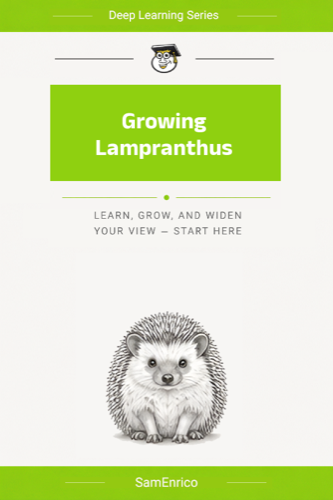
Growing Lampranthus
This publication, published by SamEnrico, covers G
This publication, published by SamEnrico, covers Growing Lampranthus
Formats
About this book
Free sample
Chapter 1: The Shining Secret--–- Every great garden has a secret weapon. For some, it’s a hidden compost pile that turns kitchen scraps into black gold. For others, it’s a south-facing wall that traps heat and extends the growing season by a precious month. But for those who have discovered the genus Lampranthus, the secret is far more visible—and far more dazzling. Imagine a plant that can turn a forgotten slope of eroded soil into a cascading river of magenta, pink, orange, or yellow so intense that it seems to glow from within.
Imagine a ground cover that smothers weeds, laughs at salt spray, asks for almost no water once established, and rewards you with a floral display so profuse that gardeners have been known to pull over their cars just to take a photograph. That plant exists, and its name is Lampranthus.Yet here is the irony: despite its spectacular performance, Lampranthus remains surprisingly underappreciated in mainstream gardening. Walk through any big-box garden center, and you will find row after row of thirsty petunias, finicky impatiens, and water-guzzling impatiens. You will find succulents marketed as “low-maintenance” that still manage to rot at the first sign of overwatering. But you will rarely find Lampranthus—the shining flower, the ice plant that actually delivers on its promises.
This chapter is the key that unlocks that secret. By the time you finish reading, you will understand not only what Lampranthus is, but why it has been hiding in plain sight, waiting for the right gardener to discover its potential.What Lampranthus Is (And What It Is Not)Let us begin with clarity. The name Lampranthus belongs to a genus of flowering succulents in the family Aizoaceae, the same family that contains the famous “living stones” (Lithops) and the lesser-known but equally fascinating Fenestraria (baby toes). The genus comprises approximately 150 to 200 species, nearly all of which are native to the winter-rainfall regions of South Africa, particularly the Western and Northern Cape provinces. In their natural habitat, these plants have adapted to a rhythm that seems almost contradictory to gardeners from…
This is the end of the free sample. Get the eBook to keep going. Buy now
Contents
- Chapter 1
- Chapter 2
- Chapter 3
- Chapter 4
- Chapter 5
- Chapter 6
- Chapter 7
- Chapter 8
- Chapter 9
- Chapter 10
- Chapter 11
- Chapter 12
Details
- Author
- Pickard Waneta
- Publisher
- SamEnrico
- Language
- English
- Genre
- Non-Fiction, Informative, Educational
- Released
- 2026-06-02
- Pages (approx.)
- 151
- Available as
- eBook, Audiobook

Read better in the ZLOADR app
Your eBooks on your phone or tablet. Sign in with your SamEnrico account and start reading.
More by Pickard Waneta
 Empathy for Teens GuidePickard Waneta$11.99
 Childhood Cancer ParentPickard Waneta$11.99
 NVC for Community ManagementPickard Waneta$11.99
 Virtual Meeting Body LanguagePickard Waneta$11.99
 Developer Focus ShieldPickard Waneta$11.99
 Chloride Fluid Balance GuidePickard Waneta$11.99
 Persuasive Nonprofit AppealPickard Waneta$11.99
 Death Dream Symbol JungianPickard Waneta$11.99
 Elle Fanning NeonPickard Waneta$11.99
 Bloodlines: The Bushes’ Unseen War for PowerPickard Waneta$11.99
 The Bronze Masters of Ife: Sculpting the Divine in Ancient YorubaPickard Waneta$11.99
 How to Start a Advocate of The Scottish Bar Business (Beginners Guide)Pickard Waneta$11.99
You may also like
 Hong Kong Handover 1997Dunn Johnnie$11.99
 Zumba For Postnatal Recovery CourseNeal Christian$11.99
 Zumba for BeginnersLadner Nikia$11.99
 YouTube Comment Mining GuideHumes Pandora$12.99
 Worry Box MeditationCarlin Rudy$11.99
 Workplace Stress MeditationNguyen Lynn$11.99
 Workplace Stress and Sleep RepairHawley Ivory$11.99
 Workplace Perfectionism CureDelaney Jeffry$11.99
 Workplace Injustice Anger GuideWallen Isabelle$11.99
 Work Addiction and Burnout LinkGreenwood Ester$11.99
 Women in Yoga and WellnessBeattie Galina$11.99
 Women in Stand Up ComedyChun Evangeline$11.99