
Non-FictionInformativeEducational
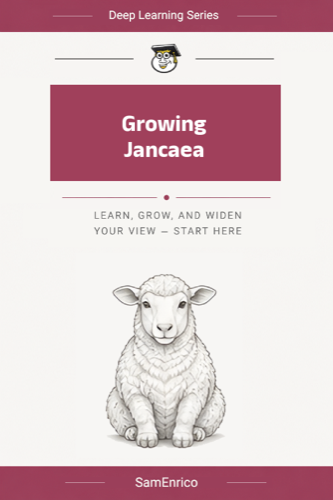
Growing Jancaea eBook
This publication, published by SamEnrico, covers G
This publication, published by SamEnrico, covers Growing Jancaea
Formats
Free sample
Chapter 1: The Purple Ghost...–- It arrived in a small cardboard box, no bigger than a deck of cards, wrapped in a single sheet of tissue paper. I remember holding it in my palm, that tiny rosette of silvery-green leaves no larger than a thumbnail, and feeling something I had not anticipated: fear. Not the fear of a venomous creature or a dangerous situation, but the quieter, more insidious fear of failure. This was Jancaea heldreichii—the plant I had read about in whispered forums and tattered alpine journals, the plant that veteran growers called the “Holy Grail” with a mix of reverence and resignation. I had paid seventy-eight dollars for a specimen smaller than a quarter, and I was absolutely certain I would kill it within a month.That certainty, as it turned out, was the first honest thing I had felt about this plant.
Everything else—the confidence I projected to my gardening friends, the meticulous notes I had taken from half a dozen books, the expensive tufa rock I had special-ordered from a quarry in Somerset—was a performance. I was a competent gardener. I had kept orchids alive for years. I had propagated succulents from fallen leaves. I had even coaxed a finicky Venus flytrap through three winters.
But Jancaea was different. Jancaea was the plant that broke everyone eventually, and I had just invited it into my home.The Alpine Garden Society, in its characteristically understated British way, describes Jancaea as “a challenge for the experienced enthusiast.” What that phrase conceals is decades of quiet heartbreak: the grower who waited four years for a flower only to watch the plant rot in a single weekend of poor ventilation; the collector who imported seeds from Greece only to watch them germinate, grow for six months, and collapse without warning; the expert who had grown Ramonda and Haberlea for decades but could not keep Jancaea alive for more than two seasons. I knew these stories. I had read them in forum archives dating back to the early days of the internet. And yet, like every other fool who had come before me, I believed I would be different.This book is the record of how wrong I was—and how that wrongness eventually led to something like wisdom.The Seduction of the Impossible There is a particular kind of gardener who is drawn to difficult plants.
We are not the majority. Most gardeners, sensibly enough, want plants that thrive with minimal intervention: the reliable hydrangea, the forgiving pothos, the indestructible snake plant. These are good plants. These are wise choices. But there exists a smaller, more self-destructive subspecies of horticulturist—the collector, the obsessive, the person who reads the words “near impossible” and hears a dare.I am such a person.My fascination with Jancaea began not with a photograph of its flowers—though those are extraordinary, violet-lavender blooms that emerge in spring like small miracles—but with a description I encountered in an obscure alpine gardening monograph from 1987.
The author, a certain Dr. Harold Merriweather, had devoted exactly one paragraph to the plant. I quote it here from memory, because I have long since lost the original:“Jankaea heldreichii (now Jancaea) remains the most exacting of the European resurrection plants. While its relatives Ramonda and Haberlea may be cultivated with reasonable success in the alpine house, Jancaea demands conditions so specific that many growers consider it unworthy of the attempt. The author has succeeded with the plant on only three occasions in forty years of practice.”Forty years.
Three successes. I read that sentence seven times in a row. Then I closed the book and began plotting how to acquire one.What I Wish I Had Known on Day One Looking back at that first cardboard box and that trembling quarter-sized rosette, I can identify at least a dozen mistakes I made before the plant was even unwrapped. But the most fundamental error—the one that underlies all the others—was this: I did not understand what Jancaea actually was.I thought I was buying a plant. In reality, I was entering into a relationship with a geological formation.Jancaea heldreichii is endemic to a single mountain range on Earth: Mount Olympus in Greece.
Not the entire mountain, mind you. Not the lower slopes with their pine forests and wildflowers. Jancaea lives only in a very specific elevation band—roughly 1,000 to 2,100 meters—and only on the north-facing limestone cliffs that receive morning sun but are shaded from the brutal afternoon heat. It grows exclusively in vertical crevices, its roots threading through cracks in the rock where organic matter is nearly absent and standing water is impossible. The plant has survived in this environment since the last Ice Age, when more temperate species retreated to southern refugia and Jancaea held on by the barest margin.This is not a houseplant.
It is not even a garden plant in any conventional sense. It is a living fossil that has optimized itself for one specific set of conditions, and it will not tolerate deviation.Here is what I did not understand on day one: Jancaea does not want to be cared for. It wants to be left alone in an environment that precisely matches its evolutionary expectations. The moment you begin “fussing” with it—watering on a schedule, misting because the leaves look dry, moving it to a sunnier spot because you think it needs more light—you are not helping. You are interfering with a survival strategy that has worked for thousands of years.The plant’s silvery, fleshy leaves are covered in fine hairs called trichomes.
These are not decorative. They serve multiple functions: reflecting excess light, trapping moisture from the air, and reducing water loss through transpiration. When you mist a Jancaea leaf, you are not hydrating it in any meaningful way; you are potentially introducing water into the crown where it can stagnate and cause rot. When you move a plant into stronger light because you “feel sorry for it,” you are overriding its natural adaptation to shade.I learned these lessons the hard way. My first Jancaea died in week seven.
The second lasted four months. The third—the one that taught me everything—survived long enough to flower, then slowly declined over the course of a year while I watched, helpless, because I still did not understand what I was doing wrong.The Myth of the “Impossible” Plant Let me address something directly. If you have read about Jancaea online—and you almost certainly have, if you are holding this book—you have encountered the reputation. “Impossible.” “Only for experts.” “Don’t bother.” I want to challenge that reputation not by pretending the plant is easy (it is not), but by reframing what “impossible” actually means.In my experience, Jancaea is not impossible. It is specific.
It is unforgiving. It punishes mistakes that other plants would tolerate. But it is not a magic trick, and it does not require a degree in botany to keep alive. What it requires is a shift in mindset that many gardeners find genuinely difficult: the shift from active care to passive provision.Most of our gardening instincts are…
This is the end of the free sample. Get the eBook to keep going. Buy now
About this book
Details
- Author
- Lovett Barbra
- Publisher
- SamEnrico
- Language
- English
- Genre
- Non-Fiction, Informative, Educational
- Released
- 2026-05-08
- Pages (approx.)
- 152
- Available as
- eBook, Audiobook

Read better in the ZLOADR app
Your eBooks on your phone or tablet. Sign in with your SamEnrico account and start reading.
More by Lovett Barbra
 Giraffe Language HandbookLovett Barbra$11.99
 Design Thinking Collaboration GuideLovett Barbra$11.99
 Call To Action Copywriting GuideLovett Barbra$11.99
 The Homeless Shelter PipelineLovett Barbra$11.99
 Cameo Celebrity InfluencerLovett Barbra$11.99
 Blue Zone Meat ConsumptionLovett Barbra$11.99
 The Stress Sleep Insomnia LinkLovett Barbra$11.99
 The Welcome HomeLovett Barbra$11.99
 Nap for Night Workers GuideLovett Barbra$11.99
 The Maid of Orléans: Joan's Fire Against the CrownLovett Barbra$11.99
 The Love That Mapped the Stars: Hipparchus and the Lost Lighthouse of AlexandriaLovett Barbra$11.99
 The Great Unwind: How a Forgotten 1970s Policy Reshaped the Modern EconomyLovett Barbra$11.99
You may also like
 Hong Kong Handover 1997Dunn Johnnie$11.99
 Zumba For Postnatal Recovery CourseNeal Christian$11.99
 Zumba for BeginnersLadner Nikia$11.99
 YouTube Comment Mining GuideHumes Pandora$12.99
 Worry Box MeditationCarlin Rudy$11.99
 Workplace Stress MeditationNguyen Lynn$11.99
 Workplace Stress and Sleep RepairHawley Ivory$11.99
 Workplace Perfectionism CureDelaney Jeffry$11.99
 Workplace Injustice Anger GuideWallen Isabelle$11.99
 Work Addiction and Burnout LinkGreenwood Ester$11.99
 Women in Yoga and WellnessBeattie Galina$11.99
 Women in Stand Up ComedyChun Evangeline$11.99