
Non-FictionInformativeEducational
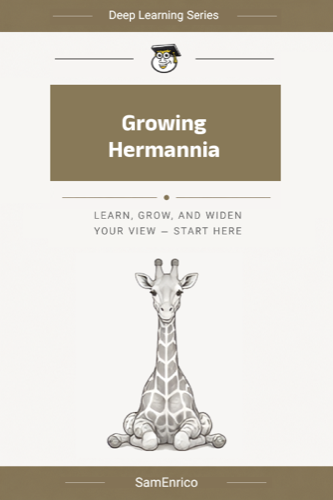
Growing Hermannia eBook
This publication, published by SamEnrico, covers G
by Ford Virgil
This publication, published by SamEnrico, covers Growing Hermannia
Formats
Free sample
Chapter 1: The Survivor’s Secret--–- It arrived in a cardboard box the size of a shoebox, postmarked from a small nursery in Northern California that had no business shipping plants in December. The box had been crushed on one corner, punctured near the air hole, and looked like it had served as a footrest for a very heavy postal worker. Inside, wrapped in a single sheet of newspaper so thin you could read tomorrow’s forecast through it, was a Hermannia verticillata. It had no soil. The roots were bare, dry, and curled into themselves like sleeping snakes.
The leaves were the color of old paper. The stems were brittle enough to snap at a whisper. By every measure of conventional plant care, this thing was dead.I almost threw it away. In fact, I set it on the counter next to the compost bin and told myself I would deal with it in the morning. Morning came, and morning went.
The plant sat there for another three days while I attended to the more promising members of my collection—the glossy philodendrons, the obedient succulents, the fiddle-leaf fig that demanded daily prayers and weekly sacrifices. The Hermannia was an afterthought. An embarrassment. A reminder that not every online plant purchase ends in triumph.On the fourth day, I noticed something strange. The newspaper had shifted, and beneath it, a single stem had changed color.
Not green—that would have been too dramatic. But a faint, almost imperceptible shift from dead-grey to something closer to olive. I touched the stem. It didn’t crumble. I touched another.
It bent, just slightly, instead of snapping. Against all logic, against every instinct that told me this plant had been dead on arrival, I watered it.I did not water it carefully. I did not measure the p H or check the temperature or consult an app. I took the whole sad, shriveled thing, dropped it into a pot of sandy soil I had mixed for a cactus that had also died (my fault, not the cactus’s), and poured water through it until it ran out the bottom. Then I put it in a south-facing window and forgot about it for another two weeks.When I finally remembered to check, the Hermannia had grown four new leaves.
Not tentative, pale, apologetic leaves, either. Full, bright, slightly velvety leaves that caught the winter light and held it like stained glass. Within a month, it had tripled in size. Within three months, it bloomed—small, yellow, bell-shaped flowers that smelled faintly of honey and hung from the stems like tiny lanterns. I had done nothing to deserve this.
I had been neglectful, dismissive, and objectively bad at plant care. The Hermannia did not care. It grew anyway.This is the secret that this book exists to share: there is an entire genus of plants that does not need you to be a good gardener. It does not need you to remember to water it every Tuesday. It does not need you to mist it, or rotate it, or sing to it, or apologize when you forget.
It needs you to understand three things—soil that drains, light that reaches, and the patience to leave it alone when it decides to take a nap. That is it. Everything else is decoration.The problem is that almost no one knows this. Search for “Hermannia” online and you will find fragments: a scientific paper here, a forum post there, a single paragraph on a South African botanical garden’s website that mentions, almost as an afterthought, that the genus has “high horticultural potential which is sadly undervalued.” That phrase—“sadly undervalued”—has haunted me since I first read it. Because it is not true.
Hermannia is not undervalued because it is difficult or rare or uninteresting. It is undervalued because no one has bothered to write the book that explains, in plain English, how to grow it.This is that book.What This Chapter Will Teach You By the time you finish this chapter, you will understand why Hermannia has been hiding in plain sight for decades, why it is perfectly suited to the way people actually garden in the twenty-first century, and why the plant you thought you killed last year might not be dead at all. You will learn the difference between a plant that is difficult and a plant that is simply undocumented. You will discover why the caudex—that strange, swollen rootstock that looks like a mistake but is actually a miracle—changes everything about how you think about watering. And you will walk away with a single, actionable insight that will save you money, time, and the particular grief of watching a plant die despite your best efforts.But more than that, you will learn to see Hermannia not as a curiosity or a collector’s obsession, but as a solution.
A solution to overwatering. A solution to forgetfulness. A solution to the guilt that comes with buying a plant, loving it too much, and watching it drown in your affection. Because here is the truth that the plant industry does not want you to know: most houseplants do not die from neglect. They die from over-attention.
They die from being watered on a schedule instead of when they are thirsty. They die from soil that holds moisture like a sponge when it should drain like a sieve. They die from owners who cannot tell the difference between a plant that is sleeping and a plant that is dead.Hermannia solves all of these problems. Not because it is magic, but because it evolved in some of the harshest environments on Earth. The South African veld does not have gentle rain and consistent temperatures.
It has droughts that last for months, fires that sweep across the landscape, and soil that is more rock than dirt. The plants that survive there did not do so by accident. They developed strategies—the thick, woody rootstock called a caudex, the star-shaped hairs that reflect sunlight and reduce water loss, the hanging flowers that protect their pollen from rain—that make them almost absurdly resilient in the average home.The Problem with Modern Plant Advice Before we go any further, I need to address the elephant in the living room. If you have ever tried to keep a plant alive using advice from the internet, you have probably encountered something like this: “Water every nine days. Place in bright, indirect light.
Fertilize monthly during growing season.” This advice is not wrong, exactly. It is just useless. Because your home is not the same as my home. Your tap water is not the same as my tap water. Your south-facing window in Arizona in July is not the same as my south-facing window in Seattle in December.
A plant does not know what day it is. It does not have a calendar. It has soil moisture, light intensity, and air temperature. That is it.The “water every nine days” approach treats plants like appliances. You plug them in, you perform maintenance on a schedule, and you expect consistent results.
But plants are not appliances. They are living organisms that respond to their environment in real time. A Hermannia in…
This is the end of the free sample. Get the eBook to keep going. Buy now
About this book
Details
- Author
- Ford Virgil
- Publisher
- SamEnrico
- Language
- English
- Genre
- Non-Fiction, Informative, Educational
- Released
- 2026-06-02
- Pages (approx.)
- 133
- Available as
- eBook, Audiobook

Read better in the ZLOADR app
Your eBooks on your phone or tablet. Sign in with your SamEnrico account and start reading.
More by Ford Virgil
 Academic Researcher Distraction GuideFord Virgil$11.99
 Listening Without Interrupting GuideFord Virgil$11.99
 Bipolar ECT GuideFord Virgil$11.99
 Small Talk for Doctors and NursesFord Virgil$11.99
 The Happiness FearFord Virgil$11.99
 IFTTT Reminder RecipesFord Virgil$11.99
 Study Myth BustingFord Virgil$11.99
 EQ for Negotiation SkillsFord Virgil$11.99
 The Sea Between UsFord Virgil$11.99
 The Scandal That Shook the Regency: The Secret Letters of Lady Caroline LambFord Virgil$11.99
 The Enlightenment's Arsenal: How Western Thinkers Defeated PlagueFord Virgil$11.99
 Gold Rush Ghosts: The Phantom Fortunes of the KlondikeFord Virgil$11.99
You may also like
 Hong Kong Handover 1997Dunn Johnnie$11.99
 Zumba For Postnatal Recovery CourseNeal Christian$11.99
 Zumba for BeginnersLadner Nikia$11.99
 YouTube Comment Mining GuideHumes Pandora$12.99
 Worry Box MeditationCarlin Rudy$11.99
 Workplace Stress MeditationNguyen Lynn$11.99
 Workplace Stress and Sleep RepairHawley Ivory$11.99
 Workplace Perfectionism CureDelaney Jeffry$11.99
 Workplace Injustice Anger GuideWallen Isabelle$11.99
 Work Addiction and Burnout LinkGreenwood Ester$11.99
 Women in Yoga and WellnessBeattie Galina$11.99
 Women in Stand Up ComedyChun Evangeline$11.99