
Non-FictionInformativeEducational
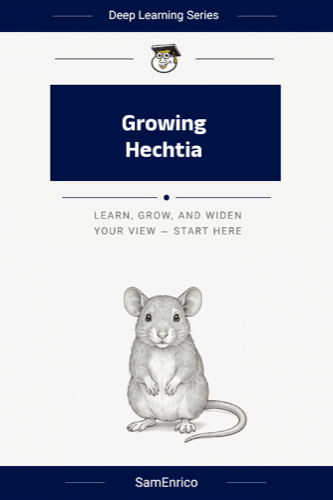
Growing Hechtia eBook
This publication, published by SamEnrico, covers G
This publication, published by SamEnrico, covers Growing Hechtia
Formats
Free sample
Chapter 1: The Forgotten Jewel...--– I killed my first Hechtia. That sentence is not a confession of a novice gardener from decades ago, nor a hyperbolic opening designed to shock. It is a literal fact, delivered with the precision of someone who still remembers the exact shade of brown the leaves turned—a sickly, translucent amber—and the specific sound the rosette made when I lifted it from the pot: a wet, sucking noise followed by the soft collapse of tissue that had once been rigid with life. I had read the care tag that came with the plant, the one that said "bromeliad" in cheerful green letters, and I had treated it accordingly. I filled a decorative ceramic pot with standard potting mix.
I watered it once a week, as I did my philodendrons. I set it in a bright window that received four hours of gentle morning sun. By all conventional gardening logic, I was doing everything right. And yet, within six weeks, that Hechtia texensis—a species renowned in its native Texas for surviving on barren limestone outcrops through months of drought—had died of what I would later learn was a combination of root rot, stem rot, and the horticultural equivalent of suffocation. I had loved it to death.This experience, humiliating as it was at the time, became the unlikely foundation for everything this book represents.
Because as I stood in my kitchen, holding the corpse of a plant that should have outlived me, I realized something important: the standard rules of houseplant and garden care do not apply to Hechtia. In fact, those rules are actively dangerous to it. Hechtia is not a difficult plant. That is the first myth this chapter will dismantle. Hechtia is a different plant—different in its ancestry, its physiology, its growth patterns, and its needs.
And until a gardener accepts that difference not as an obstacle but as an invitation, the Hechtia will remain, as it has for decades, the "forgotten jewel" of the bromeliad family: overlooked, misunderstood, and tragically underappreciated.This chapter serves as the gateway to everything that follows. It will solve the primary confusion that kills more Hechtia than any pest or disease: What exactly is this plant? Is it an agave, a succulent, or a bromeliad? The answer, as you will discover, is all three and neither. We will explore the evolutionary path that placed Hechtia in the Bromeliaceae family alongside the pineapples and air plants of the world, while simultaneously equipping it with the armor and attitude of a desert-dwelling agave.
You will learn about the single most critical biological fact of Hechtia's existence—its dioecious nature, or the reality that individual plants are either male or female—and why this matters not only for seed production but for how collectors build their gardens. And finally, we will walk through the aesthetic features that make Hechtia worth the small effort of understanding it: the chalky silver leaf scales that shimmer under morning light, the dramatic purple undersides that reveal themselves only when the wind lifts a leaf, the sought-after variegated forms that command high prices at specialty nurseries, and the "menacing but beautiful" marginal teeth that give this plant the presence of a living sculpture.By the end of this chapter, you will know whether Hechtia is the right plant for your collection or landscape. More importantly, you will understand why it is different—and why that difference, once embraced, makes Hechtia one of the most rewarding, resilient, and conversation-starting genera available to the modern gardener.The Three-Way Identity Crisis: Agave, Succulent, or Bromeliad?Walk into any nursery that sells Hechtia—and to be fair, few do—and you will likely find it shelved in one of three sections: the succulent table, the agave display, or the bromeliad house. This taxonomic shuffle is not the result of lazy merchandising. It is a genuine reflection of Hechtia's chameleon-like nature.
To the untrained eye, a mature Hechtia looks like a classic rosette-forming agave: stiff, spiny leaves radiating from a central point, often bluish or silver-gray, with teeth along the margins and a sharp terminal spine at the tip. If you saw one growing in a public garden without a label, you would almost certainly call it an agave. You would be wrong, but you would be understood.The confusion is ancient and widespread. Early botanists who first described Hechtia in the 1830s initially placed it near the agaves before recognizing its bromeliad characteristics. The common name "False Agave" persists in horticulture to this day, and for good reason.
Hechtia and Agave share what biologists call convergent evolution: they evolved on different continents (Hechtia in the Americas, Agave also in the Americas but through a different lineage) under similar environmental pressures—rocky, dry, sunny habitats with long periods of drought. Nature solved the same problems with the same solution: a rosette of tough leaves that minimizes water loss, maximizes light capture, and protects the central growing point with a fortress of spines.But here is where the resemblance ends. Agaves are members of the Asparagaceae family, closely related to asparagus and hyacinths. They flower once in their lifetime—often after decades—producing a spectacular stalk that can reach thirty feet, after which the mother plant dies. Hechtia, by contrast, is a true bromeliad.
It belongs to the Bromeliaceae family, which includes pineapple (Ananas), Spanish moss (Tillandsia usneoides), and the colorful urn plants (Aechmea) found in every shopping mall atrium. Unlike agaves, Hechtia is polycarpic: it flowers repeatedly over its lifespan without dying. A healthy Hechtia can produce flower stalks every year for decades, each one rising on a slender, often arching stem that bears dozens of small, white to pale pink flowers.And what about the "succulent" label? This one is partially accurate, partially misleading. Hechtia stores water in its thick, fleshy leaves—a classic succulent adaptation.
But true succulents (cacti, euphorbias, mesembs) have evolved specialized water-storage tissues that allow them to survive extreme aridity by going completely dormant for months. Hechtia is more flexible. It can tolerate drought, yes, but it also responds vigorously to rainfall or watering, putting on new growth within days. In its native habitat, Hechtia occupies a middle ground: too dry for rainforest bromeliads, too moist for true cacti. This flexibility makes it easier to grow than many succulents, provided the gardener respects its need for sharp drainage and seasonal rhythms.So here is the answer that will guide everything in this book: Hechtia is a terrestrial bromeliad with succulent adaptations, masquerading as an agave.
It is not a cactus, not a true succulent, not an agave, and not a tank bromeliad that holds water in a central cup. It is its own thing—and that thing is spectacular.The Dioecious Reality: Why Your Single Hechtia Will Never Make Seeds If you take only one biological fact away from this chapter, make it this: Hechtia is dioecious. The word comes from the Greek di (two) and oikos (house), meaning "two households." In botanical terms, a dioecious plant species has separate male and female individuals. Some plants produce only male flowers; others produce only female flowers. This is in contrast to the vast majority…
This is the end of the free sample. Get the eBook to keep going. Buy now
About this book
Details
- Author
- Kasper Myriam
- Publisher
- SamEnrico
- Language
- English
- Genre
- Non-Fiction, Informative, Educational
- Released
- 2026-05-09
- Pages (approx.)
- 159
- Available as
- eBook, Audiobook

Read better in the ZLOADR app
Your eBooks on your phone or tablet. Sign in with your SamEnrico account and start reading.
More by Kasper Myriam
 Deep Work Interruption Shield GuideKasper Myriam$11.99
 Zumba for Wedding PrepKasper Myriam$11.99
 Conversation Starters for StutterersKasper Myriam$11.99
 The Diplomat's House NightmareKasper Myriam$11.99
 Wunderlist Legacy GuideKasper Myriam$11.99
 Bipolar Advanced DirectiveKasper Myriam$11.99
 Study Group EfficiencyKasper Myriam$11.99
 Stepchild Death GriefKasper Myriam$11.99
 Social Skills EQ Improvement GuideKasper Myriam$11.99
 The Mozart Gambit: A Maestro's MasterstrokeKasper Myriam$11.99
 The 2008 Lehmans: How One Bank’s Fall Shook the WorldKasper Myriam$11.99
 The Golden Apple: The Untold Betrayal of the Trojan HorseKasper Myriam$11.99
You may also like
 Hong Kong Handover 1997Dunn Johnnie$11.99
 Zumba For Postnatal Recovery CourseNeal Christian$11.99
 Zumba for BeginnersLadner Nikia$11.99
 YouTube Comment Mining GuideHumes Pandora$12.99
 Worry Box MeditationCarlin Rudy$11.99
 Workplace Stress MeditationNguyen Lynn$11.99
 Workplace Stress and Sleep RepairHawley Ivory$11.99
 Workplace Perfectionism CureDelaney Jeffry$11.99
 Workplace Injustice Anger GuideWallen Isabelle$11.99
 Work Addiction and Burnout LinkGreenwood Ester$11.99
 Women in Yoga and WellnessBeattie Galina$11.99
 Women in Stand Up ComedyChun Evangeline$11.99