
Non-FictionInformativeEducational
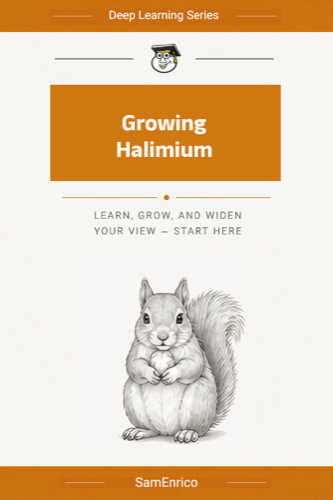
Growing Halimium eBook
This publication, published by SamEnrico, covers G
by Doherty Raye
This publication, published by SamEnrico, covers Growing Halimium
Formats
Free sample
Chapter 1: Beyond the Confusion...–- Every spring, gardeners across the world stare at a yellow-flowered shrub in their gardens and call it a rockrose. They are almost always wrong. The plant they are admiring—with its brilliant golden petals, often marked with a dramatic maroon blotch at the base—is almost certainly not a true rockrose at all. It belongs to a forgotten genus that botanists have argued about for more than two centuries, a plant that has been shuffled between taxonomic categories like a orphan passed between reluctant relatives. That plant is Halimium, and the fact that you have likely never heard its name is precisely why this book exists.The confusion begins innocently enough.
Walk into any nursery during late spring, and you will find tables loaded with Mediterranean shrubs labeled simply "Rockrose" or "Sunrose." The tag might say Cistus, or it might say Helianthemum, or it might say nothing more specific than "drought-tolerant perennial." Buried somewhere in that jumble of misidentified plants sits Halimium, wearing the wrong name tag, waiting for someone to notice its true identity. This chapter is that introduction. Before you can grow Halimium successfully—before you can water it correctly, prune it without killing it, or design a garden around its unique habits—you must first understand what it is, where it came from, and why distinguishing it from its cousins matters more than any botanical trivia contest might suggest.The Taxonomic Tangle: Two Centuries of Misidentification The story of Halimium's confused identity begins with Carl Linnaeus, the father of modern taxonomy, who in 1753 published Species Plantarum, the foundation of botanical naming. Linnaeus placed several species now recognized as Halimium under the genus Cistus, grouping them by their superficial similarities: both produce five-petaled flowers, both are woody shrubs, both thrive in Mediterranean climates. In Linnaeus's defense, he was working with dried herbarium specimens, not living plants, and the differences between Cistus and Halimium are far more apparent in life than on a pressed page.
For the next 150 years, botanists largely followed Linnaeus's lead, occasionally moving a species here or there but never questioning the fundamental assumption that all these yellow-flowered shrubs were simply a subgroup within Cistus.The first serious challenge came in 1836, when the French botanist Edmond Spach proposed separating the genus Halimium based on a single but critical feature: the seed capsule. In Cistus, the seed capsule splits open along five seams, releasing seeds in a radial pattern. In Halimium, the capsule opens by a valve mechanism at the top, a more controlled release that botanists call "poricidal dehiscence." To the naked eye, the difference is subtle. Under magnification, it is unmistakable. Spach's proposal created a taxonomic rift that persists to this day, with some authorities treating Halimium as a full genus, others as a subgenus of Cistus, and still others splitting the difference with awkward compromises.Modern DNA analysis has largely resolved the debate in Spach's favor.
Genetic sequencing published in the early 2000s confirms that Halimium and Cistus diverged between 15 and 20 million years ago, during the Miocene epoch, when the Mediterranean Sea dried up and reformed, creating the climate patterns that define the region today. The two genera are closely related—like cousins rather than siblings—but they are distinct evolutionary lineages. More importantly for gardeners, they have different cultural requirements, different growth habits, and different responses to pruning, watering, and winter cold. Treating a Halimium like a Cistus is a recipe for disappointment. Treating it like Helianthemum is even worse.The Defining Characteristics: How to Spot a Halimium If you are standing in a nursery or walking through a botanical garden, how do you know whether the yellow-flowered shrub before you is a true Halimium?
The answer requires looking at three features: flowers, seed capsules, and foliage. None of these alone is definitive, but together they create a clear identification.Flower color is the first clue, though not a guarantee. Halimium flowers are almost always yellow, ranging from pale buttercream to deep gold. Cistus flowers, by contrast, are typically white to pink, though a handful of Cistus species produce yellow blooms. The overlap is small but confusing: Cistus ladanifer, the gum rockrose, produces white petals with a maroon blotch at the base—a pattern that mimics some Halimium species but in reverse colors.
The rule of thumb is reliable but not absolute: if it is bright yellow with a dark center, it is probably Halimium. If it is white, pink, or magenta, it is almost certainly Cistus or Helianthemum.The seed capsule is the most reliable diagnostic feature, though it requires patience and a hand lens. Halimium capsules mature in late summer, turning from green to brown as they dry. When fully ripe, the top of the capsule opens via small valves, like a salt shaker, releasing seeds through small holes rather than splitting open entirely. Cistus capsules split into five distinct sections, like a starfruit cut in cross-section.
If you can collect a ripe seed capsule and examine it under magnification, the difference is immediately obvious. For the gardener who does not carry a hand lens to the nursery—and few do—the seed capsule is not a practical field guide. But understanding the difference explains why Halimium self-seeds differently than its relatives, a topic we will return to in Chapter 9 on propagation.Foliage provides the most accessible clue. Halimium leaves tend to be gray-green rather than bright green, with wavy or undulating margins that give them a slightly crumpled appearance. The leaf surface is often covered with fine hairs, visible only in bright light, that reflect sunlight and reduce water loss.
Cistus leaves are typically brighter green, often sticky to the touch (especially Cistus ladanifer, whose resin has been used in perfumery for centuries), with smooth margins. Helianthemum leaves are smaller, often linear or needle-like, and usually arranged alternately along the stem rather than in opposite pairs. These differences are subtle but become obvious once you have seen a dozen examples of each genus side by side.The Twelve Species: A Botanical Tour The genus Halimium contains twelve accepted species, though taxonomic revisions occasionally add or subtract a few. Rather than memorizing Latin names, the gardener should understand the geographic and ecological range of the genus, as this directly informs cultivation practices.The largest concentration of Halimium species occurs in the Iberian Peninsula—Spain and Portugal—where eight species are native. These range from the coastal dunes of southern Portugal (Halimium halimifolium, the tallest of the genus, reaching up to six feet) to the mountain slopes of central Spain (Halimium umbellatum, a delicate species with small white flowers that appear almost translucent in bright light).
The Iberian species share a common adaptation to the region's climate pattern: wet winters from Atlantic storms, followed by hot, dry summers with almost no rainfall from June through September. Understanding this pattern is the key to all cultivation advice in later chapters. If you water a Halimium in August, you are violating ten million years of evolutionary programming.The Canary Islands, a Spanish archipelago off the coast of northwest Africa, host two endemic species: Halimium lasianthum and Halimium ocymoides. Island endemics often behave differently than mainland relatives, and these are no…
This is the end of the free sample. Get the eBook to keep going. Buy now
About this book
Details
- Author
- Doherty Raye
- Publisher
- SamEnrico
- Language
- English
- Genre
- Non-Fiction, Informative, Educational
- Released
- 2026-05-11
- Pages (approx.)
- 154
- Available as
- eBook, Audiobook

Read better in the ZLOADR app
Your eBooks on your phone or tablet. Sign in with your SamEnrico account and start reading.
More by Doherty Raye
 Zumba with DisabilitiesDoherty Raye$11.99
 Overdose Death Of ChildDoherty Raye$11.99
 The Nap Ergonomics GuideDoherty Raye$11.99
 Small Talk for Expat CommunitiesDoherty Raye$11.99
 Assertiveness For The Hearing ImpairedDoherty Raye$11.99
 Bipolar And PregnancyDoherty Raye$11.99
 Pomodoro Study MethodDoherty Raye$11.99
 Bipolar Ketogenic Diet GuideDoherty Raye$11.99
 Amazon Alexa RemindersDoherty Raye$11.99
 The Great Unraveling: How the 'Free Britney' Movement Changed the Music IndustryDoherty Raye$11.99
 The Battle of the Aegean: Salamis' Shadow Over the Mediterranean (480 BC)Doherty Raye$11.99
 The American AFL Dream: How Aussie Rules Football Took Root in the U.S.Doherty Raye$11.99
You may also like
 Hong Kong Handover 1997Dunn Johnnie$11.99
 Zumba For Postnatal Recovery CourseNeal Christian$11.99
 Zumba for BeginnersLadner Nikia$11.99
 YouTube Comment Mining GuideHumes Pandora$12.99
 Worry Box MeditationCarlin Rudy$11.99
 Workplace Stress MeditationNguyen Lynn$11.99
 Workplace Stress and Sleep RepairHawley Ivory$11.99
 Workplace Perfectionism CureDelaney Jeffry$11.99
 Workplace Injustice Anger GuideWallen Isabelle$11.99
 Work Addiction and Burnout LinkGreenwood Ester$11.99
 Women in Yoga and WellnessBeattie Galina$11.99
 Women in Stand Up ComedyChun Evangeline$11.99