
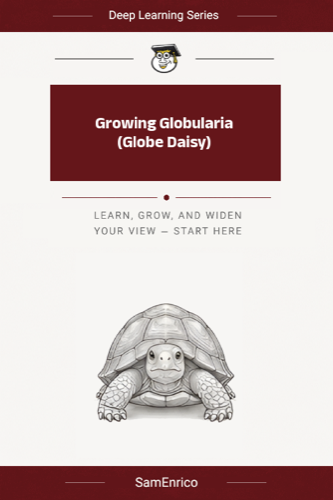
Non-FictionInformativeEducational
Growing Globularia (Globe Daisy)
This publication, published by SamEnrico, covers G
This publication, published by SamEnrico, covers Growing Globularia (Globe Daisy)
Formats
About this book
Free sample
Chapter 1: The Limestone Secret--The first time I killed a Globularia, I did everything right—or so I believed. I had read the sparse online forums, consulted the outdated alpine gardening encyclopedias, and even called a specialty nursery in Oregon that listed the plant as “rare, for advanced growers only.” I planted my little rosette in a terracotta pot filled with commercial cactus mix, set it on a south-facing windowsill, watered it sparingly, and waited for magic. Three weeks later, the crown turned black, the leaves dissolved into brown mush, and the plant was dead. I assumed I was simply not skilled enough for alpines. I assumed the plant was fragile, demanding, and perhaps a little spiteful.I was wrong about all of it.What I did not know then—what almost no beginner knows—is that the commercial cactus mix I used, despite being labeled “fast draining,” was still too rich, too moisture-retentive, and too acidic for a plant that evolved on pulverized limestone cliffs where rain passes through rock in seconds and organic matter is almost nonexistent.
I had not killed the plant through neglect. I had killed it through kindness. I fed it soil that was, from the plant’s perspective, a suffocating swamp.This chapter is not about how to water or fertilize Globularia—those come later. This chapter is about understanding where these plants come from, why they look the way they do, and why the limestone cliffs of Southern Europe and the scree slopes of Turkey hold the secret to everything that follows in this book. If you grasp nothing else from this chapter, grasp this: Globularia is not a difficult plant.
It is a misunderstood plant. And the misunderstanding begins with the soil beneath its feet.The Genus in Context: What Globularia Actually Is Before we can grow a plant successfully, we must know what it is—not just its name, but its family history, its evolutionary strategy, and its place in the botanical order of things. Globularia belongs to the family Plantaginaceae, the plantain family. This often surprises gardeners, because the common plantain (Plantago major)…
This is the end of the free sample. Get the eBook to keep going. Buy now
Contents
- Chapter 1
- Chapter 2
- Chapter 3
- Chapter 4
- Chapter 5
- Chapter 6
- Chapter 7
- Chapter 8
- Chapter 9
- Chapter 10
- Chapter 11
- Chapter 12
Details
- Author
- Espinosa Pennie
- Publisher
- SamEnrico
- Language
- English
- Genre
- Non-Fiction, Informative, Educational
- Released
- 2026-06-02
- Pages (approx.)
- 140
- Available as
- eBook, Audiobook

Read better in the ZLOADR app
Your eBooks on your phone or tablet. Sign in with your SamEnrico account and start reading.
More by Espinosa Pennie
 Meditation Pain CourseEspinosa Pennie$11.99
 Teen Grief Parent Death GuideEspinosa Pennie$11.99
 Remote Productivity Case StudiesEspinosa Pennie$11.99
 Napping for Medical ResidentsEspinosa Pennie$11.99
 Mania Prevention HandbookEspinosa Pennie$11.99
 Strava Run Comparison TrapEspinosa Pennie$11.99
 Jumia Performance MetricsEspinosa Pennie$11.99
 Personal Crisis While LeadingEspinosa Pennie$11.99
 Assertiveness For The AnxiousEspinosa Pennie$11.99
 The Last Broadcast: The Mysterious Signals of the Wow! SignalEspinosa Pennie$11.99
 The Ballerina and the King: The Royal Dance Legacy of the African DiasporaEspinosa Pennie$11.99
 The Golden Healers of Nubia: Pioneers of Ancient MedicineEspinosa Pennie$11.99
You may also like
 Hong Kong Handover 1997Dunn Johnnie$11.99
 Zumba For Postnatal Recovery CourseNeal Christian$11.99
 Zumba for BeginnersLadner Nikia$11.99
 YouTube Comment Mining GuideHumes Pandora$12.99
 Worry Box MeditationCarlin Rudy$11.99
 Workplace Stress MeditationNguyen Lynn$11.99
 Workplace Stress and Sleep RepairHawley Ivory$11.99
 Workplace Perfectionism CureDelaney Jeffry$11.99
 Workplace Injustice Anger GuideWallen Isabelle$11.99
 Work Addiction and Burnout LinkGreenwood Ester$11.99
 Women in Yoga and WellnessBeattie Galina$11.99
 Women in Stand Up ComedyChun Evangeline$11.99