
Non-FictionInformativeEducational
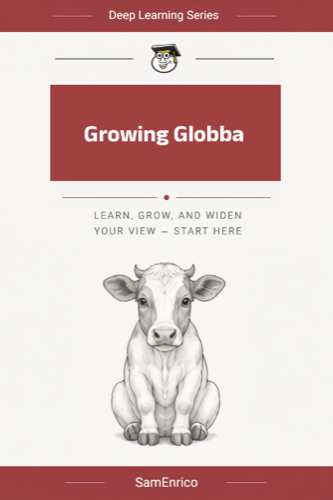
Growing Globba eBook
This publication, published by SamEnrico, covers G
This publication, published by SamEnrico, covers Growing Globba
Formats
Free sample
Chapter 1: The Unlikely Dancer...--It begins, as all good obsessions do, with a lie.The lie was this: "You don't have the right conditions for tropical plants. Your apartment faces north. Your winters last six months. You once killed a succulent by looking at it wrong. Give up before you start."That voice lived in my head for thirty-seven years.
It belonged to no one and everyone—the garden center employee who pointed me toward the snake plants "because those are impossible to kill," the online forum where someone wrote "Globba is not for beginners," and the quiet, insidious part of myself that had learned to shrink my ambitions to fit the space I could afford.I tell you this not because my story matters, but because yours does. Because if I had listened to that voice—the one that says "you are not the kind of person who grows rare gingers from the monsoon forests of Southeast Asia"—this book would not exist. And more importantly, you would not be holding it.My name is Sam Enrico, and I am not a botanist. I am not a master gardener, a horticultural therapist, or a university-trained plant scientist. I am, by trade, a designer who once failed to keep a basil plant alive for three consecutive summers.
I am a person who, on a humid Tuesday in Chiang Mai, Thailand, while hiding from both the afternoon rain and a collapsing marriage, watched a flower move.Not sway in the wind. Not track the sun like a sunflower. Move. Deliberately. Quickly.
As if it had made a decision.The plant had no business being where I found it—tucked into a cracked ceramic pot behind a forgotten temple, shaded by a mango tree that had long since stopped producing fruit. Its leaves were broad and soft, the color of young limes. Its stems were thin, almost fragile-looking, and from each stem hung a chain of small, pendulous structures that I would later learn are called bracts. They were pale yellow with tips the color of dried blood, and they dangled like miniature lanterns.I reached out to touch one. Just a finger, barely a brush.And it snapped.Not broke.
Snapped. The entire inflorescence—the whole dancing assembly—flicked sideways so fast I jerked my hand back, certain I had been bitten. But there was no pain. There was only the flower, now pointing in a new direction, trembling slightly, as if surprised by its own audacity.I touched another. Same thing.I laughed.
Actually laughed, out loud, alone in a foreign country, in the rain, with my marriage dissolving three thousand miles away. A flower had just made me laugh.That was fifteen years ago. That Globba schomburgkii—the Burmese Dancing Girl—is now growing in a pot on my kitchen windowsill in a house with a north-facing exposure, in a climate where the temperature drops to minus twenty degrees Celsius for weeks at a time. It has bloomed every July for the past twelve years.And I am here to tell you that the lie was wrong. The conditions were never the problem.
The information was.The Global Rise of a Forgotten Ginger Let me tell you something the plant industry doesn't want you to know: Globba has been hiding in plain sight for over two hundred years.The genus was first described in 1804 by the Dutch botanist Carl Ludwig Blume, who encountered it in Java. For most of the nineteenth century, Globba specimens were shipped back to European botanical gardens as curiosities—odd little gingers that did something strange with their flowers. But they never caught on. While Victorian plant hunters went mad for orchids, ferns, and the great spectacle plants like Victoria amazonica lilies, Globba remained a footnote. Too small, perhaps.
Too subtle. Too easily dismissed by people who wanted their gardens to shout rather than whisper.That began to change around 2015, though you would be forgiven for not noticing. The shift happened quietly, in the margins of the plant world—on Instagram hashtags like #gingercollector and #rareplantswap, in the Facebook groups dedicated to "understory tropicals," and in the living rooms of people who had realized that the monster Monstera deliciosa was taking up too much floor space.What changed? Three things.First, the houseplant boom of the early 2020s created a generation of growers who had mastered the basics. They could keep a pothos alive.
They could propagate a philodendron. They were ready for something that required a little more... conversation. Globba, with its dormancy cycle and its dancing flowers, offered exactly that.Second, tissue culture technology became accessible to small-scale commercial propagators. Suddenly, Globba could be produced in quantities that made it affordable for the average grower, rather than being a $75 specialty item traded among obsessives.Third—and this is the one that matters most—people discovered that Globba does not need a greenhouse.
It does not need a humidifier the size of a refrigerator. It does not need supplemental lighting that costs more than a car payment. It needs a windowsill, a pot with drainage, and a grower who understands one simple truth: this plant wants to sleep for the winter, and you need to let it.That last point is where almost everyone gets it wrong. I got it wrong, at first. The first winter I owned my Globba, I brought it inside, put it under a grow light, kept watering it, and watched it die.
Not immediately. Slowly. Tragically. The leaves yellowed one by one. The stems collapsed.
The rhizome, when I finally dug it up in desperation, was a soft, brown, foul-smelling mess.I had killed it with kindness.The second plant—the one that still lives on my windowsill today—I treated differently. When the leaves began to yellow in November, I stopped watering. I moved the pot to the coolest room in my apartment (which, in a poorly insulated rental, was the hallway closet). And I left it alone for three months.In February, I saw it: a tiny green shoot, pushing up through the soil like a question. I watered it once, lightly.
A week later, another shoot. By April, it was a jungle. By July, it danced.That was the moment I realized that the conventional wisdom about tropical plants—warm, wet, constant—was not wisdom at all. It was a generalization that fit some plants but not others. Globba does not want to be treated like a Monstera.
It wants to be treated like a plant that knows, deep in its rhizome, that winter comes and that survival means sleeping through it.The Science of the Dance (Without the Boring Parts)I am not going to give you a botanical lecture. There are plenty of textbooks for that, and you are not reading this book because you want to memorize Latin binomials until your eyes cross. But you do need to understand a few things about what Globba is and how it works, because that understanding is what separates success from failure.Globba belongs to the Zingiberaceae family. That is the ginger family. Your culinary ginger—Zingiber officinale—is a cousin.
So are turmeric, cardamom, and the ornamental gingers you might have seen at garden centers: Hedychium (butterfly ginger), Costus (spiral…
This is the end of the free sample. Get the eBook to keep going. Buy now
About this book
Details
- Author
- Singletary Henriette
- Publisher
- SamEnrico
- Language
- English
- Genre
- Non-Fiction, Informative, Educational
- Released
- 2026-06-02
- Pages (approx.)
- 139
- Available as
- eBook, Audiobook

Read better in the ZLOADR app
Your eBooks on your phone or tablet. Sign in with your SamEnrico account and start reading.
More by Singletary Henriette
 The Craving Busting WorkbookSingletary Henriette$11.99
 The Nap Alarm Clock GuideSingletary Henriette$11.99
 Remote Productivity FAQSingletary Henriette$11.99
 Parent Loss and Young ChildrenSingletary Henriette$11.99
 Digital Boundary SettingSingletary Henriette$11.99
 Board of Directors CrisisSingletary Henriette$11.99
 Microbiome Kidney HealthSingletary Henriette$11.99
 Mindfulness Pain ReliefSingletary Henriette$11.99
 Alibaba Inspection ServicesSingletary Henriette$11.99
 The Ballad of the Black Cowboy: Nat Love and the Wild West’s Forgotten LegendSingletary Henriette$11.99
 Hannibal's Ghosts: The Cursed March Over the AlpsSingletary Henriette$11.99
 Bridges of Time: The Lovers Who Built the Iron AgeSingletary Henriette$11.99
You may also like
 Hong Kong Handover 1997Dunn Johnnie$11.99
 Zumba For Postnatal Recovery CourseNeal Christian$11.99
 Zumba for BeginnersLadner Nikia$11.99
 YouTube Comment Mining GuideHumes Pandora$12.99
 Worry Box MeditationCarlin Rudy$11.99
 Workplace Stress MeditationNguyen Lynn$11.99
 Workplace Stress and Sleep RepairHawley Ivory$11.99
 Workplace Perfectionism CureDelaney Jeffry$11.99
 Workplace Injustice Anger GuideWallen Isabelle$11.99
 Work Addiction and Burnout LinkGreenwood Ester$11.99
 Women in Yoga and WellnessBeattie Galina$11.99
 Women in Stand Up ComedyChun Evangeline$11.99